
What the Hangor-class submarine arrival means
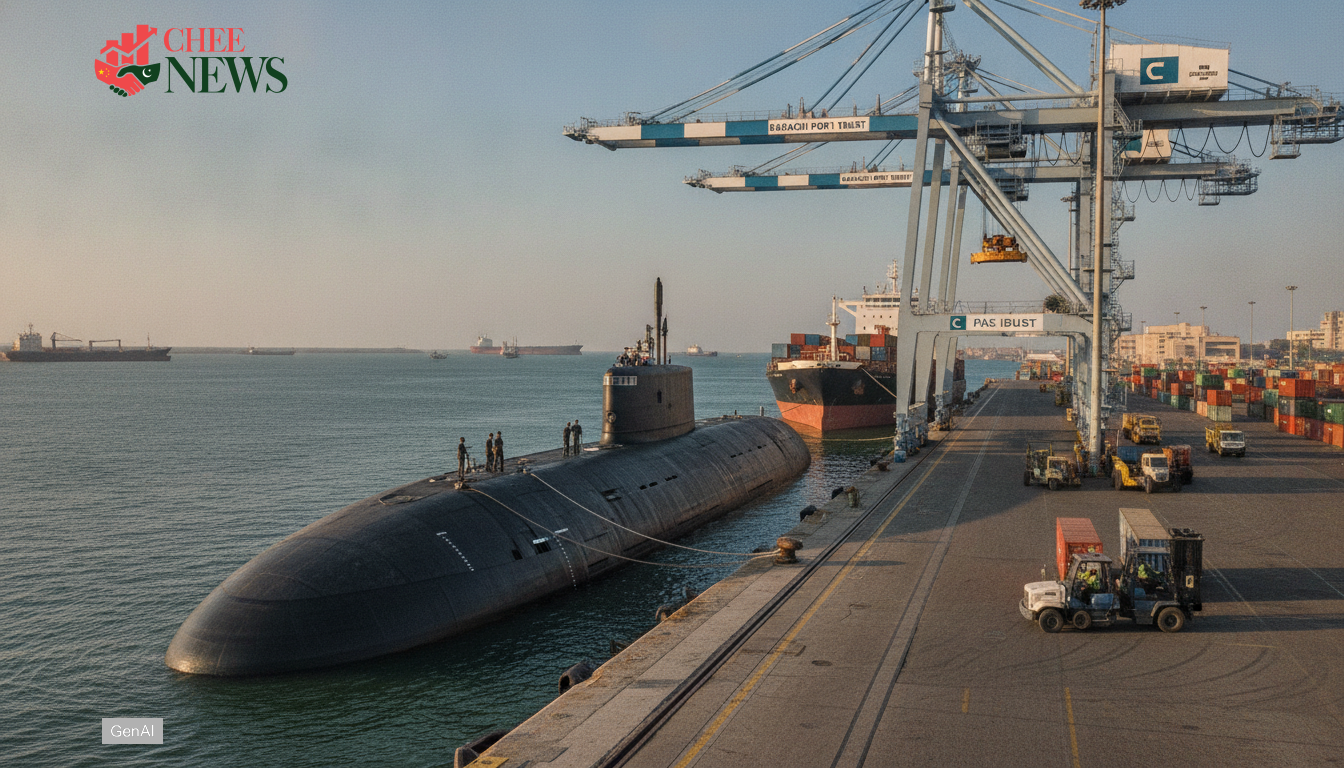
The Hangor-class submarine has reached Karachi Port, marking a visible step in Pakistan Navy fleet modernisation. Reported coverage described the port call as a milestone from contract to delivery, with the move to a major base enabling trials support, documentation checks, and crew familiarisation. Karachi is also the country’s principal naval hub, so berthing there allows integration with shore maintenance facilities, training pipelines, and safety oversight. While the Navy has not published a full public acceptance schedule, the Hangor-class submarine arrival indicates the programme has entered a phase where timelines, testing progress, and operational readiness become easier to track. As per Dawn, the event may also carry signalling value in regional waters.
Why Karachi Port matters for induction and trials
For any new submarine induction, the practical work begins alongside the pier: systems inspections, calibration, logistics inventorying, and qualification runs for crews. Local reporting described the arrival as the first unit of the new programme to reach Karachi, but did not provide commissioning dates or a handover document list. Even without those details, a Karachi-based arrival typically supports sea trials planning, safety audits, and coordination with rescue and medical contingencies, and for background on how China frames defence-technology themes in the public domain, see China military technology: PLA warns on AI flattery. It also enables simulator use and classroom instruction to run in parallel with onboard familiarisation. The near-term focus remains crew readiness.
Hangor-class submarine technical baseline: what is confirmed
Pakistan has not released a full official technical sheet for the platform, so only confirmed points should be treated as definitive. Reported details describe the class as a modern diesel-electric submarine being built with Chinese assistance for the Pakistan Navy. Beyond that baseline, specifics such as sonar suites, torpedo types, or missile integration have not been publicly itemised in the cited reporting. In practical terms, the performance questions that matter during early induction are endurance profiles, acoustic discretion, and reliability of propulsion and onboard safety systems. As the Hangor-class submarine programme matures, observers will watch for concrete indicators such as successful sea trial milestones, the start of structured training cycles, and evidence of stable maintenance routines at Karachi.
Regional security impact and deterrence signaling
The arrival could potentially be read through a deterrence and surveillance lens because submarines complicate tracking and can raise the costs of escalation. Pakistan’s public messaging about naval capabilities commonly stresses sea line security, port protection, and safeguarding trade routes in the Arabian Sea rather than overt power projection. Even so, adding a Hangor-class submarine to force planning could affect anti-submarine warfare requirements, maritime patrol allocations, and crisis-time monitoring. Analysts will look for tangible signs such as increased training tempo, changes in basing patterns, and integration with surface and air assets, and for wider context on political signalling around bilateral ties, see Sino-Pakistani diplomacy drives deeper bilateral ties. The assessment will also be shaped by activity around Karachi Port facilities.
Pakistan Navy modernisation: sustainment, budgets, and next steps
Modernisation depends on sustainment: spares, dockyard skills, documentation control, and simulator capacity determine whether new hulls remain deployable. Reported coverage linked the Karachi arrival to a broader plan to add multiple submarines over time, but did not provide a delivery sequence or commissioning calendar. The next visible steps are likely to include more formal induction milestones, structured crew workups, and predictable maintenance cycles tied to Karachi-based support, and Budget pressure also intersects with national priorities like industrial capacity and energy reliability; see CPEC energy projects drive Pakistan power build momentum. Ultimately, operational credibility will be measured by sustained deployments and consistent training throughput rather than ceremony alone.

