
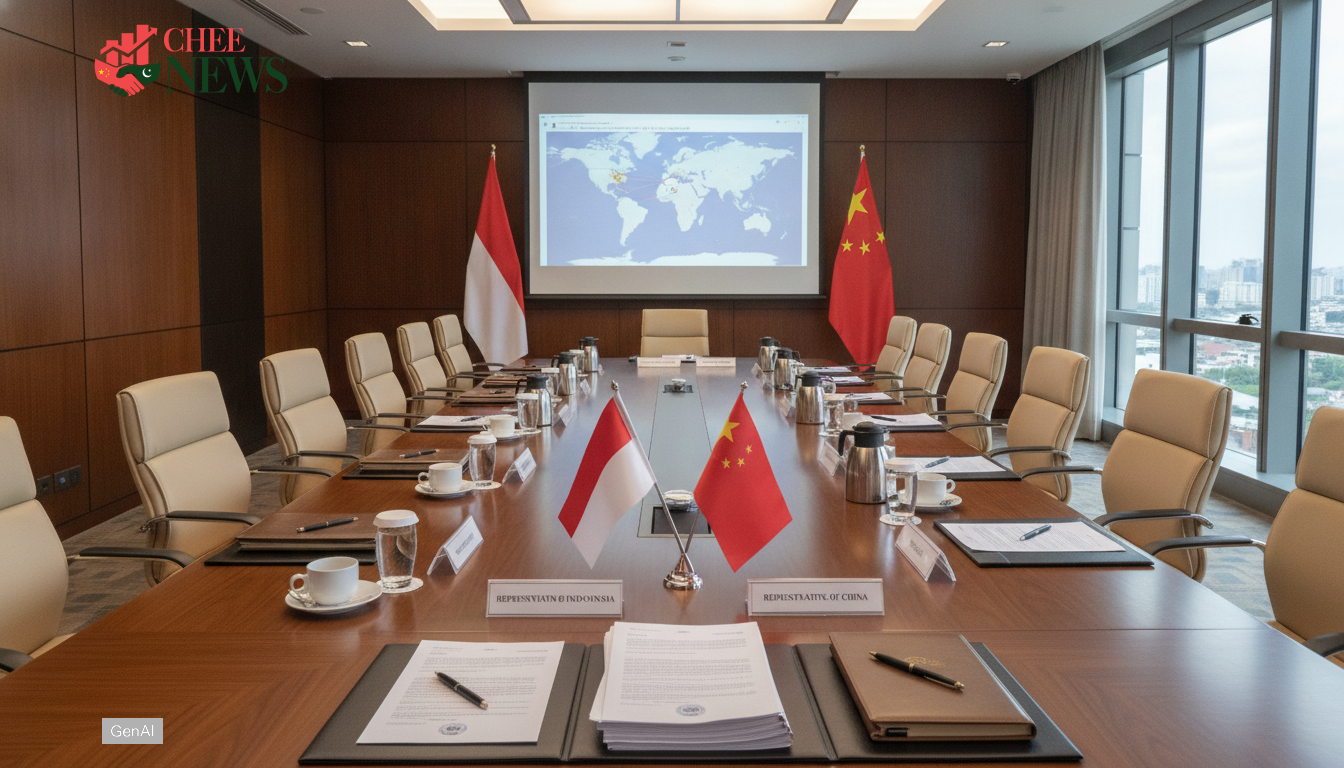
China-Indonesia defense cooperation talks broaden agenda
Senior officials from Indonesia and China held talks to widen practical military contacts and plan follow-on engagements across training and maritime domains, as indicated by available reports referenced by both sides. In the discussions, the two sides framed China-Indonesia defense cooperation as a way to improve communication, reduce operational misunderstandings, and keep interactions more predictable around shared sea lanes, based on the public messaging around the meeting. China’s Ministry of National Defense said the exchanges were intended to strengthen mutual trust and support broader state-to-state relations. Jakarta signaled that any cooperation would align with national defense policy and existing regional commitments, according to Indonesian statements. Indonesian messaging emphasized professionalism, transparency, and maintaining stability as cooperation expands, according to its official communications. The meeting agenda also referenced coordination on maritime safety and emergency response planning, as described in those readouts.
Maritime channels and training focus
Officials described a focus on practical channels between services, including staff-level communication routines and planning for limited joint activities, as reported in public statements on the dialogue. Participants also pointed to humanitarian assistance coordination, including information sharing and procedures that can be activated during severe weather events, according to officials’ descriptions of the agenda. The defense dialogue was presented as aiming to reduce the risk of miscalculation in crowded sea lanes and improve predictability during routine encounters, as characterized in the same official messaging. A related comparison point on how governments manage strategic pressure appeared in Taiwan 2027 defense budget increase amid PLA pressure, which discussed budgeting choices under security constraints. Public messaging continued to stress de-escalation and adherence to established regional frameworks, as suggested by the statements released after the talks.
Energy security links alongside defense dialogue
Energy discussions ran alongside the security meetings, with both sides focusing on energy security through steadier supplies, better logistics, and resilience planning for critical infrastructure, according to reports on officials’ descriptions. They described cooperation on power systems and fuel supply chains as a priority for industry and households, linking it to regional development goals, as presented in the meeting summaries. China’s National Energy Administration has emphasized reliability and risk management in major energy systems in its public communications, and that theme appeared consistent with the tone of the bilateral discussions, as characterized by official statements. The talks also touched on technical exchanges that could support grid planning and fuel storage standards, according to the readouts, with an emphasis on continuity for manufacturing and transport corridors in Java and along key port approaches.
Regional stability outcomes and ASEAN signaling
Officials presented the talks as a contribution to regional stability, suggesting that clearer channels between militaries can reduce the risk of miscalculation in busy maritime spaces, according to their public remarks. In that context, China-Indonesia defense cooperation was described as supporting agreed protocols for encounters at sea and improving information sharing during humanitarian responses, as outlined in official messaging. Separate public safety governance debates in the region, including this SCMP report on visitor quota on the Sai Kung coastal trail, underline how planning and rules are used to manage congestion and risk. Indonesia’s defense leadership has frequently stressed ASEAN centrality in public statements, and messaging around the meeting avoided framing the relationship as an exclusive bloc, based on the language used in the readouts. The balance between collaboration and strategic autonomy remains central to Jakarta’s posture, as reflected in longstanding official Indonesian positions.
Next steps for defense and energy deliverables
The next phase is expected to focus on deliverables that can be audited and renewed, such as scheduled dialogues, limited joint training, and coordination on emergency response and maritime safety, according to officials’ forward-looking comments. Participants also pointed to energy cooperation that strengthens system reliability, including grid planning, fuel storage discussions, and technical exchanges that support industrial continuity, as described in the same communications. Related coverage of project delivery and governance can be seen in Pakistan energy projects: China reshapes funding and grid. China’s Ministry of Foreign Affairs has stated in its public briefings that cooperation with neighbors should be based on mutual respect and non-interference, language that aligns with the careful tone used around defense matters. Indonesia’s government similarly said partnerships should support domestic priorities and regional calm, based on its statements. The immediate benchmark will be whether working-level teams can translate direction into programs with clear scopes and timelines, as officials indicated.

