
China’s film industry experienced a landmark year in 2025 as animated movies emerged as the driving force behind a nationwide box office surge, reshaping audience preferences and signalling a deeper transformation in the country’s cultural and entertainment landscape.
According to official figures reported by state media, China’s total box office revenue reached 51.832 billion yuan, equivalent to about 7.37 billion US dollars. Animated films accounted for more than 25 billion yuan of that total, representing nearly half of all ticket sales. The scale of the contribution highlights how animation has moved from a niche genre to the centre of China’s cinematic economy.
The standout title of the year was Ne Zha 2, a fantasy adventure inspired by Chinese mythology. With global box office earnings of nearly 15.95 billion yuan, the film became the highest-grossing animated movie in cinema history worldwide. Its success also marked the first time an Asian film entered the global top ten box office rankings, placing fifth on the all-time list and setting a new benchmark for non-Hollywood productions.
Industry analysts say the popularity of Ne Zha 2 reflects a broader cultural shift. Audiences are increasingly drawn to stories rooted in Chinese folklore and identity, presented through modern animation techniques that rival international standards. The film’s appeal extended beyond younger viewers, attracting families and adult audiences and demonstrating that animated storytelling can resonate across generations.
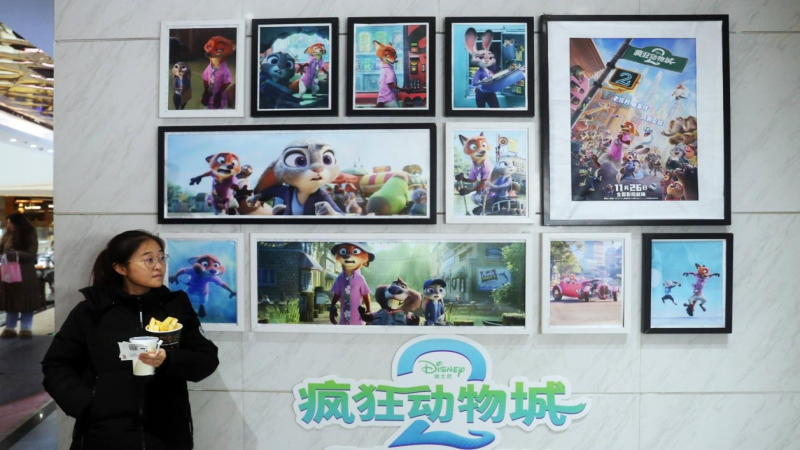
The momentum was not limited to a single blockbuster. Other domestic animated releases performed strongly throughout the year, reinforcing the genre’s commercial viability. International titles also found enthusiastic audiences in China. Films such as Zootopia 2 recorded robust ticket sales, underscoring China’s continued importance as a key global market for animated entertainment.
Executives within the industry believe animation’s rise is tied to improvements across the production chain. Chinese studios have invested heavily in visual effects, storytelling talent and long-term intellectual property development. This has allowed local productions to compete more effectively with established global players while offering narratives that feel culturally authentic to domestic audiences.
Yu Zhou, president of Beijing-based Light Chaser Animation, said the success of animated films demonstrates the growing maturity of China’s creative sector. He noted that audiences are no longer satisfied with spectacle alone and are increasingly demanding emotional depth, strong characters and culturally meaningful stories. Studios that meet those expectations are being rewarded at the box office.
The strong performance of animated films also provided a boost to cinemas, which have faced pressure in recent years from streaming platforms and shifting consumer habits. Packed screenings during holiday periods helped revitalise foot traffic and restored confidence among exhibitors that theatrical releases still hold a powerful draw when content aligns with audience interests.
Cultural commentators see 2025 as a turning point. Animation is no longer viewed simply as children’s entertainment but as a strategic pillar of China’s cultural output. The genre’s success has encouraged studios to greenlight more ambitious projects, including sequels, spin-offs and original stories aimed at both domestic and international audiences.
As China looks to expand its cultural influence globally, animated films are emerging as one of its most effective soft-power tools. With strong box office performance at home and growing recognition abroad, the animation-led cinema boom of 2025 may prove to be the foundation for a new era in Chinese film.

