
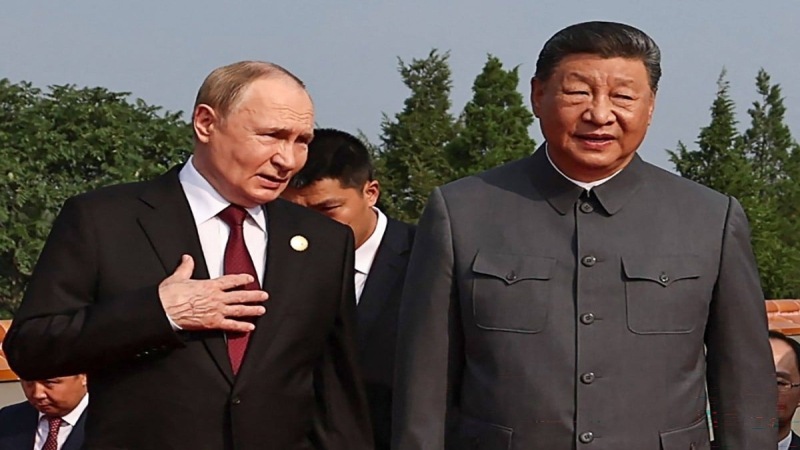
The balance of power within the Russia China relationship has shifted decisively in Beijing’s favor, according to a senior United States lawmaker who warned that China now represents the primary strategic challenge for Washington. The assessment reflects growing concern in US policy circles that the long standing partnership between Moscow and Beijing is no longer one of equals and that China increasingly sets the direction of the relationship.
Speaking at a policy discussion in Washington focused on the first year of President Donald Trump’s renewed foreign policy agenda, US Congressman Pat Fallon said the evolution of Russia China ties has become unmistakable. While the two countries have cooperated for decades across diplomatic military and economic fronts, Fallon argued that the senior partner role has clearly moved from Moscow to Beijing.
According to Fallon the relationship was historically defined by Soviet dominance particularly during the Cold War era when Moscow led the socialist bloc and exerted significant influence over Beijing. Today however China’s economic scale technological capacity and growing global reach have altered that dynamic. Fallon stated that what the world is witnessing now is a partnership in which China holds greater leverage and strategic initiative.
This shift is evident in several areas. China has become Russia’s most important economic partner as Western sanctions and political isolation have pushed Moscow to rely more heavily on Asian markets. Chinese demand for energy commodities has helped cushion Russia’s economy while Chinese manufactured goods and technology have become increasingly important for Russian supply chains. Analysts note that this asymmetry gives Beijing greater negotiating power in bilateral trade and infrastructure projects.
The military and diplomatic dimensions of the relationship also reveal changing dynamics. While Russia retains significant military capabilities and experience China’s rapid modernization of its armed forces has narrowed the gap and in some areas surpassed Russian capacity. Joint exercises and security coordination continue but observers suggest these activities increasingly reflect Chinese priorities particularly in the Asia Pacific region.
Fallon’s remarks also highlighted broader US concerns about the implications of a China led partnership. From Washington’s perspective closer coordination between Beijing and Moscow complicates efforts to manage global security challenges and reinforces China’s ability to contest US influence. The lawmaker described China as the primary long term threat to American interests with Russia playing a secondary but still disruptive role.
Despite the deepening ties analysts caution that the Russia China relationship is shaped more by shared interests than by mutual trust. Historical differences strategic competition in Central Asia and concerns over long term dependency continue to limit how far the partnership can evolve. Even so the current imbalance favors Beijing as Russia’s room for maneuver narrows.
For US policymakers Fallon’s comments reflect a growing consensus that understanding the hierarchy within the Russia China partnership is critical for shaping future strategy. As China’s influence expands and Russia’s options contract the relationship is increasingly viewed in Washington as one where Beijing leads and Moscow follows.

