
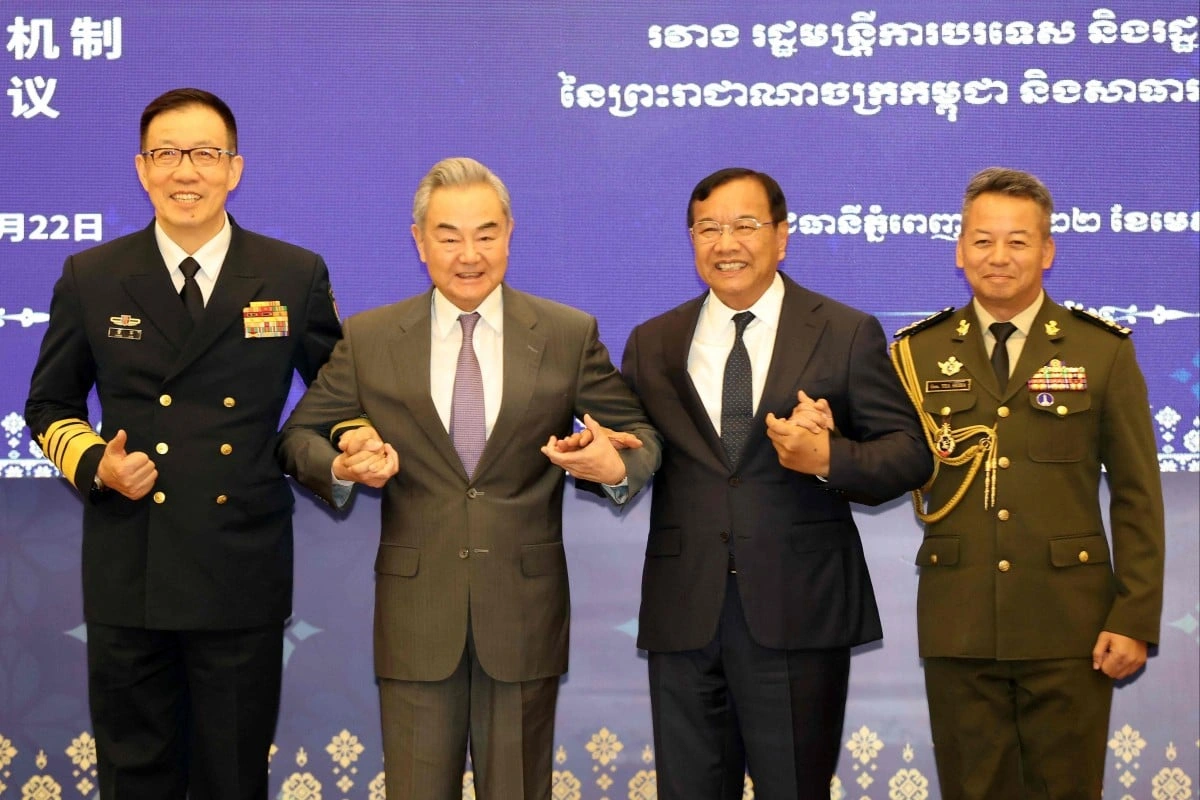
China has urged Cambodia to strengthen cooperation on shared security challenges and political coordination as both countries seek to navigate a period of global instability. The call was made during a high level 2+2 strategic dialogue held in Phnom Penh, bringing together foreign and defence ministers from both sides. Chinese officials emphasized the importance of closer alignment in order to safeguard development priorities and maintain stability in an increasingly complex international environment marked by geopolitical tensions and shifting alliances.
The dialogue marks the first official meeting under a newly established 2+2 mechanism between China and Cambodia, which integrates foreign policy and defence discussions into a single strategic framework. This approach is designed to enhance communication between the two countries across multiple levels of government, allowing for more coordinated responses to regional and global challenges. Chinese Foreign Minister Wang Yi highlighted the need for stronger solidarity, stating that closer cooperation is essential for both nations to maintain control over their development and security priorities.
During the meeting, both sides discussed expanding collaboration in areas such as political trust building, defence cooperation, and regional stability. Officials stressed that the current global situation requires nations to work more closely together to manage risks and uncertainties. The dialogue also reflected China’s broader diplomatic strategy of strengthening partnerships with neighboring countries through structured mechanisms that combine political, economic, and security engagement under a unified framework.
The 2+2 format was introduced as part of a wider initiative proposed by Chinese leadership to deepen strategic ties with regional partners. It represents an effort to institutionalize dialogue between foreign and defence ministries, ensuring that security considerations are integrated into broader diplomatic discussions. In the case of Cambodia, the mechanism is seen as a step toward enhancing long term cooperation and reinforcing mutual interests in maintaining regional peace and stability.
As global tensions continue to evolve, China’s engagement with Cambodia highlights its focus on building closer relationships within Southeast Asia through sustained diplomatic coordination. The emphasis on shared security and risk management reflects a broader effort to create resilient partnerships capable of addressing both traditional and emerging challenges. The Phnom Penh meeting underscores the growing importance of structured regional cooperation in shaping responses to an uncertain global landscape.

