
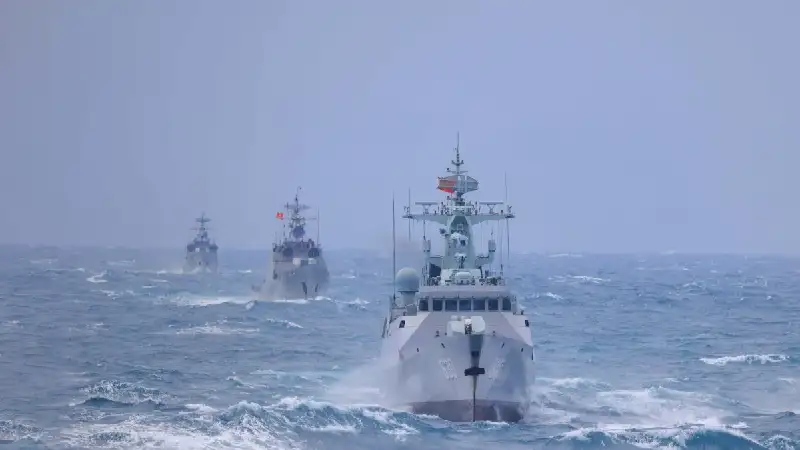
China and Vietnam have agreed to introduce live fire drills into their future joint naval exercises, signaling a notable expansion of military cooperation between the two neighboring countries. The move comes as both sides seek to strengthen coordination in regional waters while maintaining stability in shared maritime zones. The agreement reflects a broader effort to enhance operational readiness and deepen defense ties, particularly as geopolitical dynamics in Asia continue to evolve. Officials from both countries have emphasized that these exercises are aimed at improving coordination and ensuring maritime security rather than escalating tensions in the region.
The development follows a recent meeting between naval commanders at Fangcheng port in southern China, where Vietnamese naval vessels arrived to participate in a new round of joint patrols and training activities. The exercises mark the 40th joint patrol conducted by the two navies, highlighting the continuity of their maritime cooperation. During the engagement, both sides discussed expanding the scope of drills to include practical combat scenarios, particularly focusing on light weapon live fire exercises. The initiative is designed to strengthen tactical coordination and improve the effectiveness of joint responses to security challenges at sea.
According to officials familiar with the discussions, the live fire component will be integrated into anti piracy training modules, which have been a central element of previous joint exercises. These drills are intended to simulate real world scenarios where coordinated naval action is required to protect shipping lanes and ensure safe maritime navigation. Analysts note that such training enhances the ability of both forces to respond quickly and effectively to threats such as piracy, illegal activities, and maritime disruptions. The inclusion of live fire exercises represents a step toward more advanced and realistic training frameworks between the two navies.
Vietnamese leadership has reiterated the importance of maintaining strong relations with China, describing bilateral ties as a key strategic priority. This emphasis on cooperation comes amid a complex regional environment where countries are balancing national interests with the need for stability. Military engagement, including joint naval exercises, is seen as one of the practical ways to build trust and reduce the risk of misunderstandings in contested waters. Observers say that consistent communication and coordinated training efforts can contribute to a more predictable security environment in the region.
The Gulf of Tonkin has long served as a focal point for cooperation between China and Vietnam, providing a platform for joint patrols and coordinated activities. Over the years, these exercises have evolved from basic patrol coordination to more structured training programs aimed at enhancing interoperability. The addition of live fire drills suggests that both countries are willing to take their cooperation to a more advanced level while maintaining a framework focused on defensive and security oriented objectives. This progression reflects a broader trend of countries investing in more comprehensive maritime capabilities.
Regional analysts view the move as part of a wider effort by both nations to manage maritime challenges through cooperation rather than confrontation. As shipping routes remain vital to economic stability, ensuring their security has become increasingly important. Joint naval exercises play a crucial role in this context by enabling coordinated responses to potential disruptions. The inclusion of realistic training elements such as live fire drills is expected to improve operational confidence and strengthen the overall effectiveness of maritime security initiatives in the region.
The latest exercises are expected to continue over the coming days, with both navies participating in a series of coordinated activities designed to test communication, maneuvering, and response capabilities. While the expansion of training scope marks a significant development, officials from both sides have maintained that the exercises remain focused on maintaining peace and stability. As cooperation between China and Vietnam continues to evolve, these joint initiatives are likely to play an important role in shaping the future of regional maritime security dynamics.

