
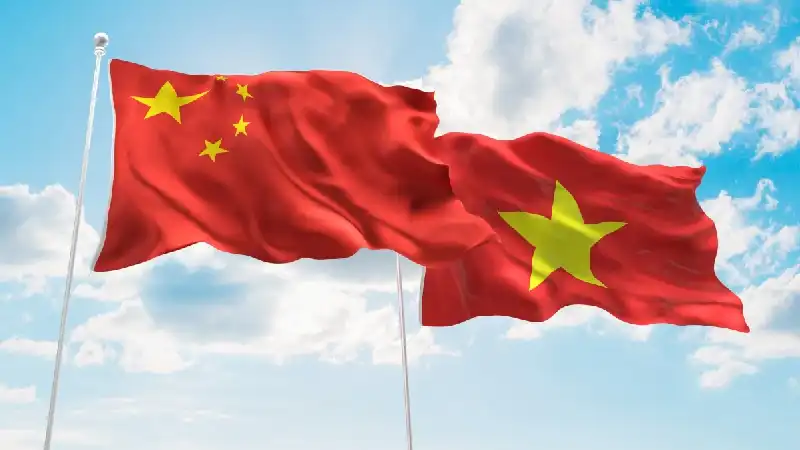
China has firmly defended its ongoing construction and land development activities in the disputed Paracel Islands, stating that the projects are taking place within its own territory and are aimed at improving living conditions and supporting local economic growth. The remarks come amid continued regional sensitivity over competing territorial claims in the South China Sea. Chinese officials emphasized that the islands, which Beijing refers to as the Xisha Islands, are an integral part of China, rejecting any suggestion that the activities are subject to dispute.
Foreign ministry spokesperson Lin Jian stated that the construction work is focused on enhancing infrastructure and supporting residents living on the islands. He explained that such development is part of normal governance and economic planning, highlighting that the projects are designed to strengthen local conditions rather than escalate tensions. While details about the exact scale and locations of the activities were not disclosed, the statement reflects China’s consistent position on sovereignty over the area.
The Paracel Islands remain a point of contention between China and Vietnam, both of which claim sovereignty over the archipelago. Vietnam refers to the islands as Hoang Sa and has repeatedly expressed opposition to Chinese activities in the region. The situation forms part of a broader set of disputes in the South China Sea, where multiple countries have overlapping claims to various islands and maritime zones. These disputes have significant implications for regional security, trade routes, and access to natural resources.
China has maintained that its actions in the South China Sea are lawful and within its sovereign rights, while also calling for stability and dialogue in managing regional tensions. The government has consistently framed its infrastructure development as necessary for improving living standards and supporting economic activity on the islands. This narrative aligns with broader efforts to strengthen administrative presence and logistical capabilities in strategically important areas.
The South China Sea is one of the world’s most important maritime corridors, carrying a significant portion of global trade, including energy shipments and commercial goods. Any developments in the region are closely watched by neighboring countries and international stakeholders, given the potential impact on trade flows and regional stability. For countries connected to global supply chains, maintaining open and secure sea lanes remains a critical priority.
China’s activities in the Paracel Islands also reflect wider geopolitical dynamics, where infrastructure development is often linked with strategic positioning. Analysts note that such projects can serve both civilian and logistical purposes, contributing to long term presence in contested areas. At the same time, regional actors continue to advocate for diplomatic solutions to manage disputes and prevent escalation.
The issue has been a recurring point in regional discussions, with calls for adherence to international norms and peaceful resolution of disputes. While tensions remain, efforts to maintain communication channels between involved parties continue to be emphasized as essential for stability. The balance between development, sovereignty claims, and regional cooperation remains a central challenge in the South China Sea.
China’s latest statement reinforces its long standing stance on the Paracel Islands while highlighting ongoing construction efforts as part of domestic development priorities. As activities continue, the situation is expected to remain under close observation by regional governments and global markets, given its implications for security and international trade.

