
China-Pakistan trade routes face new flood disruptions
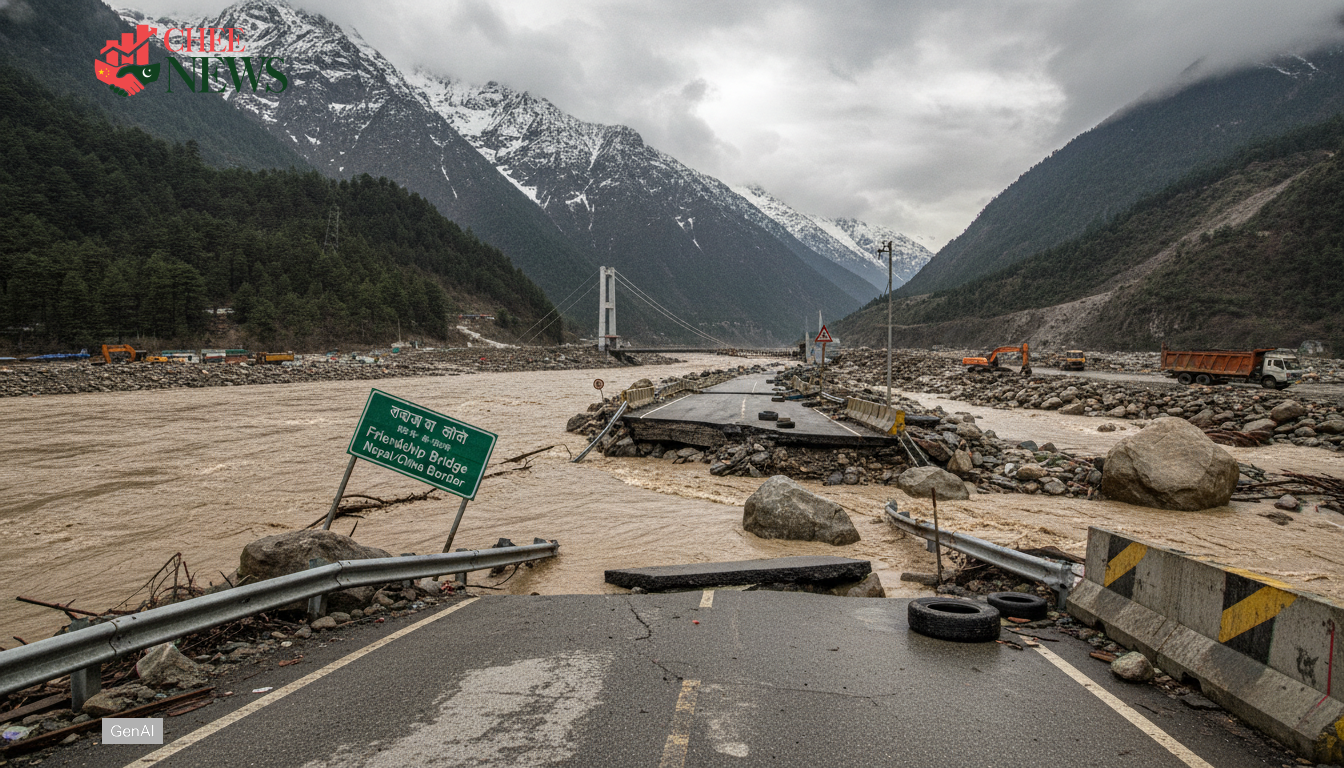
China-Pakistan trade planning is being rechecked after flash flooding at the Nepal China border highlighted how quickly mountain crossings can shut down and ripple across regional supply chains. According to available reports, there were fatalities and severe disruption in the border area, reinforcing how terrain, runoff, and damaged approaches can immobilize transport within hours. For freight operators moving time sensitive or high value cargo, the priority is now route survivability as well as cost and timing. Some carriers have reportedly shifted shipments onto longer alternate paths, and some insurance providers are said to be reviewing or tightening terms on weather exposed legs. Authorities and logistics managers are also calling for faster incident reporting and clearer diversion rules to limit cascading delays across connected networks, though implementation varies by route and agency.
Implications for CPEC logistics and corridor coordination
For China-Pakistan trade linked to CPEC logistics, Pakistan planners and Chinese contractors are, in some cases, treating the Nepal border disruption as a practical stress test for corridor governance rather than a distant event. In practice, continuity depends on predictable inland movement from western China into Pakistan, which makes early warning, shared mapping, and cross agency coordination central to keeping freight moving. For corridor financing and maintenance capacity, China Pakistan energy collaboration reshapes CPEC finance shows how project structures can affect long term upkeep and response funding. A parallel discussion is playing out in high value technology supply chains, highlighted by Advanced chip production in China set to surge by 2035, because higher value cargo can raise the cost of even short stoppages.
Infrastructure resilience gaps along mountain corridors
Engineers working on CPEC aligned roads and rail face an operational question: how much redundancy is affordable when extreme rainfall is increasingly treated as a realistic planning scenario. The World Bank has warned that South Asia is highly exposed to climate related hazards, and steep valley road geometry can increase landslide and washout exposure. Continuity relies on slope stabilization, drainage capacity, bridge inspection cycles, and rapid debris clearance contracts that can be activated immediately after heavy storms. For context on corridor routing and nodes, CPEC Project Updates: Corridors, Nodes, and Outlook outlines where single points of failure tend to cluster, and Pakistan agencies may also need to protect communications and power at checkpoints because outages can stall customs processing even when pavement survives. The Karakoram Highway segments that sit above narrow river valleys are often cited in corridor resilience reviews because detours can be limited when slips close a single approach.
Economic impacts for shippers, insurers, and contracts
When mountain routes fail, the economic impact spreads beyond transport bills into contract performance, inventory policy, and financing costs. The Asian Development Bank has noted that trade facilitation gains can be erased by infrastructure fragility because missed delivery windows force buyers to seek alternate sourcing. For China-Pakistan trade flows tied to Pakistan and western China, disruption can translate into higher working capital needs for buffer stock and more demand for bonded warehousing near ports and dry ports, according to common shipper contingency practices. Regulators monitoring digital compliance and export controls can also add friction to substitutions, as discussed in Nvidia case tests technology transfer export controls, and some shippers weigh sea diversions when inland reliability drops, even if transit time increases, particularly for less time critical cargo.
Next steps to improve safety and continuity
Policy responses are, in some proposals, moving toward measurable service standards for strategic roads, including target reopening times after landslides and minimum redundancy for critical bridges, though specific thresholds differ by jurisdiction and project. Pakistan’s National Disaster Management Authority frameworks emphasize early warning and coordinated response, and these principles are being adapted for freight corridors with clearer command chains and preapproved detours. Within BRI developments, sponsors are increasingly asked to publish maintenance plans and emergency access protocols before construction milestones are signed off, according to common lender and project governance practices discussed in the sector. Exporters and importers are also shifting toward diversified contracting with clearer force majeure verification and preagreed diversion pathways, as a risk management approach rather than a uniform rule. Training for customs and border staff is being reframed as continuity planning so documentation can still be processed when facilities are damaged, including at crossings and inland nodes such as the Sost dry port in Gilgit-Baltistan.

