
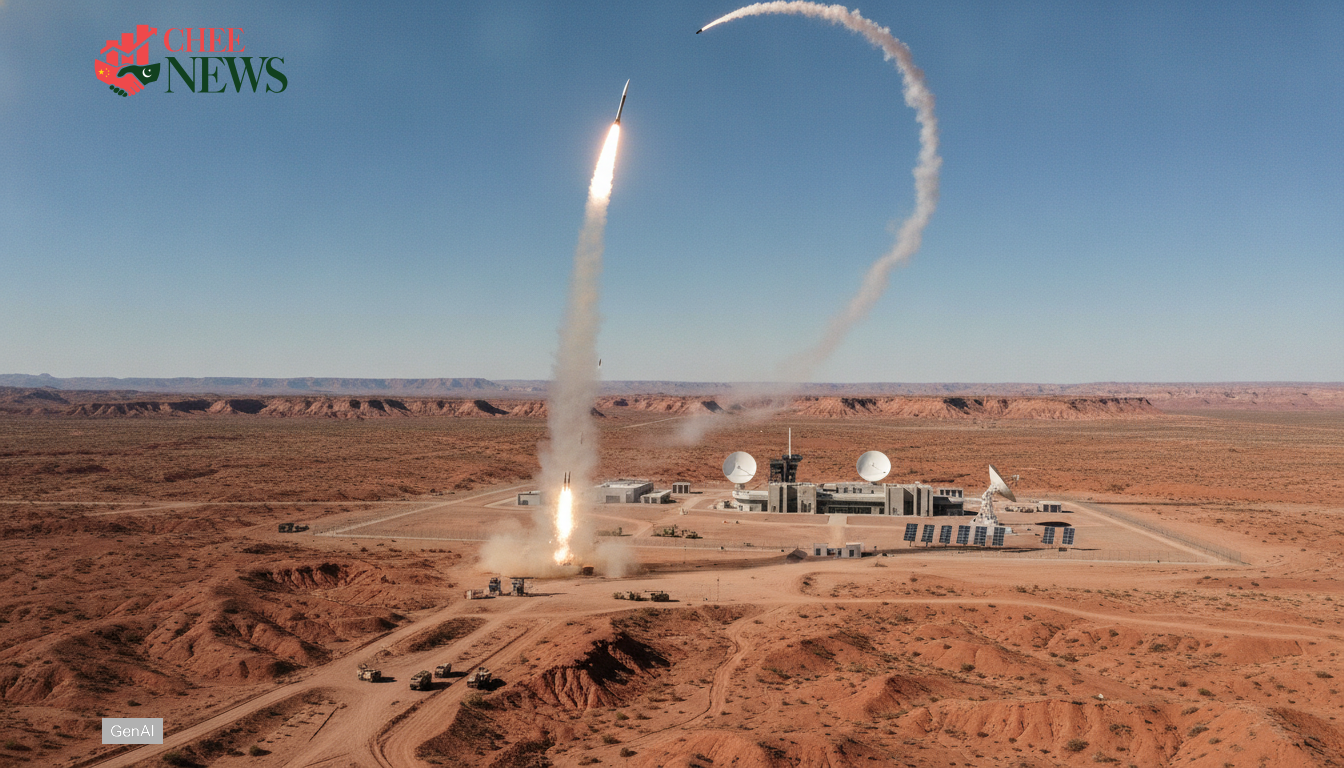
China hypersonic missile: capabilities and flight profile
China hypersonic missile programs are reshaping how Asia and the United States think about warning time, tracking, and interception, according to public commentary from defense analysts and government reporting. Analysts often argue that high speed combined with maneuvering can reduce decision windows for commanders and could increase miscalculation risk in a crisis. Public assessments frequently describe a boost-glide profile, in which a rocket booster accelerates a glide vehicle that then maneuvers at high speed. The practical issue is not headline Mach numbers alone, but whether guidance, communications, and thermal protection can deliver consistent performance under countermeasures, as analysts commonly note. As the hypersonic debate expands, planners also scrutinize flight testing cadence, basing options, and whether late course changes could complicate tracking and engagement.
How detection and tracking change under hypersonic threats
Hypersonic weapons can pressure the sensor chain because continuous custody may be harder when a target can maneuver and fly at lower altitudes than traditional ballistic trajectories, according to widely cited defense analyses. That has driven interest in combining space-based tracking with distributed terrestrial radars to maintain a consistent track, as described in public discussions of missile warning and tracking architecture. A parallel debate has emerged over industrial capacity and compute, and Advanced chip production in China set to surge by 2035 is cited in some regional discussions as relevant to long run seeker and processing supply chains. Workforce depth is also treated as a constraint, and How mainland Chinese engineers can help Hong Kong firms bridge talent gap is referenced as an example of how engineering pipelines can affect defense adjacent sectors. For defense planners, the operational goal is earlier detection, faster track confirmation, and resilient data links even under jamming, as officials and contractors have said in open forums, including briefings in Washington in 2023.
US and allied responses to China hypersonic missile pressure
US planning, as indicated by available reports, has emphasized persistent tracking, battle management, and engagement concepts designed for tighter decision cycles, according to publicly available US Department of Defense statements and program materials. In recent years, US budget documents and strategy publications have highlighted hypersonic defense as a joint mission that depends on shared data across services rather than a single interceptor solution, as those documents describe. Within that framing, a China hypersonic missile threat is often treated as a driver of operational redesign, pushing investment toward distributed sensors, hardened command nodes, and forward deployed coverage, according to analysts who track US force development. A second order effect could be cost and schedule risk, because counter-hypersonic programs may compete with other modernization priorities across air, sea, and space forces. The practical benchmark for credibility is test evidence: how often a track can be maintained, how quickly fire control quality data can be generated, and whether interceptors can reach an effective engagement geometry, as discussed in 2024 budget documentation.
Asia crisis stability and regional security implications
Across Asia, a commonly cited concern is crisis stability because shorter warning windows could increase the chance of misinterpretation during fast moving incidents at sea or in the air, according to regional security commentary. Regional analysts often distinguish between peacetime signaling and wartime performance, but some argue hypersonic systems can blur that line by appearing difficult to stop and by compressing the time leaders have to verify intent. Governments are also watching how missile technology diffusion might shape local arms planning, including investments in early warning, hardening, dispersal, and passive defense, in places such as the South China Sea and the Taiwan Strait. For Pakistan, planners track how strategic competition could interact with infrastructure security, and CPEC Project Updates: Corridors, Nodes, and Outlook provides context for how transport and energy corridors are assessed under wider risk frameworks. Related coverage such as CPEC updates: sanctions, trade risks and timelines is also used by some readers to understand how sanctions and timelines can influence regional risk calculations.
What comes next for hypersonic defense and escalation control
Defense roadmaps are commonly described as converging on two priorities: sensor persistence and engagement options that can operate at the tempo hypersonic weapons may impose, according to public program overviews and expert commentary. In US programs discussed publicly in recent years, the Glide Phase Interceptor concept has been presented as one approach intended to engage threats earlier in flight, while proliferated satellite tracking concepts aim to improve custody of fast targets across wide areas, according to US agency briefings and contractor descriptions. The debate is shifting from whether to build such layers to how quickly they can be fielded, tested, and governed in allied command relationships, as policymakers and analysts often frame it, including discussions in 2022 hearings. Export controls and supply chain resilience are frequently raised as factors because interceptors, seekers, and secure datalinks depend on high end components at scale. A plausible near term outcome is a defensive race focused on integration discipline, frequent testing, and clearer escalation control measures as regional planning adapts to the China hypersonic missile challenge.

