
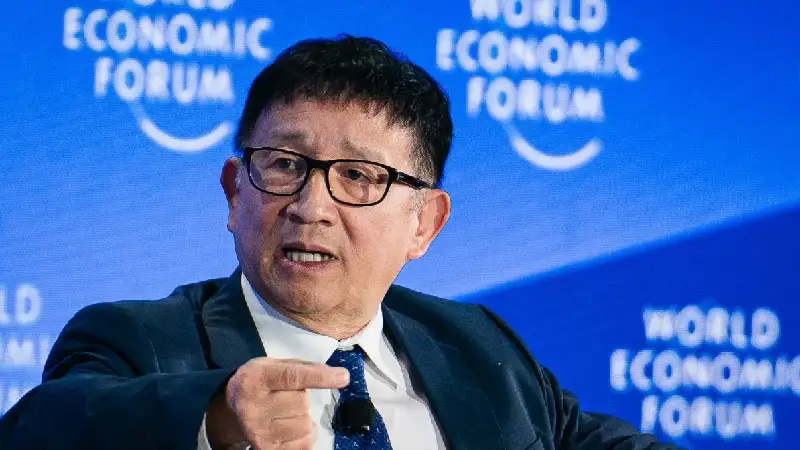
China remains on track to become the world’s largest economy within the next ten years, according to a prominent academic speaking at a major regional forum, signaling a continued shift in global economic power toward Asia. The projection comes amid ongoing structural changes in China’s economy and rising uncertainty in the United States. Analysts say the long term trajectory reflects broader global trends, where emerging markets and regional integration are increasingly shaping economic influence. For countries connected to China through trade and infrastructure partnerships, including Pakistan, such forecasts highlight the growing importance of aligning with Asia driven economic expansion.
The assessment was presented by a senior political science scholar who emphasized that despite internal economic adjustments, China’s growth momentum remains resilient over the long term. He noted that while China is navigating structural transitions such as shifting from investment led growth to consumption and innovation, these changes are part of a broader modernization process. In contrast, the United States is facing deeper challenges linked to political divisions, trade disputes and policy uncertainty, which could weigh on its long term economic performance. These contrasting trajectories are seen as key factors influencing the projected shift in global economic leadership.
The academic pointed to ongoing tensions within the United States, including cultural divisions and prolonged trade conflicts, as elements that may limit economic stability and growth. He described some policy approaches as counterproductive, suggesting they could weaken the country’s competitive position over time. Meanwhile, China continues to expand its role in global supply chains, manufacturing and emerging technologies. This expansion is supported by large scale infrastructure initiatives and trade networks that connect Asia with other regions, creating new economic corridors and reinforcing China’s position as a central hub in global commerce.
Experts note that the global economic landscape is becoming increasingly multipolar, with Asia playing a more dominant role in shaping growth patterns. China’s influence extends beyond traditional manufacturing into sectors such as digital technology, green energy and advanced industry. This transformation is also driving new forms of cross border collaboration, including digital payments, logistics integration and technology exchange. For developing economies, closer engagement with China’s economic ecosystem may offer opportunities for industrial growth, investment inflows and participation in expanding regional markets.
The outlook presented at the forum reflects a broader debate among economists about the future balance of global power. While uncertainties remain, including demographic trends and external economic pressures, the expectation that China could surpass the United States within a decade continues to gain attention. Policymakers and businesses worldwide are closely monitoring these developments as they shape long term strategies. The evolving economic order is expected to influence trade policies, investment decisions and international partnerships as countries adapt to a shifting center of global economic activity.

