
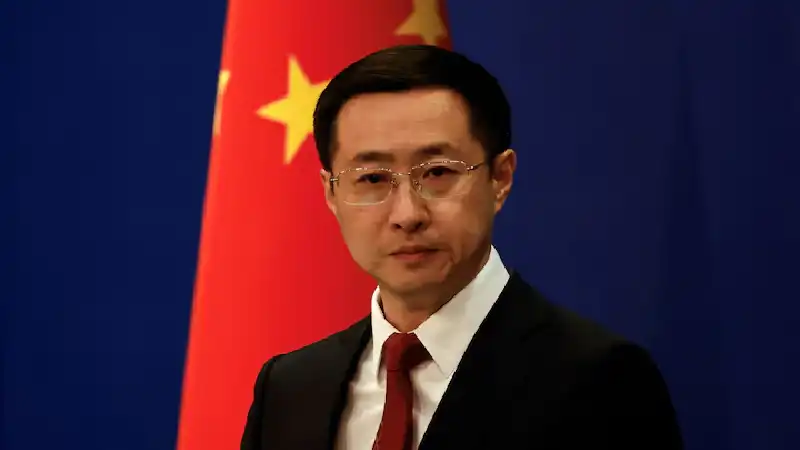
China has called on the United States and Israel to halt military actions in the Middle East, warning that continued escalation risks creating a dangerous cycle of conflict with far reaching global consequences. Chinese officials stressed that rising hostilities could destabilize the region and disrupt economic stability worldwide, particularly at a time when global markets are already under pressure. The statement reflects Beijing’s growing concern over the broader economic and geopolitical impact of the conflict, including its potential effects on trade, energy supply, and international security.
Chinese envoy Zhai Jun, following a series of diplomatic visits across the Gulf region, emphasized the need for immediate de escalation and renewed dialogue among all parties. He stated that those responsible for triggering tensions must take steps to restore stability, highlighting China’s position as a mediator seeking to reduce conflict. At the same time, foreign ministry spokesperson Lin Jian warned that continued use of force would only deepen instability and push the region into prolonged uncertainty, further complicating efforts to restore peace.
Officials also pointed to historical lessons, referencing the long term consequences of past conflicts in the Middle East. The legacy of earlier wars, including widespread instability and economic disruption, was cited as a reminder of how prolonged military action can reshape entire regions. Chinese policymakers stressed that similar patterns could emerge again if the current conflict continues, potentially leading to broader humanitarian and economic challenges that extend well beyond the immediate area.
The economic implications of the conflict are already becoming visible, particularly in global energy markets. Disruptions linked to tensions around key shipping routes have driven oil prices higher, raising concerns about inflation and supply chain pressures. For China, which remains a major importer of energy, sustained price increases could influence domestic production costs and economic growth. Analysts have also warned that weaker demand from emerging markets, many of which are sensitive to energy price fluctuations, could further affect China’s export performance.
China’s trade outlook is closely tied to the stability of its global partners, especially in regions that depend heavily on imported energy. Rising fuel costs can reduce consumer demand and industrial output in these markets, indirectly impacting Chinese exports. Financial institutions have already adjusted growth forecasts, citing the conflict as a key risk factor. While China’s diversified energy mix and reserves provide some buffer, prolonged instability could still lead to higher inflation and reduced economic momentum.
Beijing has maintained communication with all parties involved, positioning itself as a stabilizing force advocating diplomatic solutions. Officials reiterated that dialogue remains the most effective path forward and that escalation only increases risks for the entire international community. This approach aligns with China’s broader foreign policy strategy of promoting economic stability and avoiding disruptions that could affect global trade and development.
The situation has also drawn attention from global markets, where investors are closely monitoring the potential impact on commodities, currencies, and international trade flows. Energy price volatility has become a key concern, with ripple effects expected across industries ranging from manufacturing to transportation. Countries involved in major trade corridors are particularly exposed to these shifts, highlighting how regional conflicts can quickly translate into global economic challenges.
As tensions continue, China’s call for restraint underscores the urgency of preventing further escalation in a region critical to global energy supply and trade routes. The evolving conflict remains a central concern for policymakers and businesses worldwide, with its outcome likely to shape economic conditions and geopolitical alignments in the months ahead.

