
China has taken center stage at a major defence exhibition in Saudi Arabia, showcasing a wide range of unmanned platforms as Middle Eastern countries show growing interest in autonomous military technologies. The display highlights how rapidly evolving drone and uncrewed systems are becoming a core feature of modern defence planning across the region.
At the World Defence Show in Riyadh China operates one of the largest national pavilions among hundreds of exhibitors from around the world. The event brings together defence manufacturers military officials and policymakers at a time when regional security challenges are pushing governments to explore advanced and cost effective solutions. Uncrewed platforms in particular have emerged as a priority due to their flexibility reduced risk to personnel and expanding operational roles.
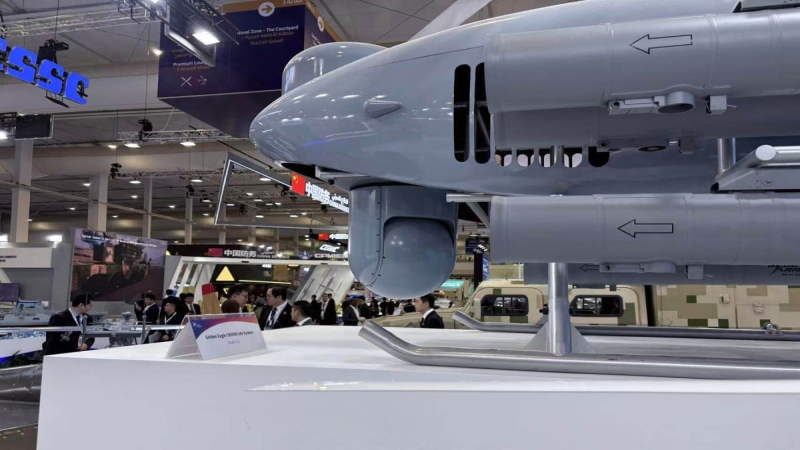
Among the systems on display is a Chinese unmanned aerial vehicle designed for anti submarine warfare. The platform reflects a shift toward integrating drones into maritime security operations where they can conduct surveillance tracking and threat detection over extended periods. For countries with long coastlines and strategic shipping routes such systems offer a way to enhance situational awareness without relying solely on traditional naval assets.
A full scale model of the Wing Loong X unmanned aerial vehicle has also attracted significant attention from visitors. The drone represents a new generation of long endurance platforms capable of performing multiple missions including reconnaissance strike operations and maritime patrol. Its modular design allows operators to adapt the system to different operational needs making it appealing to militaries seeking versatile solutions.
The strong Chinese presence at the exhibition underscores Beijing’s growing role as a defence supplier in the Middle East. Regional governments are increasingly diversifying their procurement strategies and looking beyond traditional suppliers to meet evolving security requirements. Chinese defence companies have positioned themselves as competitive alternatives by offering advanced systems at comparatively accessible price points along with flexible cooperation frameworks.
The broader exhibition features more than seven hundred defence companies from dozens of countries reflecting the scale of global interest in the Saudi defence market. Riyadh has invested heavily in developing its domestic defence sector while also strengthening partnerships with international manufacturers. Events like this serve as platforms for technology transfer joint ventures and long term procurement discussions.
Demand for autonomous systems has risen sharply across the region driven by lessons learned from recent conflicts. Drones have demonstrated their effectiveness in intelligence gathering precision targeting and force protection. As a result militaries are seeking platforms that can operate independently or alongside manned systems to extend operational reach and reduce vulnerabilities.
Analysts note that unmanned anti submarine capabilities represent a particularly strategic area. Subsea threats are difficult to detect and track using conventional methods alone. Integrating drones into maritime defence strategies allows for persistent monitoring of sensitive waters and critical infrastructure such as ports energy facilities and undersea cables.
China’s showcase at the Riyadh defence exhibition reflects broader trends shaping global defence markets. As technology advances and security challenges evolve unmanned systems are moving from niche roles to central positions in military planning. For Middle Eastern states balancing regional tensions and modernization goals these platforms offer practical tools to enhance deterrence and operational effectiveness.
Chinese defence firms are expected to continue expanding their footprint in the region as interest in autonomous technologies grows. With strong visibility at international defence events and an expanding portfolio of uncrewed systems China is positioning itself as a key player in the next phase of military innovation.

