
Looking to the Sea for Continuity
China’s expanding maritime ambitions under the Belt and Road Initiative have prompted renewed discussion about history and continuity. While the initiative is often framed in terms of infrastructure financing and global logistics, some observers see deeper cultural and historical roots behind the strategy. Among them is historical photo collector Hsu Chung-mao, who argues that today’s maritime outreach mirrors patterns established centuries ago.
By revisiting visual records from China’s past, Hsu draws parallels between contemporary port development and earlier periods when maritime trade played a central role in connecting China to the wider world. His work suggests that modern policy choices may be shaped as much by historical memory as by present day economic needs.
The Maritime Silk Road in Imperial China
During the Song, Yuan, and Ming dynasties, China developed extensive sea routes that linked its coastal cities with Southeast Asia, South Asia, the Middle East, and East Africa. Ports flourished as hubs of commerce, culture, and exchange, handling ceramics, silk, spices, and precious metals. Maritime trade complemented overland routes, creating a network that extended China’s influence far beyond its borders.
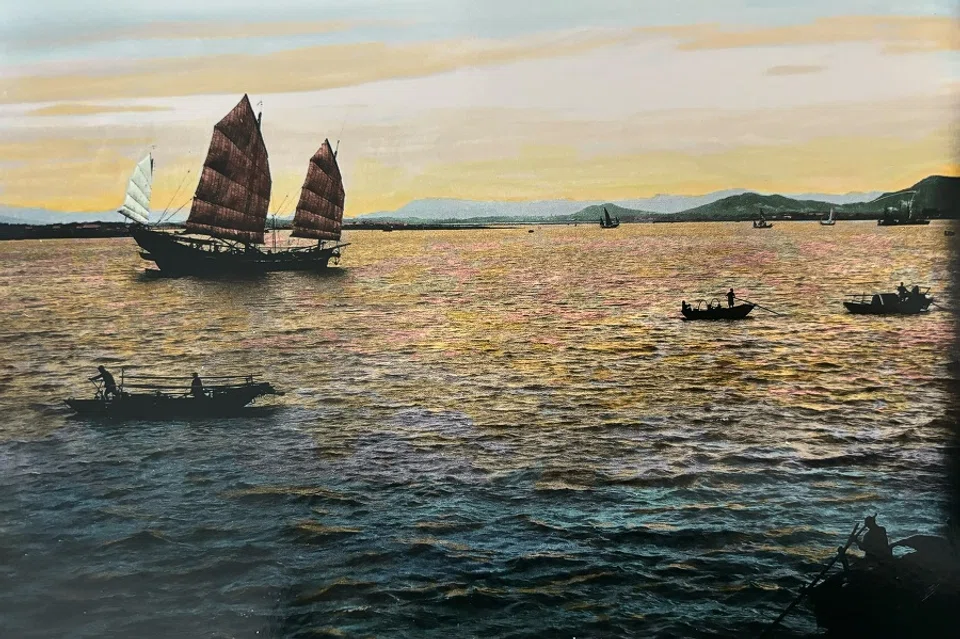
Hsu’s collection of photographs and illustrations captures this period of maritime vitality. Images of ancient harbors, shipbuilding techniques, and nautical charts reflect a time when Chinese merchants and envoys navigated vast distances with confidence. These visuals emphasize that seaborne trade was not peripheral but integral to imperial economic life.
Zheng He and the Symbolism of Seafaring
The Ming dynasty voyages led by Zheng He stand out as a defining chapter in China’s maritime history. His fleets demonstrated technological sophistication and diplomatic ambition, reaching regions across the Indian Ocean. While these expeditions were not driven by colonization, they projected power through presence and exchange.
Hsu highlights how these journeys have become enduring symbols of peaceful connectivity. In modern discourse, references to Zheng He often appear alongside discussions of contemporary maritime cooperation, reinforcing the idea that engagement with the sea is a familiar and historically validated path.
Parallels With the Belt and Road Era
China’s current efforts to expand port infrastructure, shipping corridors, and maritime partnerships echo these earlier patterns. The maritime component of the Belt and Road Initiative focuses on linking Asia, Africa, and Europe through modern sea lanes. Like the ancient maritime Silk Road, it seeks to reduce friction in trade while fostering economic interdependence.
Hsu notes that while the technologies and political contexts differ, the underlying logic remains similar. Control of routes, investment in ports, and cultural exchange are recurring themes across centuries. The initiative can therefore be seen as a modern expression of long standing strategic instincts rather than a sudden departure from tradition.
History as Narrative and Legitimacy
By presenting historical images alongside contemporary analysis, Hsu’s work illustrates how history is used to frame modern ambitions. The maritime Silk Road provides a narrative that emphasizes openness and exchange, helping position current policies within a broader civilizational story.
This historical framing does not offer a blueprint for today’s challenges, but it does explain why maritime connectivity resonates so strongly in Chinese discourse. It connects policy with identity, grounding global engagement in familiar historical experience.
In revisiting China’s maritime heyday, Hsu invites viewers to see the Belt and Road Initiative not only as an economic project but as part of a longer continuum. The sea, once again, serves as a bridge between past and present, linking memory with modern strategy.

