
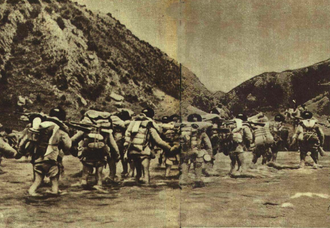
Qinghai at the Crossroads of Chinese History
Qinghai occupies a unique place in China’s modern history. Located on the northeastern edge of the Tibetan Plateau, the region has long been shaped by geography, ethnic diversity, and strategic importance. By the late nineteen forties, Qinghai stood at a crossroads as China emerged from decades of war and revolution. The process through which it was brought under the control of the newly founded People’s Republic of China was not a single dramatic battle, but a complex combination of military pressure, political negotiation, and gradual consolidation.
Understanding the conquest of Qinghai helps explain how the new Chinese state extended its authority across vast and diverse frontier regions during its formative years.
Qinghai Before the Communist Takeover
Before nineteen forty nine, Qinghai was governed by regional strongmen who exercised considerable autonomy from the central government. The most prominent among them was Ma Bufang, a powerful Muslim warlord aligned with the Nationalist government. His rule relied on a combination of military force, local alliances, and control over key towns such as Xining.
Qinghai’s population was ethnically diverse, including Han Chinese, Hui Muslims, Tibetans, and other groups. This diversity made governance complex and reinforced the region’s semi independent status. Infrastructure was limited, and the rugged terrain made large scale military operations difficult.
The Communist Strategy in the Northwest
As the Chinese Civil War drew to a close, the Chinese Communist Party focused on securing the northwest. Control of Qinghai was essential for stabilizing borders and linking the interior to Tibet and Xinjiang.
Rather than relying solely on force, the communists adopted a dual strategy. The People’s Liberation Army advanced into neighboring regions, applying military pressure while also offering terms of peaceful surrender to local leaders. This approach aimed to avoid prolonged fighting and minimize destruction in remote areas.
The Fall of Ma Bufang’s Rule
In nineteen forty nine, as communist forces achieved decisive victories elsewhere, Ma Bufang’s position weakened rapidly. Facing isolation and dwindling support from the Nationalist government, he ultimately fled abroad. His departure removed the main obstacle to communist control in Qinghai.
With resistance collapsing, the People’s Liberation Army entered Qinghai with limited fighting. Xining fell under communist control, marking a decisive turning point. The transition was swift compared to earlier campaigns in eastern China, reflecting both the strategic calculations of the new leadership and the exhaustion of local power structures.
Consolidation Through Administration and Reform
Military entry was only the first step. Following the takeover, communist authorities moved quickly to establish administrative control. Qinghai was formally incorporated into the new state structure, and local governments were reorganized under party leadership.
Land reform and political education campaigns followed, though they were implemented more cautiously than in some other regions due to ethnic sensitivities. The leadership emphasized unity and stability, seeking to integrate Qinghai without provoking widespread unrest.
Managing Ethnic and Religious Diversity
One of the central challenges in Qinghai was managing its diverse population. Hui Muslim communities, Tibetan areas, and Han settlers each had distinct social structures and traditions. The new government promoted policies of ethnic autonomy and religious tolerance, at least in principle, as part of its broader minority policy framework.
These efforts aimed to legitimize communist rule and reduce resistance. While tensions remained, the absence of large scale armed rebellion in Qinghai during this period contrasted with developments in some neighboring regions.
Strategic Importance of Qinghai
Qinghai’s integration had implications beyond provincial governance. The region became a critical link in securing China’s western frontiers. Roads and communication lines were expanded, laying the groundwork for later state projects and deeper integration into the national economy.
Control of Qinghai also facilitated subsequent political and military actions in Tibet, making the province an important staging area in the early years of the People’s Republic.
A Quiet but Significant Conquest
The conquest of Qinghai lacked the dramatic imagery of major battlefield victories, yet its significance was profound. It demonstrated the ability of the new Chinese state to absorb distant frontier regions through a combination of military strength and political pragmatism.
Qinghai’s transition from warlord rule to socialist administration marked the end of an era of fragmentation and the beginning of a new chapter. While challenges persisted, the integration of Qinghai played a crucial role in shaping the territorial and political foundations of modern China.

