
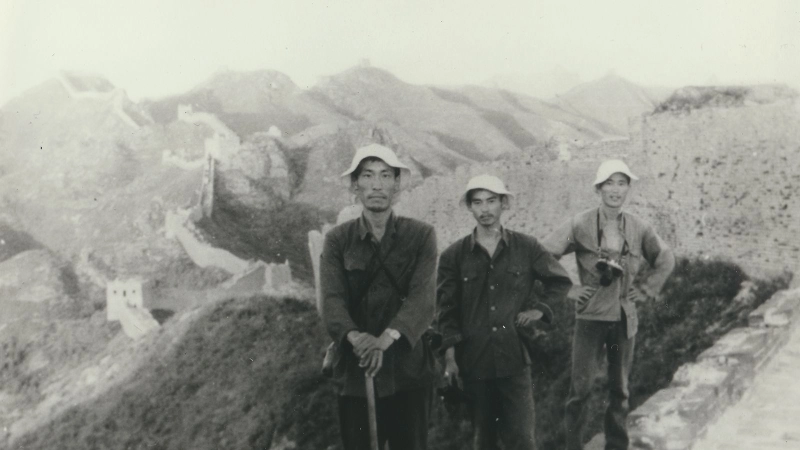
In May 1984, three young explorers set out on an ambitious and largely unprecedented journey to walk the full length of the Great Wall of China, transforming what began as a personal challenge into a nationally followed expedition. Their goal was not only to complete the physical trek but also to document the real condition of the wall across its vast and varied terrain. At a time when large sections of the structure remained under studied, the journey quickly gained attention for its scale and purpose, capturing public imagination and media coverage across China.
The expedition extended over 508 days, testing the endurance, resilience and determination of the team as they crossed mountains, deserts and remote rural regions. Their journey concluded on September 24, 1985, when they reached Jiayu Pass, a historic gateway marking the western end of the Great Wall. Throughout the trek, they maintained detailed records, noting structural conditions, environmental damage and preservation challenges. These observations provided rare ground level insight into the state of the wall, offering one of the earliest modern assessments of its condition across different provinces.
Dong Yaohui, one of the trekkers, later explained that the inspiration behind the journey was rooted in a deep appreciation for China’s cultural heritage and a desire to raise awareness about its preservation. The team faced numerous obstacles, including harsh weather, difficult terrain and limited access to supplies, especially in isolated areas. Despite these challenges, they remained committed to completing the journey and documenting their findings. Their story resonated widely, as it combined elements of adventure, national pride and a growing sense of responsibility toward historical conservation.
As the expedition progressed, it attracted widespread attention from the public and the media, turning the three explorers into recognized national figures. Their journey was followed closely, with updates highlighting both the challenges they faced and the significance of their mission. The extensive documentation they produced played a role in shaping discussions around heritage preservation, emphasizing the need to protect and restore sections of the Great Wall that were at risk of deterioration due to neglect and environmental factors.
The trek is now remembered as a pioneering effort that helped bring renewed focus to one of China’s most iconic historical landmarks. Beyond the physical achievement, it demonstrated how individual initiatives can influence national awareness and policy discussions. The journey also highlighted the vast scale and diversity of the Great Wall, reinforcing its importance not only as a symbol of China’s past but also as a heritage asset requiring continuous protection. Decades later, the expedition remains a powerful example of exploration, documentation and cultural commitment.

