
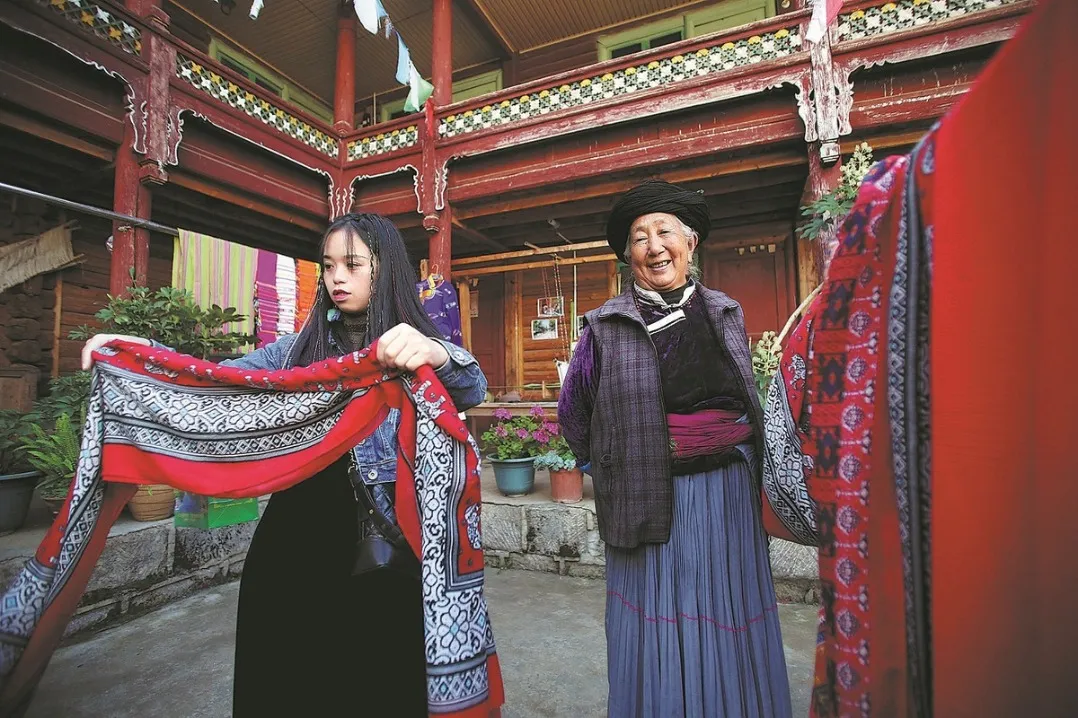
More than a decade ago, Shanghai based artist Shen Jianhua made a life changing decision to leave the city and settle in Huoshan Village near Erhai Lake in southwest China. What began as a personal search for artistic inspiration gradually evolved into a community movement that gave rural women a new way to tell their stories.
From city studios to village courtyards
When Shen arrived in the village, art was not part of daily life for most residents. Many had never held a paintbrush, and creative expression was seen as distant from farming, household work, and family responsibilities. Shen founded the Bai Folk Art Studio with a simple idea to teach villagers how to paint what they saw around them, without rules or academic techniques.
Lessons took place in modest rooms and open courtyards. Instead of copying traditional styles, the women were encouraged to paint scenes from their own lives. Markets, weddings, fieldwork, festivals, and family gatherings gradually filled the canvases.
Everyday life becomes visual history
The paintings that emerged were direct and deeply personal. Bright colors, flattened perspectives, and repeating patterns reflected Bai cultural traditions while capturing ordinary moments that often go undocumented. Children playing by the lake, women preparing meals, and seasonal farming routines became central themes.
Over time, these works formed a visual archive of rural life around Dali. They offered a record of customs, landscapes, and social rhythms at a moment when many villages across China are changing rapidly.
Art as income and independence
As interest in the paintings grew, the women began selling their work through exhibitions and cultural platforms. For many, this marked their first independent source of income. The financial benefit was modest, but meaningful, contributing to household stability and personal confidence.
More importantly, painting gave the women a sense of visibility. Their stories, once limited to the village, started reaching audiences in cities and beyond. Art became both livelihood and language.
A collective voice shaped by heritage
While each painting reflects an individual experience, together they form a collective narrative rooted in Bai heritage. Traditional clothing, rituals, and architectural details appear throughout the artwork, preserving cultural identity through personal memory rather than formal documentation.
Shen describes his role not as a teacher imposing style, but as a facilitator helping people recognize the value of their own lives as artistic subjects.
Beyond the village
Today, the Bai Folk Art Studio stands as an example of how grassroots art can empower communities. The painters are not professionals by conventional standards, yet their work resonates precisely because it is authentic.
Their canvases remind viewers that culture does not only live in museums. It also exists in kitchens, fields, and lakeside villages, carried forward by those who live it every day.

