
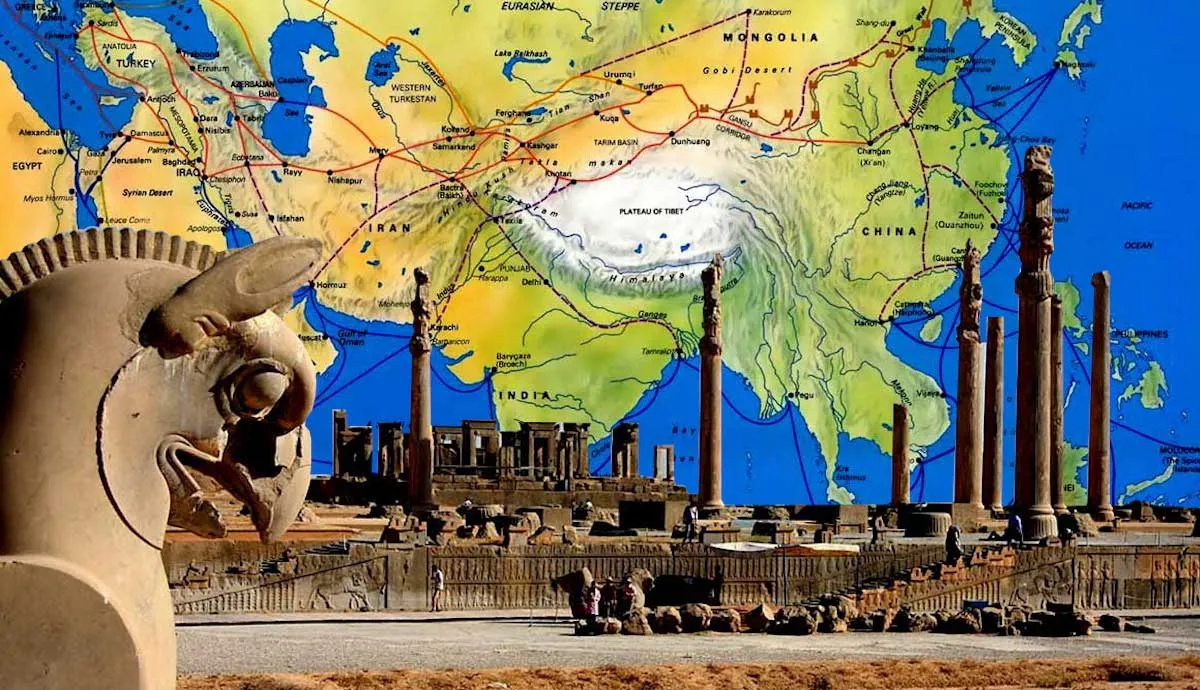
The Silk Road is often described as the world’s most influential trade network, but its impact on early Chinese society goes far deeper than commerce alone. Its origins date back to the Han Dynasty, when China began exchanging goods and ideas with faraway lands through long and dangerous routes crossing Central Asia. Although silk was the most famous product, the network carried far more than textiles. It became a channel through which cultures met, languages mixed, and new technologies spread. Understanding the Silk Road helps explain how China evolved from a largely isolated empire into a key player in early global interactions.
Cultural exchange that transformed daily life
One of the most remarkable effects of Silk Road exchanges was the cultural transformation within Chinese society. Merchants, travelers, monks and emissaries brought with them new customs, foods, instruments and beliefs. Spices, glassware, carpets and rare materials arrived in China, influencing artistic styles and luxury habits. Foreign musicians and dancers were welcomed at imperial courts, creating new forms of entertainment. Even fashion changed as people adopted clothing inspired by distant cultures. These exchanges enriched daily life and gave China exposure to diverse global influences long before the modern age.
Spread of Buddhism along the trade routes
Perhaps the most significant cultural shift triggered by the Silk Road was the spread of Buddhism into China. Monks traveled from India through Central Asia carrying scriptures and teaching ideas that would eventually shape Chinese philosophy, art and literature. The long journey resulted in the creation of cave temples, monasteries and libraries across regions such as Dunhuang and Luoyang. Buddhist sculptures blended Chinese aesthetics with foreign techniques, creating an artistic legacy that continues to inspire modern viewers. Through the Silk Road, Buddhism transformed from a regional Indian belief into a major spiritual force in East Asia.
Technological innovation and scientific knowledge
China not only imported cultural and religious influences but also shared its own advancements. Technologies such as papermaking, silk reeling and iron casting spread to distant regions through merchant interactions. In return, China gained access to new agricultural crops, medical knowledge and astronomical observations from Central Asian cultures. These scientific exchanges helped improve farming productivity, health practices and mathematical understanding. This mutual flow of knowledge demonstrated that the Silk Road was not just a commercial route but a corridor for intellectual development across continents.
Growth of cosmopolitan cities and regional prosperity
The Silk Road helped transform inland regions of China into thriving urban centers. Cities like Chang’an and Dunhuang became hubs of trade, attracting merchants from Persia, Arabia, India and Central Asia. These cities hosted bustling markets, multicultural communities and caravans carrying rare goods. Local economies grew as artisans, traders and officials benefitted from increased activity. Inns, warehouses and administrative stations developed along the route to support the constant flow of travelers. These urban centers represented some of the earliest examples of multicultural cities in human history, where people from different backgrounds lived and worked together.
Diplomatic networks shaped by trade
The Silk Road also played an important role in diplomacy. Trade created opportunities for China to strengthen its relationships with neighboring regions. Envoys traveled with caravans to establish agreements, resolve disputes and expand alliances. Luxury items such as silk and porcelain became symbols of status and diplomatic goodwill. This network of exchanges helped maintain stability across large territories and promoted peaceful interactions. The Silk Road demonstrated that commerce and diplomacy could work together to create long lasting regional partnerships.
Why the Silk Road’s legacy still matters
The Silk Road remains an important part of China’s historical identity because it highlights a period when the country looked outward and embraced global connections. The exchanges that occurred along these routes influenced Chinese culture, religion, technology and society in lasting ways. Today, museums, archaeological sites and ancient manuscripts continue to reveal new information about how people lived, traveled and interacted. Rediscovering the Silk Road allows modern readers to appreciate the early foundations of global exchange and understand how ancient cooperation shaped the world we know today. Its legacy reminds us that cultural openness and shared knowledge have always been essential to human progress.

