
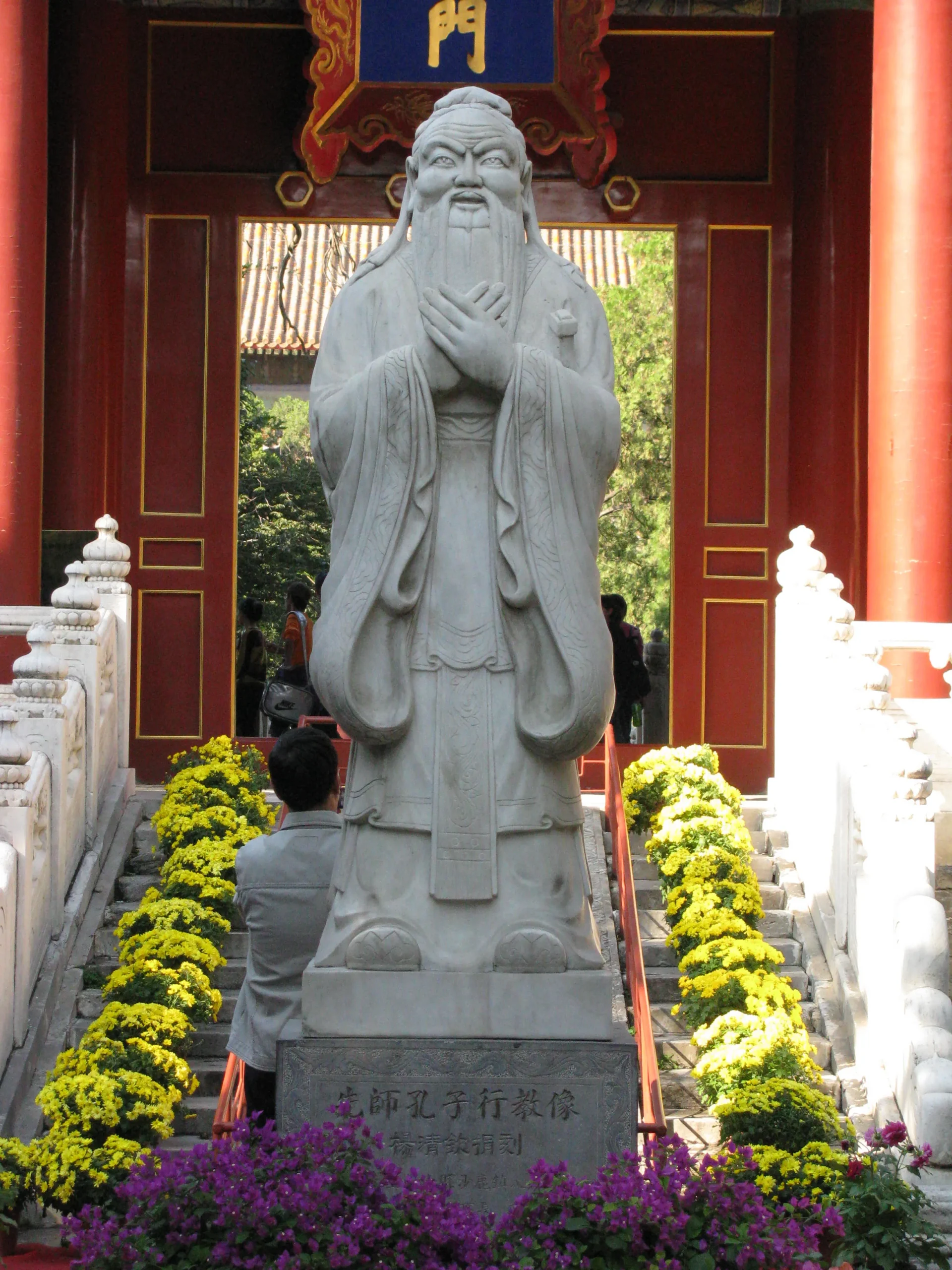
Philosophy as a foundation of political order
In imperial China, power was not sustained by force alone. Political authority was deeply shaped by Confucian philosophy, a system of thought that emphasized morality hierarchy and social harmony. Rather than viewing governance purely as command and control, Confucianism framed rule as a moral responsibility. This approach influenced how emperors governed officials served and society understood its obligations to the state.
Confucius and the moral vision of leadership
The ideas of Confucius laid the groundwork for this political philosophy. Confucius argued that good governance began with personal virtue. A ruler who acted with benevolence righteousness and restraint would inspire loyalty without coercion. Power was legitimate when it was ethical. This belief positioned the emperor as a moral exemplar whose behavior set the tone for the entire realm.
Hierarchy and harmony in social structure
Confucianism emphasized clearly defined relationships between ruler and subject parent and child elder and younger. These relationships were hierarchical but reciprocal. Authority came with responsibility while obedience was balanced by moral expectation. In political life this meant officials were expected to advise rulers honestly and rulers were expected to listen. Social harmony was achieved not through equality but through each person fulfilling their role with integrity.
Bureaucracy shaped by ethical standards
Confucian values were institutionalized through the imperial examination system. Scholar officials were selected based on their mastery of Confucian texts and moral reasoning rather than noble birth. This system created a governing elite bound by shared philosophy and ethical language. Bureaucracy became a moral enterprise as much as an administrative one. Competence and character were seen as inseparable qualities in public service.
Confucianism as a tool of stability
For centuries Confucianism helped stabilize imperial rule by providing a shared framework for authority and obedience. It discouraged rebellion by emphasizing order and continuity while also placing limits on arbitrary power. A ruler who governed unjustly risked losing moral legitimacy even if legal authority remained intact. This balance helped maintain long periods of stability across successive dynasties.
Enduring influence beyond empire
Although imperial rule has ended Confucian ideas continue to shape Chinese political culture. Concepts such as merit responsibility and social harmony remain influential in how leadership and governance are understood. The legacy of Confucianism demonstrates how philosophy can function as a form of power shaping institutions behavior and political expectations across centuries.

