
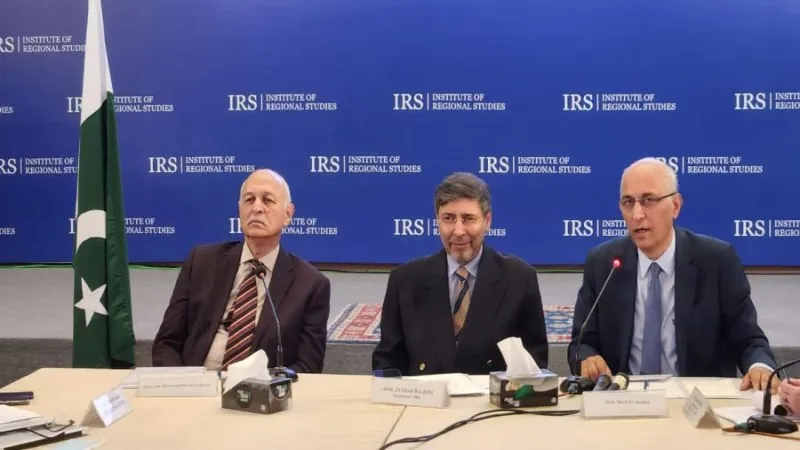
Pakistan and China share increasingly aligned views on regional security challenges, according to participants at a policy roundtable held in Islamabad that examined the evolving geopolitical environment across South Asia and the Middle East. The discussion brought together senior diplomats, policymakers and analysts to explore how both countries interpret emerging security risks and opportunities for cooperation. Speakers emphasized that Islamabad and Beijing continue to advocate diplomatic engagement and regional dialogue at a time when tensions across several regions have created uncertainty for global stability, economic development and international cooperation.
The event focused on the growing complexity of regional security dynamics, particularly the implications of the ongoing confrontation involving Iran, the United States and Israel. Participants warned that escalating tensions in West Asia could trigger broader geopolitical and economic consequences, including disruptions to global energy markets and international trade routes. Analysts noted that developments in the Middle East are closely linked to political and security dynamics across South Asia and Central Asia, meaning instability in one region can quickly affect the strategic environment in neighboring areas.
Speakers also addressed security concerns closer to Pakistan’s borders, including tensions between Pakistan and Afghanistan and the resurgence of militant activity in parts of the region. Diplomatic representatives highlighted Pakistan’s efforts to engage Kabul through bilateral and regional channels in order to reduce tensions and strengthen cooperation against cross border threats. They emphasized that continued dialogue and diplomatic engagement remain essential for managing complex relationships and maintaining stability in the region.
Participants at the discussion also highlighted the long standing strategic partnership between Pakistan and China, describing it as a major factor supporting regional balance and cooperation. Analysts said the relationship between the two countries extends beyond economic collaboration and includes important security and diplomatic coordination. According to speakers at the forum, both governments consistently support peaceful conflict resolution and encourage multilateral approaches to addressing regional disputes through international institutions and diplomatic channels.
Another key theme of the discussion was the potential global impact of escalating conflicts in different parts of the world. Experts warned that geopolitical tensions can quickly influence economic stability by affecting energy supply chains, transportation routes and financial markets. The participants stressed that economic development and regional security are closely interconnected, making stability an essential condition for long term growth and prosperity across Asia.
Diplomats and policy analysts also discussed the importance of international law and the role of global institutions in addressing emerging conflicts. They emphasized that maintaining respect for sovereignty and territorial integrity remains critical for preventing further escalation of disputes. Speakers noted that both Pakistan and China have repeatedly supported calls for dialogue, ceasefires and diplomatic negotiations as the most effective path toward resolving regional tensions.
Observers attending the forum noted that the conversation reflected a broader effort by policymakers in Pakistan and China to strengthen cooperation in addressing common challenges. With geopolitical tensions affecting multiple regions simultaneously, analysts say partnerships focused on diplomacy and economic collaboration will play an increasingly important role in shaping the future security landscape across Asia.

