
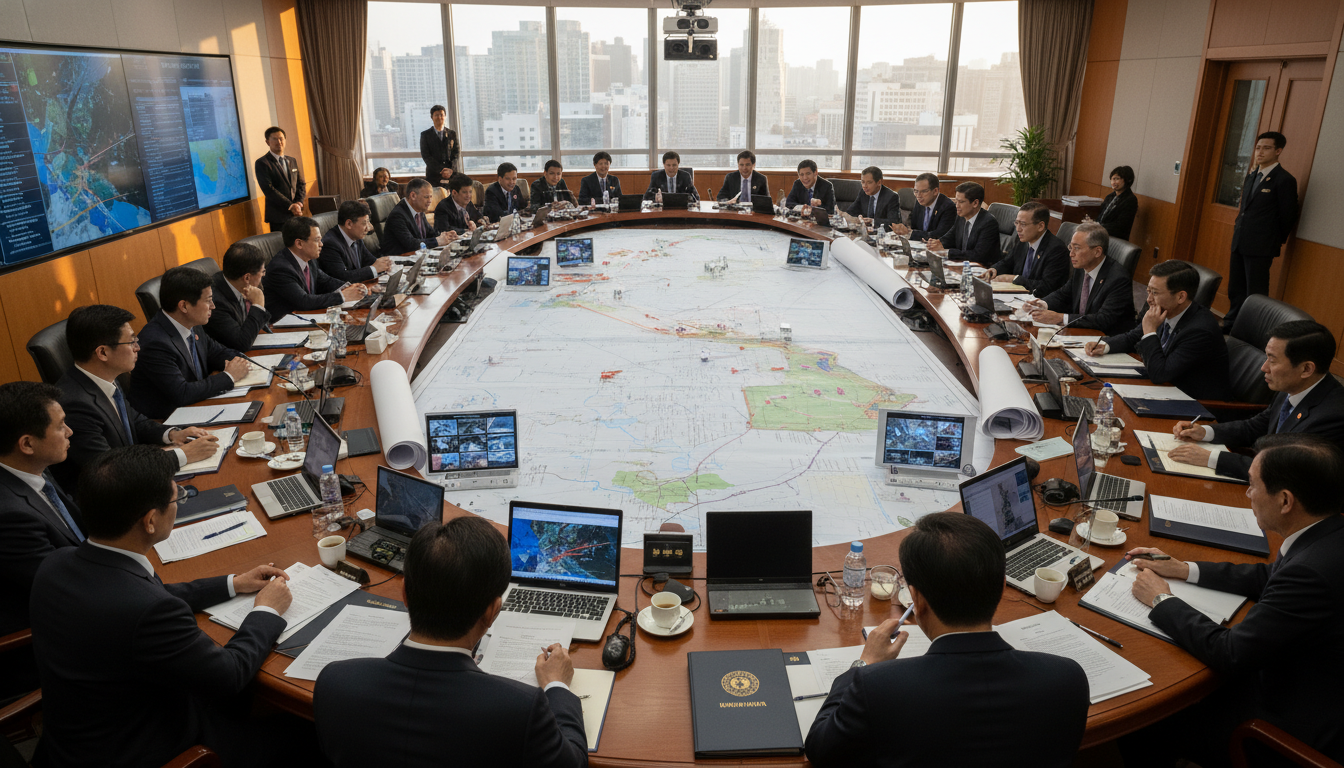
Ongoing Diplomatic Communication
Islamabad is keeping its crisis messaging tightly synchronized with Beijing as tension around the US-Iran conflict keeps markets and border regions on edge. Deputy Prime Minister Ishaq Dar said Pakistan had been in “constant touch” with China, as reported by Dawn, framing the contact as routine coordination rather than a one off intervention. In the same policy rhythm, China-Pakistan relations are being used to align public messaging and diplomatic prioritisation without inflaming rhetoric. Today, officials are treating hotline style calls, embassy contacts, and multilateral sideline exchanges as the Live layer of crisis management. An Update cycle is also visible in how Pakistan briefs partners on risks to shipping, energy flows, and diaspora safety.
Historical Context of Sino-Pakistani Alliance
The current tempo builds on long standing habits of coordination that Pakistani and Chinese diplomats have institutionalised across security and economic portfolios. A separate Update from the news cycle on Pakistan China engagement, including China clarifies FM remarks to Dar on Iran call, shows how quickly both sides address wording disputes to avoid misinterpretation. Government statements have repeatedly framed the partnership as resilient under pressure, and Dar’s remarks to Dawn reflect that continuity in a moment of heightened alert. Today, this approach is visible in how spokespeople keep language calibrated for multiple audiences while reinforcing diplomatic ties. The Live sensitivity is less about dramatic announcements and more about preventing mixed signals across capitals and markets.
Impact of US-Iran Conflict
Officials are focused on spillover rather than slogans, because disruptions from the US-Iran conflict can ripple into fuel prices, maritime insurance, and the security of overseas workers. Pakistan’s messaging emphasises de-escalation and protection of regional stability, while Beijing has publicly urged restraint in multiple Middle East crises through its foreign ministry briefings. A related regional snapshot, Liaoning Carrier Drills Raise Japan Tension Levels, underscores how simultaneous pressure points can stretch diplomatic bandwidth even when theatres differ. Today, Pakistan’s diplomats are trying to keep Live coordination with China focused on practical risk mapping, and each Update is weighed for how it could affect Gulf corridors, remittances, and investor confidence.
Strategies for Regional Stability
Islamabad’s working objective is to lower temperature while maintaining readiness, and it is using a mix of bilateral diplomacy and multilateral engagement to do it. The approach relies on disciplined diplomatic ties, quiet coordination with partners, and consistent briefings that avoid escalation cues. Within that frame, China-Pakistan relations provide a channel for aligning positions on dialogue and safe navigation, especially when regional security anxieties rise in parallel with other flashpoints. Pakistan’s officials are also monitoring maritime risk narratives and commercial exposure, and they are timing statements to avoid amplifying rumours. Today, the preferred method is a Live, verification first posture, where each Update is tied to confirmed official readouts rather than speculative commentary.
Future Prospects of Bilateral Cooperation
Near term cooperation is likely to prioritise crisis communications and economic risk buffers, with ministries keeping contact routines active while tensions remain fluid. Both sides have incentives to keep trade corridors predictable and to avoid language that could harden positions, and that calculus is reinforced by Pakistan’s dependence on external energy stability. While Pakistan’s leaders stress diplomacy, they are also signalling that coordination with China will continue through established political and technical channels, including exchanges routed through Islamabad and Beijing embassies. Today, the emphasis is on maintaining consistent engagement that supports regional security without creating new fault lines, and keeping Live situational awareness among embassies and security desks. Each Update is expected to be framed around de-escalation, protection of nationals abroad, and continuity of bilateral workstreams.

