
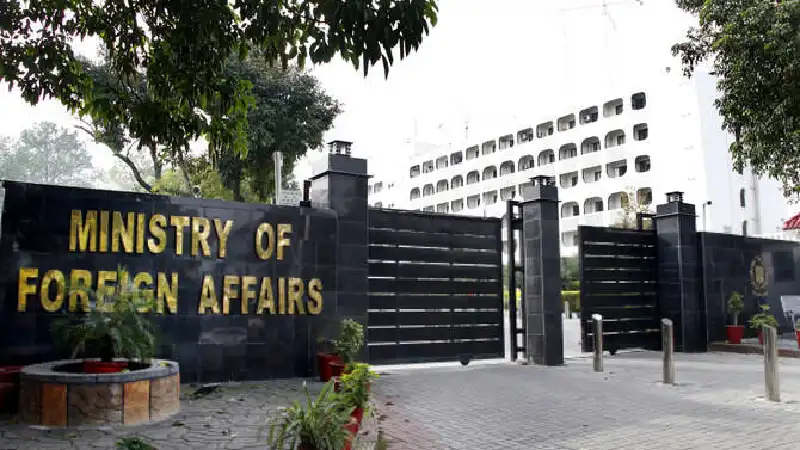
Pakistan’s foreign ministry has rejected reports suggesting that Islamabad declined China’s proposal to facilitate dialogue with Afghanistan following recent cross border clashes. Officials said Pakistan maintains close communication with Beijing and values its partnership on regional issues. The clarification came after media speculation indicated that Pakistan had turned down Chinese efforts to encourage talks between Islamabad and Kabul. According to the foreign ministry the reports were inaccurate and misrepresented ongoing diplomatic engagement between the two countries. Authorities emphasized that Pakistan continues to discuss regional developments with China and remains committed to maintaining stability along the Afghanistan border.
The tensions between Pakistan and Afghanistan intensified after Afghan forces targeted Pakistani border posts on February 26. The incident followed earlier air strikes carried out by Pakistan inside Afghan territory against locations that Islamabad said were being used by militant groups including the Pakistani Taliban and Daesh. The strikes triggered a series of confrontations along the border that raised concerns about the possibility of a broader escalation. The situation has drawn attention from regional actors including China which has been monitoring developments closely due to its economic and strategic interests in both countries.
China has played an increasingly active diplomatic role in the region and recently sent its special representative for Afghanistan to engage with both Islamabad and Kabul. Chinese officials said their envoy spent about a week conducting consultations aimed at encouraging both sides to reduce tensions and work toward a ceasefire. Beijing has repeatedly stressed that disputes between neighboring countries should be resolved through dialogue and consultation rather than confrontation. The Chinese government has also called on both Pakistan and Afghanistan to prevent further violence and return to diplomatic discussions as soon as possible.
Pakistan’s foreign ministry spokesperson Tahir Andrabi dismissed claims that Islamabad had rejected China’s efforts. He said Pakistan and China remain trusted partners and maintain regular communication on matters of mutual concern. According to the spokesperson recent discussions between Pakistan’s Deputy Prime Minister and Foreign Minister Ishaq Dar and Chinese Foreign Minister Wang Yi covered a wide range of regional issues including developments related to Afghanistan. Andrabi also confirmed that during the visit of China’s special representative Ambassador Yue Xiaoyong both sides held consultations on regional peace and stability.
China’s growing involvement in regional diplomacy reflects its deep economic and strategic relationship with Pakistan. Over the past decade Beijing has invested tens of billions of dollars in infrastructure and energy projects across Pakistan as part of the Belt and Road Initiative. These projects include major transportation corridors, power plants and industrial developments that are considered central to Pakistan’s economic growth strategy. Analysts say Beijing also maintains working relations with the Taliban administration in Afghanistan which returned to power in Kabul in 2021 after the withdrawal of foreign forces.
Regional analysts note that stability between Pakistan and Afghanistan is important not only for security but also for economic connectivity across South and Central Asia. Cross border tensions have historically complicated trade routes and development projects linking the region. China’s interest in mediating discussions reflects its broader objective of maintaining stability in areas connected to its Belt and Road infrastructure network. Diplomatic engagement between Islamabad and Kabul is therefore seen as important for preventing disruptions that could affect regional development and security.
Chinese foreign ministry spokesperson Lin Jian said Afghanistan and Pakistan are neighboring countries whose disputes must be resolved through dialogue. He stressed that preventing further escalation should be the immediate priority for both governments. According to Chinese officials encouraging both sides to return to negotiations remains a key diplomatic objective. Beijing has indicated that it will continue supporting efforts aimed at reducing tensions and promoting peaceful communication between the two countries.
Pakistan’s government says consultations with China and other regional partners will continue as diplomatic efforts move forward. Officials in Islamabad maintain that dialogue and cooperation remain essential for addressing cross border security concerns. While tensions along the border have raised concerns in recent weeks, diplomatic channels between Pakistan, Afghanistan and regional stakeholders remain active as efforts continue to prevent further escalation.

