
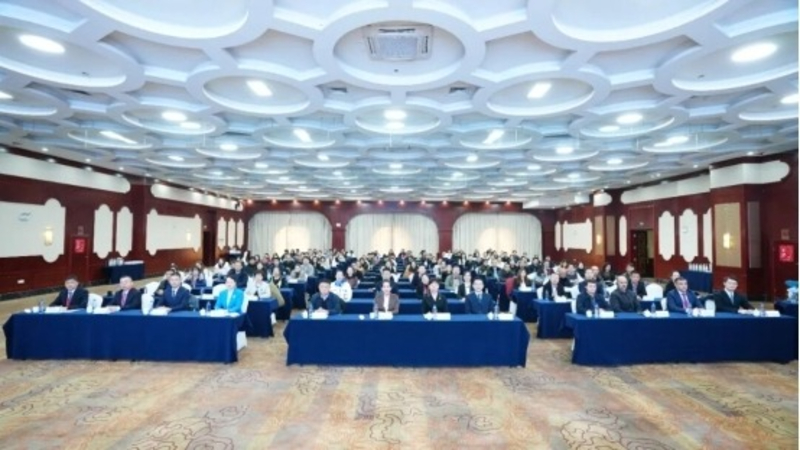
Pakistani medical professionals have strengthened their clinical skills and primary healthcare expertise after completing a specialized general practice training program in China’s Xinjiang region. The third session of the Belt and Road International General Practitioners Training Course recently concluded at the First People’s Hospital of Kashgar, marking another step forward in cross border medical cooperation between Pakistan and China.
The program brought together doctors from Pakistan and Tajikistan alongside ninety grassroots general practitioners from Kashgar’s local medical system. The training focused on strengthening the foundations of general practice while encouraging the exchange of practical knowledge between participating countries. Medical professionals took part in a structured learning environment designed to address real world challenges faced by primary healthcare providers.
The course was delivered through a combination of expert lectures case based discussions and hands on clinical practice. Participants received training in core areas of general practice and clinical decision making with particular attention to integrated medical and preventive approaches for managing chronic diseases. Sessions also covered public health priorities including the prevention and control of zoonotic infectious diseases which remain a concern across many regions.
Another important component of the training focused on coordination between primary care providers and specialized hospitals. Doctors explored referral systems early diagnosis methods and first aid skills relevant to frontline medical services. Emergency response planning and health education strategies were also discussed to help practitioners better serve communities during public health crises and routine care settings.
The training program followed the principle of making medical expertise practical and adaptable across different healthcare environments. Chinese instructors emphasized models that are learnable applicable and replicable so that participants could implement the knowledge in their own healthcare systems. This approach resonated strongly with Pakistani doctors who often work in settings with limited medical resources.
During the sessions Pakistani participants shared their experiences in delivering primary healthcare under constrained conditions. These exchanges allowed for meaningful dialogue on cost effective treatment approaches patient management strategies and community based care models. Trainers and participants noted that such discussions enriched the learning process and provided valuable insights into diverse healthcare realities.
The Kashgar hospital has hosted multiple international training sessions since 2024. The first session held in August 2024 brought together medical professionals from Kyrgyzstan and Kashgar for customized general practice training. A second session in May 2025 was jointly organized with a leading medical institution from southern China and included doctors from Gilgit Baltistan along with practitioners from Kashgar and other Chinese regions.
Experts involved in the latest session highlighted China’s prevention treatment and management primary healthcare model as a central learning outcome. This model emphasizes early intervention continuous care and community level engagement. Participants agreed that the program has laid a solid foundation for deeper medical cooperation between Pakistan and China with a shared focus on strengthening primary healthcare systems and improving patient outcomes.

