
Rethinking a Familiar National Story
The story of Singapore’s rise from hardship to global prosperity is often told through statistics, policies, and skyline images. While these narratives highlight remarkable economic growth, they frequently overlook the lived experiences of those who endured poverty during the island’s most difficult decades. A new historical picture book challenges this imbalance by placing marginalized communities at the center of Singapore’s transformation.
Compiled by historical photo collector Hsu Chung-mao, the book revisits a century of social change through images and stories that reflect daily survival rather than national triumph. By shifting the lens away from elites and institutions, it offers a more grounded understanding of how ordinary people experienced nation building.
Life at the Margins of a Growing City
In the early and mid twentieth century, many residents of Singapore lived in overcrowded settlements, makeshift housing, and kampongs vulnerable to disease, fire, and unemployment. These communities formed the invisible foundation of a society still finding its identity. Their labor sustained ports, factories, and markets long before prosperity reached the broader population.
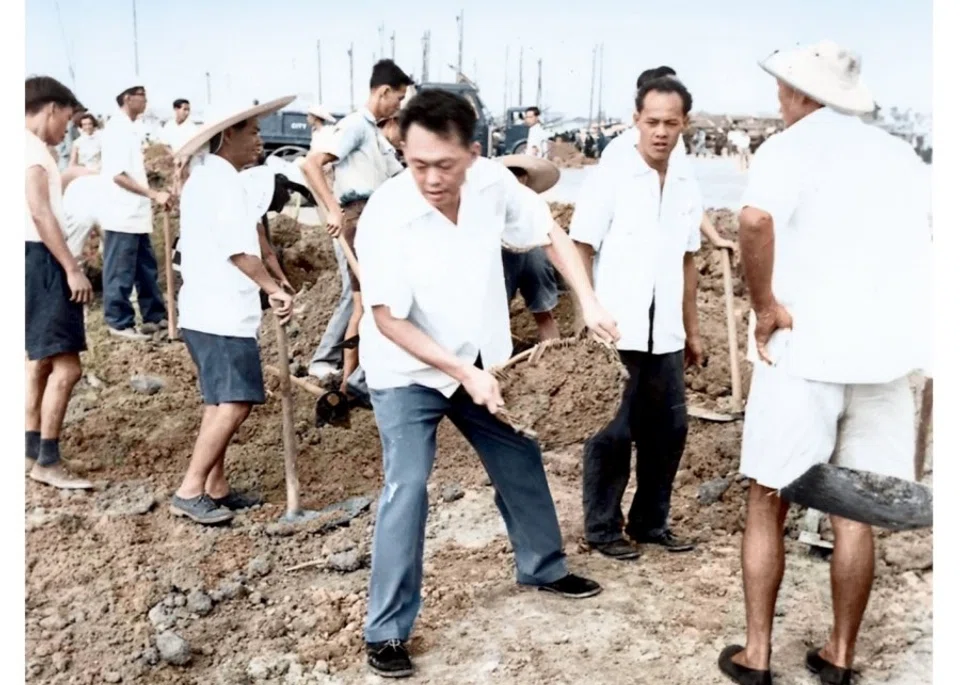
Hsu’s work documents these environments with striking clarity. The photographs capture not only hardship but also resilience. Children play in narrow alleys, families gather in modest homes, and neighbors support one another despite limited resources. These images reveal that poverty did not erase dignity or social bonds.
Nation Building From the Bottom Up
Rather than framing development as a top down process, the book emphasizes the role of social and spiritual forces among the poor. Mutual aid, shared rituals, and informal networks provided stability when formal institutions were weak or absent. According to Hsu, these collective practices were essential to social cohesion during periods of uncertainty.
This perspective complicates the conventional narrative of progress driven solely by policy and leadership. It suggests that grassroots endurance and cooperation helped prepare society for later reforms. The poor were not passive recipients of change but active participants in shaping social norms and community values.
The Power of Visual Memory
Historical photographs play a critical role in restoring forgotten voices. Unlike written records, images preserve moments that might otherwise disappear from public memory. They invite viewers to pause and reflect on the human cost of transformation, encouraging empathy rather than abstraction.
Hsu’s collection also challenges nostalgia. While some images evoke warmth and familiarity, they do not romanticize hardship. Instead, they confront viewers with the realities of scarcity while highlighting the emotional strength that sustained families through difficult times.
Why These Stories Matter Today
As Singapore continues to project an image of success and efficiency, revisiting the experiences of its poorest citizens offers valuable perspective. It reminds younger generations that prosperity was neither inevitable nor evenly distributed. Understanding this history can inform contemporary discussions about inequality, housing, and social mobility.
By centering the poor in the story of national development, this work expands the meaning of progress. It reframes Singapore’s transformation as not only an economic achievement but also a social journey shaped by endurance, solidarity, and shared hope.

