
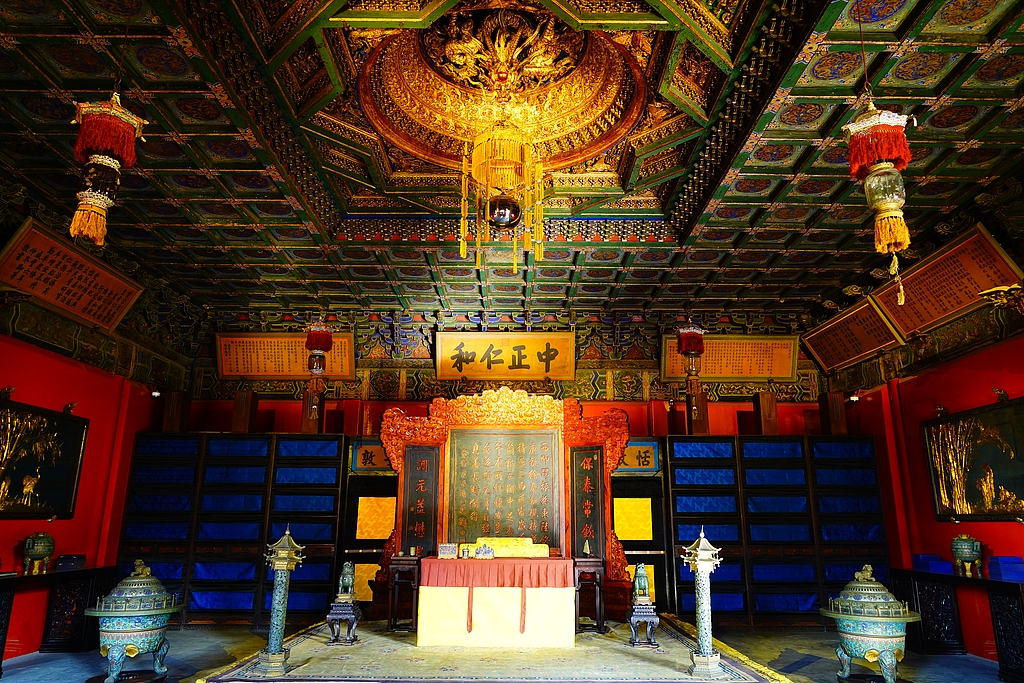
After nearly ten years of detailed research and conservation work, one of the most historically significant spaces inside Beijing’s Palace Museum has reopened to the public. The Hall of Mental Cultivation, a site deeply connected to imperial power and daily governance, is once again accessible following a major restoration effort that combined traditional craftsmanship with modern conservation science.
The reopening marks a significant moment for cultural heritage preservation in China, offering visitors a rare opportunity to experience a space that shaped centuries of imperial decision making.
A Hall Rooted in Imperial History
The Hall of Mental Cultivation was first constructed in 1537 during the Ming Dynasty. While initially serving ceremonial and residential purposes, its importance grew substantially under the Qing Dynasty. From the reign of Emperor Yongzheng onward, the hall became the primary residence of Qing emperors and the center of their daily administrative life.
Unlike the grand ceremonial halls used for state rituals, this space was more intimate. It was here that emperors slept, studied, received officials, and made critical decisions affecting the empire. As such, the hall provides a rare window into the personal routines and governing style of China’s rulers.
Governance and Private Life Intertwined
From the eighteenth century onward, the Hall of Mental Cultivation functioned as both a living space and a political command center. Emperors conducted meetings, reviewed memorials, and issued directives within its walls. This blending of private life and governance reflected a system in which power was highly centralized and deeply personal.
The hall also witnessed the influence of empresses and court officials, particularly during periods when emperors ruled from behind the scenes. As a result, the space carries layers of political, social, and cultural meaning that extend far beyond its architectural form.
A Decade of Careful Restoration
The restoration project was the result of nearly ten years of meticulous work led by experts at the Palace Museum. Conservation teams conducted extensive historical research to understand the original layout, materials, and decorative elements before beginning physical restoration.
Traditional construction techniques were used wherever possible, including woodwork, lacquer finishes, and painted decoration. At the same time, modern scientific methods helped assess structural stability and preserve fragile materials. The goal was not to modernize the hall, but to return it as closely as possible to its historical appearance while ensuring long term protection.
Preserving Authenticity Over Reconstruction
Museum officials emphasized that the restoration prioritized authenticity rather than visual perfection. Signs of age and use were carefully preserved to reflect the hall’s long history. This approach allows visitors to engage with the space as a living historical environment rather than a recreated exhibit.
By maintaining original materials and craftsmanship, the project also contributes to the transmission of traditional building knowledge, ensuring that skills developed over centuries are not lost.
A New Experience for Visitors
With the reopening, visitors can now explore areas that were previously closed to the public. The layout helps illustrate how the space functioned in daily imperial life, from sleeping quarters to administrative rooms. Interpretive displays provide context without overwhelming the original architecture.
The hall’s reopening enriches the visitor experience at the Forbidden City, offering a deeper understanding of how imperial power operated behind closed doors. It also complements more familiar ceremonial spaces by highlighting the human dimension of rulership.
Cultural Heritage in a Modern Context
The restoration reflects broader efforts in China to balance public access with heritage protection. As visitor numbers continue to grow, museums face the challenge of preserving fragile sites while making them meaningful to contemporary audiences.
By reopening the Hall of Mental Cultivation after careful preparation, the Palace Museum demonstrates an approach that values patience, research, and respect for historical integrity.
A Living Link to China’s Past
The Hall of Mental Cultivation stands as one of the most symbolically rich spaces within the Forbidden City. Its reopening allows the public to reconnect with a chapter of history where governance, personal life, and cultural tradition converged.
For visitors, the restored hall offers more than architectural beauty. It provides insight into how emperors lived, ruled, and shaped the course of Chinese history from a space that was both private refuge and political nerve center.

