
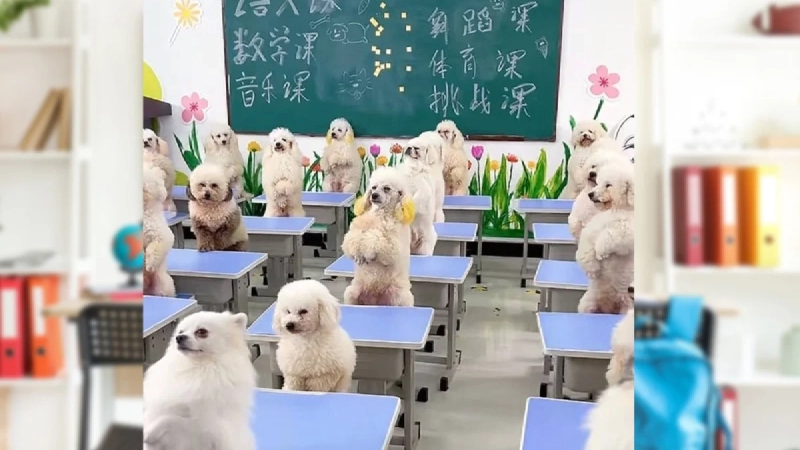
A young woman in Shanghai has drawn widespread attention after spending around $1,700 to enroll her six month old dog in a specialized pet kindergarten, highlighting the rapid growth of China’s pet care industry. The program includes personality testing, behavior training, daily care and even transport services, reflecting how pet ownership in urban China is increasingly linked to premium services. The case has sparked debate online about changing lifestyles, rising disposable incomes and the growing emotional bond between owners and their pets in modern Chinese society.
The owner, who identified herself as Taotao, said her demanding work schedule left her with little time to properly care for her Samoyed, prompting her to seek professional assistance. The monthly package covers a range of services, including structured training sessions, social interaction with other animals and regular monitoring through online platforms. The facility also offers a dedicated pickup and drop off service, often referred to as a “school bus” for pets, allowing owners to maintain convenience while ensuring their animals receive continuous care and attention throughout the day.
Pet care providers say demand for such services has been rising steadily, with waiting periods extending during peak seasons. Facilities in major cities like Shanghai offer varying levels of service, ranging from basic daycare to high end customized programs designed to address behavioral issues and improve overall well being. These programs often include health monitoring, grooming and socialization activities, helping pets adapt better to urban living environments while also giving owners peace of mind.
Industry data shows that China’s urban pet economy has grown rapidly in recent years, reaching hundreds of billions in market value and expected to expand further. Analysts attribute this growth to shifting demographics, including smaller households and a rising number of young professionals who view pets as companions. As disposable incomes increase, spending on pet related services has diversified, covering areas such as training, healthcare, nutrition and lifestyle products, creating a dynamic and competitive market.
The trend has generated mixed reactions online, with some users expressing surprise at the high costs while others see it as a reflection of evolving social priorities. Comments on social media highlight the contrast between traditional views on spending and modern consumer behavior, where pets are often treated as family members. Despite differing opinions, the popularity of such services indicates a broader cultural shift toward enhanced pet care and lifestyle integration.
Experts note that the expansion of premium pet services represents more than just a niche market, pointing to wider economic and social changes in China’s urban centers. As the industry continues to develop, new business models and services are expected to emerge, further transforming how pet ownership is managed. The growing demand for convenience, personalization and quality care is likely to drive continued innovation, making the pet economy an increasingly important segment of China’s consumer landscape.


One Response
Good