
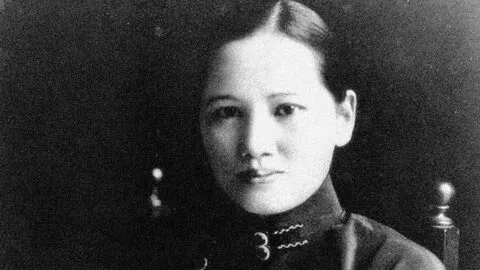
A life bridging revolution, philanthropy, and cultural diplomacy.
Roots in a Revolutionary Family
Soong Ching-ling was born in 1893 into the influential Soong family, whose children became central figures in twentieth century Chinese history. Educated in the United States, she returned to China fluent in English and committed to reform. Her marriage to Sun Yat-sen, the founding father of the Republic of China, placed her at the heart of revolutionary politics. After Sun’s death in 1925, she preserved his legacy while navigating factional battles that reshaped the nation.
Her sisters embodied different political choices: Soong Ai-ling allied with finance, Soong Mei-ling became Madame Chiang Kai-shek. Ching-ling charted her own path, combining loyalty to Sun’s ideals with a vision of social justice rooted in care for ordinary people.
Between Politics and Principle
When civil war split China between Nationalists and Communists, Soong Ching-ling refused to follow Chiang Kai-shek’s authoritarian drift. She criticized corruption and the neglect of social welfare, aligning herself gradually with the Communist movement without formally joining until after 1949. This independence made her both respected and distrusted. She carried revolutionary legitimacy as Sun’s widow, yet insisted on keeping her voice distinct from party lines.
Her moral authority often came from standing apart. In speeches, she invoked not only political slogans but also universal values of compassion, justice, and dignity.
Champion of Children and Health
Soong Ching-ling devoted much of her career to philanthropy. She founded the China Welfare Institute in Shanghai, which focused on maternal health, children’s hospitals, and educational programs. She believed that caring for children was the surest investment in the future of the nation.
Her work extended beyond charity to institution building. She helped design modern pediatric care, promoted libraries and cultural centers, and supported women’s participation in public life. In these efforts, she was not an ornamental figurehead but a hands-on organizer who combined fundraising, international networking, and personal advocacy.
International Voice of China
Fluent in English and familiar with Western culture, Soong Ching-ling served as a bridge between China and the world. She toured abroad, meeting leaders and journalists, presenting an image of Chinese modernity rooted in compassion rather than aggression. During the Sino-Japanese War, she campaigned internationally for aid, framing China’s struggle as part of a global fight against fascism.
Her ability to speak across cultures gave her unique diplomatic value. She embodied continuity between China’s republican beginnings and its socialist present, reassuring allies that the country carried principles beyond ideology.
Role in the People’s Republic
After 1949, Soong Ching-ling accepted leadership roles in the new People’s Republic of China, including Vice Chairwoman of the Central People’s Government and later Honorary President. Yet she maintained a special status, often described as above politics. During turbulent times such as the Cultural Revolution, her presence provided a symbol of unity and continuity, even when she had little direct power to shape events.
Her cautious distance from factionalism allowed her to survive shifts that toppled others. More importantly, it kept alive the memory of earlier revolutionary ideals amid the upheaval of modern governance.
Enduring Symbol
Soong Ching-ling became known as the “Mother of Modern China,” not for commanding armies or drafting constitutions, but for her ability to embody care, dignity, and moral steadiness. She symbolized an ethic of service above self-interest. Her funeral in 1981 was a moment of national reflection, uniting people across political divides in respect for a life devoted to the public good.
Conclusion: Compassion as Statecraft
Soong Ching-ling’s story illustrates that heroism is not only about founding states or leading battles. It can also be about protecting the vulnerable, preserving ideals through dark times, and serving as a bridge between cultures. Her legacy reminds us that compassion itself can be a form of statecraft, shaping both domestic welfare and international perception.

