
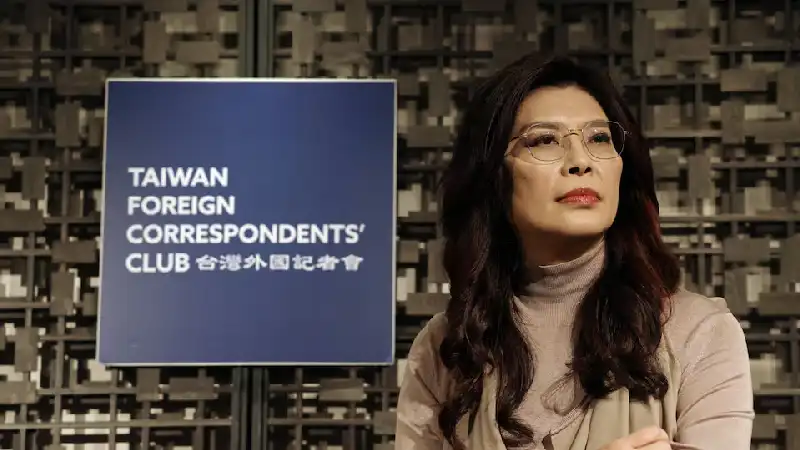
Taiwan’s main opposition leader has said that improving relations with mainland China does not mean turning against the United States, stressing that the island’s long term stability depends on balancing both relationships. Speaking in Taipei, Kuomintang chairperson Cheng Li wun said Taiwan should avoid framing its foreign policy as a choice between Beijing and Washington. Her remarks come at a time of rising geopolitical tension across the Taiwan Strait, with increasing military activity and political divisions shaping the island’s strategic direction ahead of upcoming elections.
Cheng, who became leader of the Kuomintang last year, has signaled a stronger push for engagement with Beijing compared to previous party leadership. She emphasized that maintaining communication channels with mainland China is essential for reducing risks and ensuring regional stability. At the same time, she reiterated the party’s long standing ties with the United States, including support for defense cooperation and arms procurement. Her position reflects an attempt to present a balanced foreign policy approach that avoids deepening polarization within Taiwan’s political landscape.
The debate over Taiwan’s direction has intensified as relations between Beijing and the current government remain strained. China continues to view Taiwan as part of its territory and has refused to engage with the administration of President Lai Ching te, whom it considers a separatist figure. In contrast, opposition figures from the Kuomintang have historically maintained dialogue with mainland officials, creating a clear divide in political strategy. Cheng’s leadership signals a continuation of this approach, with a focus on dialogue rather than confrontation.
Cheng addressed criticism from the ruling Democratic Progressive Party, which has accused the opposition of being too close to Beijing and undermining Taiwan’s democratic values. She rejected these claims, saying her party’s position has been misunderstood and that engagement with China does not compromise Taiwan’s political system. She also reaffirmed support for defense spending, including purchasing weapons from the United States, while noting that such decisions must be carefully evaluated to ensure financial sustainability and strategic effectiveness.
Cross strait relations remain a central issue shaping Taiwan’s domestic politics and regional security outlook. China has increased military pressure around the island in recent years and has not ruled out the use of force to achieve unification. Cheng acknowledged these tensions and said that maintaining stable relations with Beijing is critical for Taiwan’s survival. However, she also noted that discussions about any long term political settlement are not realistic at this stage, emphasizing the need to focus on immediate stability and conflict prevention.
The political environment in Taiwan is also influenced by electoral dynamics, with all major parties preparing for local elections later this year. These contests are expected to serve as a key indicator of public sentiment ahead of the next presidential election. The Kuomintang and its allies currently hold a parliamentary majority, giving them significant influence over policy decisions and legislative priorities. This balance of power has created an environment where cross strait policy remains both a domestic and international issue.
Cheng has also expressed interest in engaging directly with Chinese leadership, including the possibility of meeting President Xi Jinping in the future. While no concrete plans have been confirmed, such a move would mark a significant step in cross strait engagement if it materializes. Analysts say that any direct dialogue could help ease tensions but would also require careful political handling given the sensitivities involved on both sides.
As tensions persist, Taiwan’s strategic position continues to draw global attention, particularly from regional partners and major powers. The evolving approach of its political leadership highlights the complexity of managing relations with both China and the United States. Cheng’s remarks reflect an effort to position Taiwan within a framework that prioritizes stability, economic continuity, and diplomatic flexibility while navigating one of the most sensitive geopolitical issues in the Asia Pacific region.

