
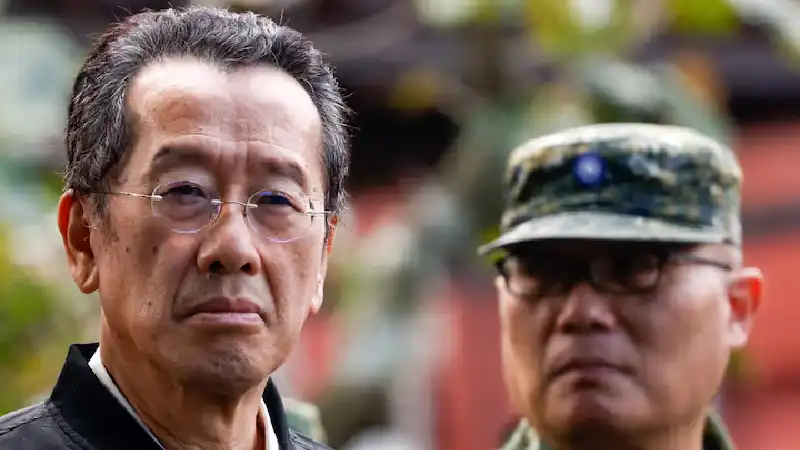
Taiwan has warned that China’s growing military capabilities pose an increasing threat to regional stability, urging stronger deterrence measures to prevent any potential conflict. Defence Minister Wellington Koo stated that Beijing’s continued military expansion requires a firm response to ensure that any attempt to use force would carry significant risks. The warning comes amid heightened tensions in the region, as Taiwan continues to strengthen its defence posture while monitoring China’s strategic intentions and military activities near the island.
Koo emphasized that China has not slowed its military buildup and continues to maintain the option of using force, even as global assessments suggest no immediate invasion timeline. He noted that deterrence remains the most effective strategy, arguing that increasing Taiwan’s defence capabilities would reduce the likelihood of an attack. According to his remarks, a stronger military position would force Beijing to reassess the risks involved, making any potential operation less viable and pushing back the possibility of escalation.
The issue remains one of the most sensitive geopolitical flashpoints, with China asserting its claim over Taiwan while the island’s government rejects any suggestion of sovereignty from Beijing. Recent months have seen an increase in military drills and pressure around Taiwan, reinforcing concerns about long term stability in the region. Officials in Taipei continue to stress the importance of maintaining readiness while balancing diplomatic and strategic considerations.
Koo stated that the balance of power plays a critical role in shaping Beijing’s decisions. He explained that if Taiwan fails to enhance its defence capabilities while China continues to expand its military, the risk of confrontation could increase. Conversely, improved deterrence would lower the probability of conflict by raising the expected cost of any military action. His comments highlight a strategic approach focused on prevention rather than escalation.
Taiwan’s government has proposed a significant increase in defence spending to support modernization efforts, though progress has faced delays within parliament. Lawmakers have raised concerns about the clarity of the proposed plans, leading to ongoing debates over funding and priorities. Despite these challenges, officials continue to push for investment in defence systems aimed at strengthening overall preparedness.
As part of these efforts, President Lai Ching te recently inspected Taiwan’s submarine fleet, including a domestically developed submarine undergoing trials. Upgrades to existing vessels are also underway, with officials noting that these improvements are expected to enhance operational capabilities. Defence authorities view such developments as critical components of a broader strategy to strengthen deterrence and maintain stability in the region.
China has responded by reiterating that Taiwan remains an internal matter and has criticized external narratives that frame Beijing as a threat. The situation continues to evolve as both sides adjust their strategies, with regional and global stakeholders closely monitoring developments. The focus remains on whether deterrence measures and diplomatic engagement can prevent further escalation in one of the world’s most closely watched security environments.

