
A Divided Cold War World
When the Second World War ended, the global order was reshaped by new alliances and rivalries. The most visible confrontation became known as the Cold War, a prolonged ideological and political struggle between the capitalist United States and the communist Soviet Union. This rivalry would dominate international relations for decades. Yet the common image of two unified camps facing each other across ideological lines oversimplifies reality.
Behind the appearance of unity, deep fractures existed within both blocs. Nowhere was this more consequential than within the communist world itself. Two of its largest and most powerful members, China and the Soviet Union, moved from close partnership to bitter rivalry, nearly reaching armed conflict despite sharing similar ideological foundations.
Early Cooperation and Shared Revolutionary Goals
In the years leading up to the establishment of the People’s Republic of China, relations between Beijing and Moscow were warm and cooperative. The Soviet Union played a crucial role in assisting the Chinese Communist Party during its civil war against nationalist forces led by Chiang Kai shek. This support helped tip the balance in favor of Mao Zedong’s forces, culminating in victory in nineteen forty nine.
Once the new Chinese state was established, Soviet assistance shifted from military to economic and technical support. China was economically devastated after decades of war, and Soviet aid became essential for rebuilding industry and infrastructure. The relationship was framed as a partnership between revolutionary comrades working toward a shared socialist future.
The Sino Soviet Treaty and Symbolic Unity
The closeness between the two countries was formally displayed in nineteen fifty with the signing of the Sino Soviet Treaty of Friendship and Alliance. The agreement focused on mutual security, political cooperation, and economic development. While it benefited both sides, it was especially important for China, which sought protection and legitimacy in a hostile international environment.
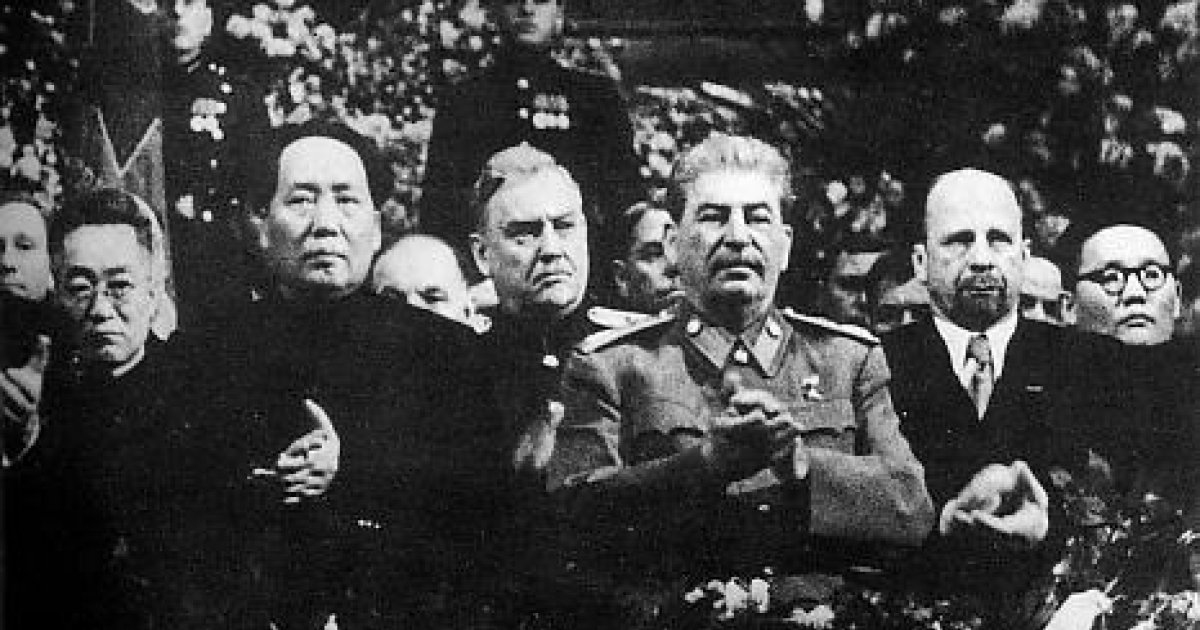
The treaty followed a personal meeting between Mao Zedong and Joseph Stalin in late nineteen forty nine. The symbolism of two communist leaders standing together sent a powerful message to the world. It suggested that the socialist camp was united and capable of matching Western influence.
Growing Differences Beneath the Surface
Despite early cooperation, differences soon began to emerge. China and the Soviet Union approached socialism from different historical and cultural perspectives. China emphasized mass mobilization and rural revolution, while the Soviet model focused on centralized industrial development and party control.
These differences were initially muted by shared interests, but tensions grew as China sought greater independence in decision making. Beijing resented what it perceived as Soviet dominance within the socialist world, while Moscow grew uneasy with China’s growing assertiveness.
Ideology and Leadership Clashes
Leadership played a significant role in the growing rift. After Stalin’s death, the Soviet Union began a process of de Stalinization under new leadership. This shift included criticism of past excesses and a move toward peaceful coexistence with the West.
Mao Zedong strongly disagreed with this approach. He viewed Soviet reforms as ideological weakness and feared they undermined revolutionary commitment. These disagreements transformed ideological debate into political rivalry, eroding trust between the two governments.
From Allies to Rivals
By the late nineteen fifties and early nineteen sixties, the split had become public. The two sides exchanged criticism through official statements and propaganda, each claiming to represent the true path of socialism. Cooperation declined, and joint projects were abandoned.
The rivalry eventually extended beyond words. Border disputes and military tensions escalated, bringing the two communist giants close to open conflict. The idea of a unified socialist bloc collapsed, reshaping global Cold War dynamics.
Global Consequences of the Split
The Sino Soviet split had far reaching effects. It weakened the overall communist position in the Cold War and created opportunities for new diplomatic alignments. Countries across Asia, Africa, and Latin America were forced to choose sides or navigate a divided socialist world.
For the West, the split complicated the Cold War but also reduced the likelihood of a single unified communist front. For China and the Soviet Union, it marked the end of revolutionary brotherhood and the beginning of strategic competition.
A Lesson in Ideological Power Politics
The Sino Soviet split demonstrates that shared ideology does not guarantee unity. National interests, leadership ambitions, and historical context can override common beliefs. What began as a partnership rooted in revolutionary solidarity evolved into one of the most significant fractures of the twentieth century.
The Cold War among the communists serves as a reminder that political alliances are rarely permanent. Even movements built on shared ideals can fracture when power, pride, and differing visions collide.

