
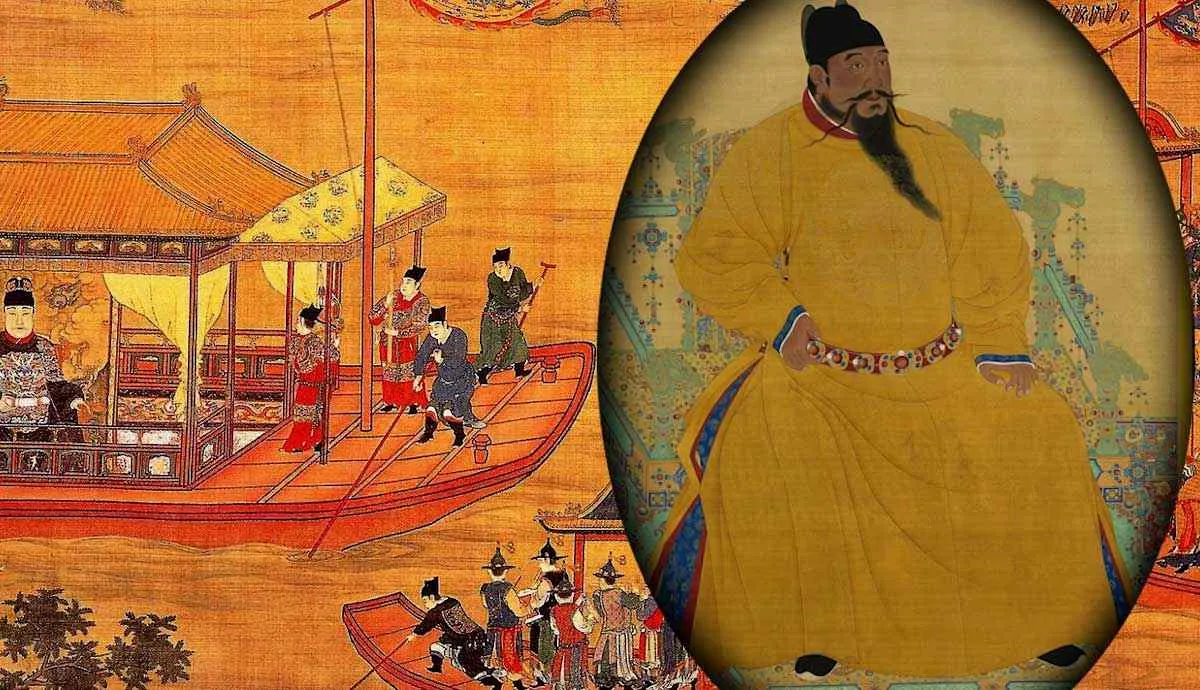
The Ming Dynasty emerged in 1368 as a symbol of renewal and national pride. After decades of Mongol rule under the Yuan Dynasty, China was ready for a new era led by a native Han Chinese government. Zhu Yuanzhang, a former monk and rebel leader, defeated the Yuan forces and founded the Ming Dynasty, taking the title Emperor Hongwu. His early rule focused on restoring farmland, rebuilding infrastructure and strengthening local communities. Under his leadership, China regained stability and reestablished systems that brought order to a nation recovering from war and hardship. Hongwu emphasized discipline and merit in government, laying the foundation for what would become one of China’s most influential dynasties.
A flourishing era of trade and exploration
The Ming Dynasty is remembered for its economic vitality and outward looking spirit. Agriculture expanded, cities grew and domestic industries thrived. Trade along the coastline and through Southeast Asia brought wealth and cultural exchange. One of the most extraordinary achievements of the era was the series of maritime expeditions led by the famed admiral Zheng He. Between 1405 and 1433, his massive fleets sailed to regions including South Asia, the Middle East and East Africa. These voyages showcased China’s naval power and facilitated diplomatic ties, trade relationships and cultural encounters. Although the expeditions eventually halted, they demonstrated the Ming Dynasty’s global curiosity and technological capability.
Cultural brilliance and artistic innovation
Ming society saw tremendous growth in literature, painting and craftsmanship. The development of blue and white porcelain became one of China’s most celebrated artistic traditions, admired both domestically and abroad. Woodblock printing expanded, making books more accessible and supporting a flourishing literary culture. Scholars and artists explored themes of nature, philosophy and personal expression, contributing to a vibrant intellectual environment. Architecture also reached new heights. The Forbidden City, built during the Ming, remains one of the world’s most impressive imperial complexes. Its palaces, courtyards and ceremonial halls reflected the dynasty’s power, aesthetic vision and organizational skill.
Governance, challenges and shifting power
Despite early strength, the Ming government faced growing difficulties over time. The civil service examination system continued to promote talented officials, yet power struggles within the imperial court became increasingly common. As emperors withdrew from day to day governance, influential eunuchs gained significant authority. This shift created tension and corruption, weakening the state’s administrative effectiveness. At the same time, natural disasters, epidemics and economic strains placed enormous pressure on rural communities. Peasant uprisings erupted, signaling deep social dissatisfaction. The dynasty’s military defenses also became strained as threats along the northern frontier intensified.
The dynasty’s fall and lasting impact
By the mid seventeenth century, internal turmoil and external pressures collided. Rebel leader Li Zicheng captured Beijing in 1644, prompting the last Ming emperor, Chongzhen, to take his own life. Soon after, Manchu forces swept in and established the Qing Dynasty. Although the Ming rule ended, its legacy remains deeply rooted in Chinese history. The dynasty left behind monumental architecture, literary treasures, artistic masterpieces and administrative systems that shaped future generations. It is remembered as a period of cultural confidence, technological achievement and resilience. Even today, the Ming Dynasty’s influence is visible in China’s artistic traditions, historical imagination and continuing pride in its cultural heritage.

