
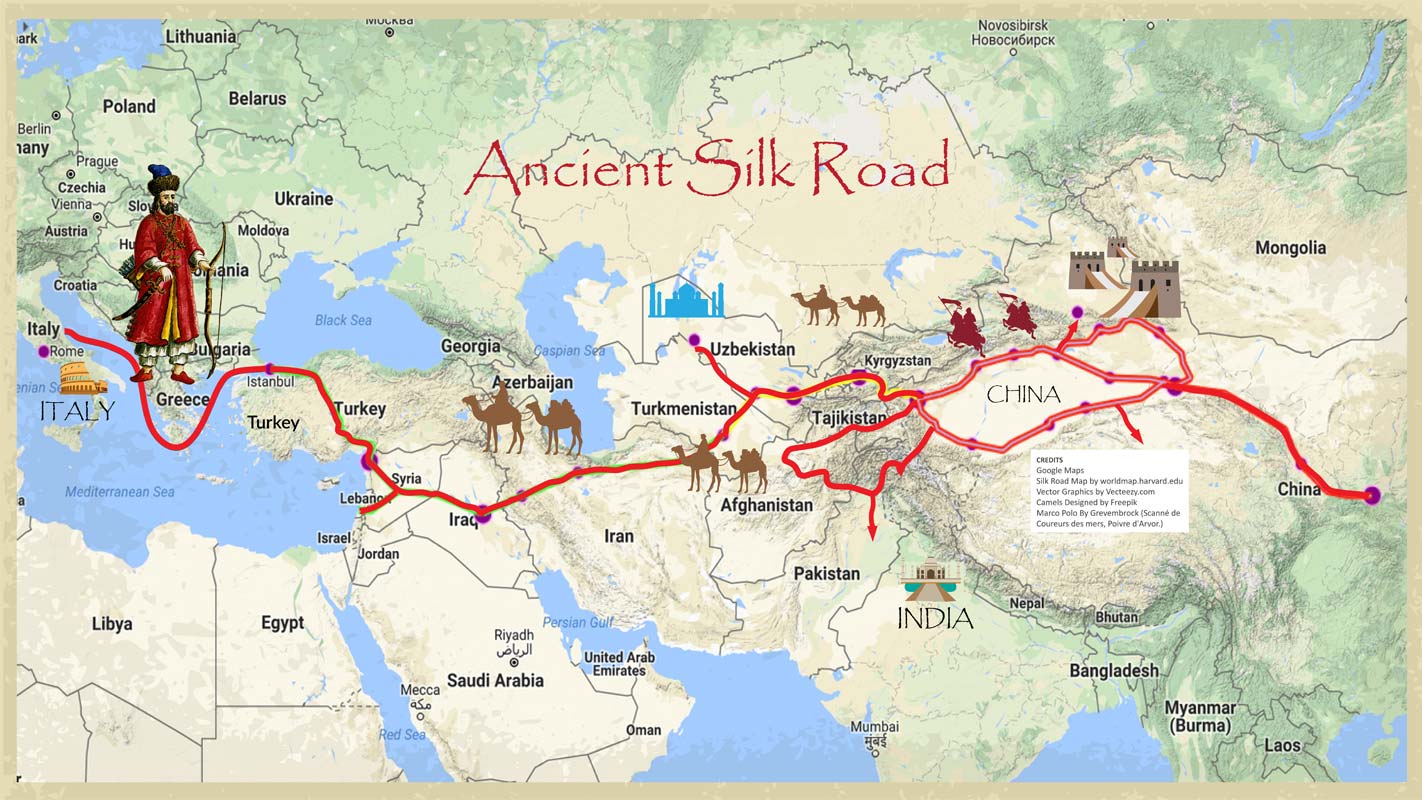
The Silk Road stands as one of history’s most remarkable trade networks, linking China with Central Asia, the Middle East and even parts of Europe. Rather than a single road, it was a sprawling web of land and sea routes that enabled exchanges of goods, ideas and cultures across vast distances. Its origins trace back to the Han Dynasty, when Emperor Wu sent emissaries westward in search of allies and information about distant lands. These early missions opened channels of communication and set the stage for a flourishing trade system that would shape global history for centuries. As Chinese silk reached foreign courts and caravans brought new goods into China, the network grew into a vital artery of economic and cultural life.
A marketplace of treasures and ideas
What made the Silk Road so influential was not just the exchange of luxury goods but also the movement of knowledge and beliefs. Traders carried silk, porcelain, tea and lacquerware westward, while China received horses, gemstones, spices, glassware and metals. Each region contributed its specialties, creating a marketplace that stretched across continents. Yet it was the exchange of ideas that left the deepest imprint on civilizations. Along these routes, Buddhism traveled from India into China, gradually becoming one of the country’s most significant religions. Artistic styles, technological innovations and culinary traditions also crossed borders, blending into local cultures. The Silk Road was as much a cultural bridge as it was a commercial one.
Life along the trade routes
The flourishing trade brought prosperity to many cities across Asia. Places like Dunhuang, Samarkand and Kashgar became bustling hubs where merchants, monks and travelers from diverse backgrounds gathered. These cities hosted caravanserais, lively markets and temples that reflected the influences of many cultures. Life along the Silk Road was vibrant yet challenging. Caravans crossed deserts, mountains and harsh climates, relying on skilled guides and strong animals like camels. Despite the risks, the promise of wealth and discovery kept the routes active. The interactions among travelers fostered a cosmopolitan atmosphere rare for the ancient world, making the Silk Road a place of both opportunity and cultural harmony.
China’s role as a cultural and economic engine
China’s position at the eastern end of the Silk Road made it a powerful driver of trade and innovation. Chinese silk was so coveted that it became a form of currency in some regions. The demand for silk strengthened China’s economy and encouraged advancements in textile production. In return, China absorbed new crops, technologies and artistic influences. Grapes, pomegranates and musical instruments such as the pipa made their way into Chinese society. Paper, initially invented in China, eventually traveled westward and revolutionized record keeping and literature across Eurasia. China’s engagement with the Silk Road showcased its openness to external influences while sharing its own rich culture with the world.
The lasting legacy of the Silk Road
Although the Silk Road eventually declined due to changing trade patterns and maritime routes, its legacy endures. The cultural blending it inspired remains visible in art, religion and languages across Asia. The spirit of connectivity continues to influence modern initiatives such as China’s Belt and Road cooperation, which seeks to revive ancient networks in a contemporary form. The Silk Road’s impact is a reminder that global exchange is not a new phenomenon but a long standing part of human history. By connecting distant worlds through trade, diplomacy and shared curiosity, the Silk Road helped shape the civilizations we know today.

