
A New Dynasty With a New Philosophy
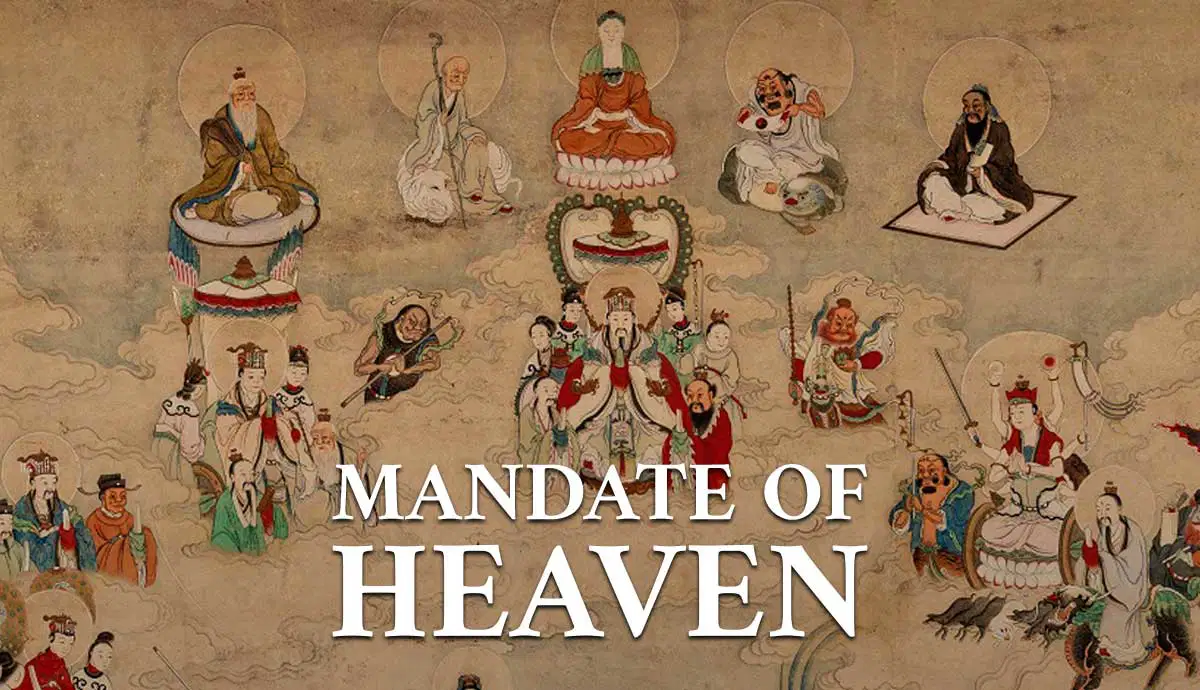
The Zhou Dynasty emerged around 1046 BCE after the fall of the Shang, marking a turning point in Chinese political thought. While the Zhou inherited many cultural practices from their predecessors, they introduced a revolutionary idea that would define Chinese governance for centuries. This idea was the Mandate of Heaven, a moral framework that explained why rulers gained power and how they could lose it.
Explaining Power Through Moral Order
Unlike earlier beliefs that kings ruled purely through ancestral favor, the Zhou argued that Heaven granted authority based on virtue. A ruler was expected to govern justly, care for the people, and maintain social harmony. Natural disasters, famine, or rebellion were interpreted as signs that a ruler had lost Heaven’s approval. This concept transformed political legitimacy from a fixed inheritance into a conditional responsibility.
The Mandate as Political Innovation
The Mandate of Heaven served a practical purpose. It justified the Zhou overthrow of the Shang by framing it as a moral correction rather than an act of rebellion. By doing so, it created a precedent that future dynasties would repeatedly use. Each new ruling house could claim that Heaven had withdrawn its mandate from the previous rulers due to corruption or misrule. This flexible ideology helped explain cycles of rise and decline in Chinese history.
Feudal Governance and Regional Power
During the early Zhou period, power was decentralized through a feudal system. The king granted land to relatives and loyal supporters who governed regional states. These lords owed military service and tribute to the Zhou court. While this system helped maintain control over vast territory, it also planted the seeds of fragmentation as regional rulers gradually gained autonomy.
Ritual, Culture, and Social Order
Ritual practice became a key tool for maintaining stability under the Zhou. Elaborate ceremonies reinforced hierarchy, loyalty, and moral conduct. These rituals shaped everyday life, defining relationships between ruler and subject, parent and child, and elder and youth. Over time, this emphasis on proper behavior influenced philosophical traditions, particularly Confucian thought, which later became central to Chinese society.
From Unity to Fragmentation
As centuries passed, the Zhou king’s authority weakened. Regional states grew stronger, leading to periods of conflict such as the Spring and Autumn era and the Warring States period. Despite political fragmentation, the Mandate of Heaven remained influential. Competing rulers all claimed moral legitimacy, showing how deeply the concept had embedded itself in political thinking.
A Lasting Intellectual Legacy
The Zhou Dynasty’s greatest contribution was not territorial expansion or military dominance but an enduring idea about governance. The Mandate of Heaven linked political authority to ethical responsibility, encouraging rulers to see themselves as caretakers rather than absolute owners of power. This principle shaped how history was written and judged, turning moral evaluation into a standard for leadership.
Why the Zhou Still Matters
The Mandate of Heaven became the backbone of Chinese political philosophy for over two thousand years. It influenced dynastic transitions, popular uprisings, and historical interpretation. By redefining the source of authority, the Zhou Dynasty reshaped Chinese civilization, ensuring that power would always be judged not only by strength but by virtue.

