
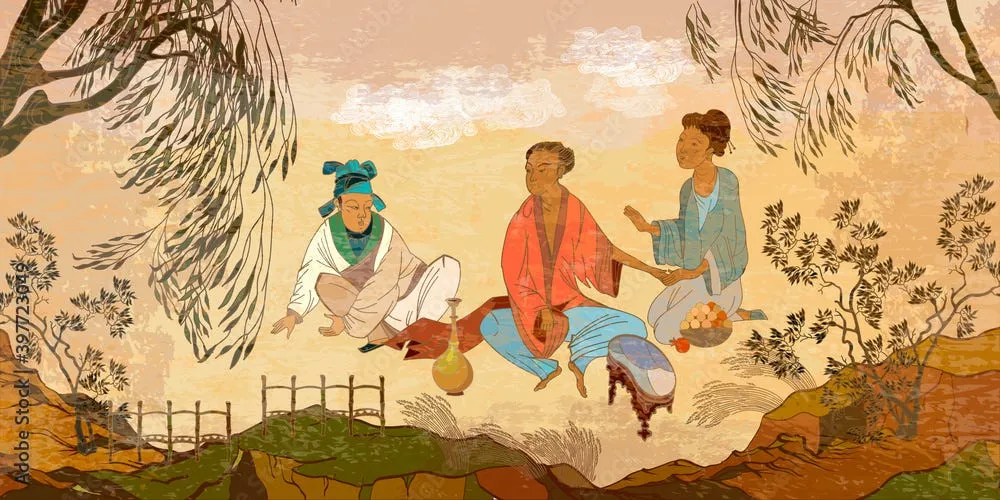
China’s long history is filled with well-known dynasties such as the Han, Tang, and Qing, yet underneath these familiar names lies a layer of forgotten kingdoms that shaped the country in ways rarely discussed. These lost dynasties existed during periods of fragmentation and transition, leaving behind ruins, artifacts, and stories that historians are still uncovering today. Their influence can be seen in local cultures, traditional art forms, and ancient governance systems that later dynasties adopted or refined. Understanding these forgotten states helps reveal how diverse and dynamic ancient China truly was.
The mystery of the Baiyue region
Among the lesser known cultural regions in early China, the Baiyue territories stand out due to their unique customs and decentralized governance. Located in present day southern China, the Baiyue people were skilled in agriculture, metalwork and maritime trade long before major northern dynasties expanded their influence. Although they were eventually absorbed into larger Chinese states, their legacy remains visible in traditional festivals, clothing patterns and linguistic traces. Archaeological discoveries such as bronze drums and intricate ornaments show that Baiyue craftsmanship was advanced and deeply symbolic. These findings challenge the idea that early Chinese civilization was shaped only by northern dynasties.
Kingdoms of the Warring States era
The Warring States period saw the rise of multiple kingdoms competing for control. While states like Qin and Chu are widely recognized, other kingdoms such as Han, Wei, Yan and Zhongshan are often overshadowed. The state of Zhongshan, for example, produced some of the most refined jade carvings of the era, demonstrating high artistic achievement. Excavations from forgotten capitals reveal sophisticated city planning, defensive systems and burial practices. These states played an important role in shaping political ideas, legal systems and military strategies that later unified China under the Qin empire. Their forgotten achievements offer valuable insight into how Chinese philosophy and statecraft evolved.
Rediscovering the ancient Shu civilization
The Shu kingdom, located in present day Sichuan, is one of the most mysterious early civilizations in China. The discovery of Sanxingdui and Jinsha archaeological sites changed historians’ understanding of China’s past. The giant bronze masks, detailed gold artifacts and unusual sculptures revealed a culture that was visually distinct from northern societies. These artifacts indicate that the Shu civilization had a complex belief system, advanced metallurgy and vibrant artistic traditions. The findings highlight that ancient China was not a single cultural stream but a network of diverse civilizations interacting at different levels.
Influence on trade, culture and migration
These lost kingdoms played a major role in trade routes that connected China with Southeast Asia, Central Asia and coastal regions. Their strategic locations helped spread early technologies, agricultural practices and cultural traditions. Many local dances, musical instruments and folk beliefs still practiced today originated from these forgotten states. Migration patterns during these ancient periods shaped regional identities that survived long after the kingdoms disappeared. By studying these kingdoms, historians gain a deeper understanding of how the Chinese cultural map expanded and how regional diversity was preserved within a unified civilization.
Why rediscovering them matters today
Modern China continues to invest in archaeological research to rediscover its lost kingdoms. Each excavation adds new layers to historical understanding, correcting old assumptions and highlighting cultural diversity across ancient regions. These findings are important for academic knowledge but also for cultural preservation. Local communities gain a stronger sense of identity when their forgotten past is acknowledged and celebrated. As museums expand exhibitions related to these dynasties, the public becomes more aware of how rich and varied China’s historical landscape truly is. Rediscovering these kingdoms strengthens appreciation for cultural heritage and helps protect ancient sites for future generations.

