
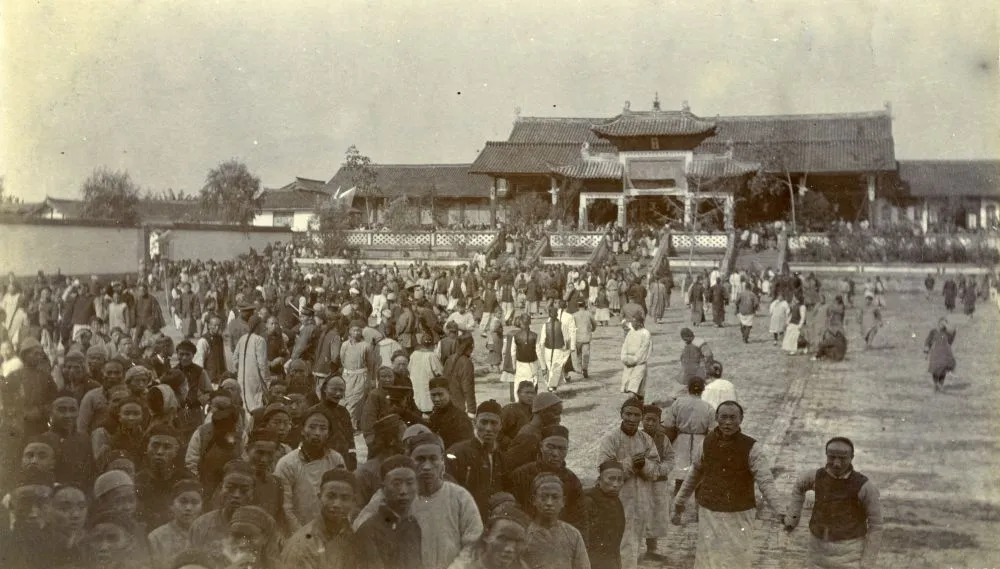
By the early twentieth century, the Qing Dynasty was struggling to survive. After more than two hundred years of rule, it faced widespread corruption, military weakness and mounting public frustration. Foreign powers had carved out spheres of influence across China, and unequal treaties drained both national pride and economic strength. Natural disasters and heavy taxation made life even more difficult for ordinary people. Within this atmosphere of discontent, many began to question whether the Qing government could still protect the country or guide it toward progress. Reformers, students and intellectuals increasingly believed that China needed a dramatic political change to survive in a rapidly modernizing world.
Growing calls for reform and revolution
The late nineteenth century had already seen attempts at modernization, including the Self Strengthening Movement and the Hundred Days’ Reform, but these efforts were limited by conservative factions at court. Reformers wanted new schools, modern industry and a stronger military, yet the Qing court resisted many of these proposals. Meanwhile, revolutionary groups inspired by nationalism and anti imperial sentiment were gaining momentum. Among them, Sun Yat sen emerged as a leading figure. He envisioned a China free from dynastic rule, built on principles of nationalism, democracy and people’s livelihood. Secret societies, student groups and overseas Chinese communities rallied around these ideas, building a foundation for revolutionary action.
The trigger: The Wuchang Uprising
The spark that set the revolution in motion came on October 10, 1911, with the Wuchang Uprising in Hubei Province. The uprising began somewhat unexpectedly when a bomb accidentally exploded in a revolutionary safehouse, exposing the identities of anti Qing plotters. Knowing they would soon be arrested, revolutionary leaders decided to act immediately. To their surprise, the local army units, many of which were sympathetic to reform, joined the movement. Wuchang fell quickly, and news of the uprising spread across the country. Province after province declared independence from Qing rule. What began as a sudden local revolt rapidly transformed into a nationwide revolution.
The end of imperial rule and the birth of a republic
As the revolution gained momentum, Qing authority weakened further. In December 1911, representatives from various provinces met in Nanjing and elected Sun Yat sen as the provisional president of the Republic of China. On January 1, 1912, he formally announced the establishment of the new republic, marking the end of more than two thousand years of imperial rule. Shortly afterward, the last emperor, the young Puyi, abdicated under the guidance of court officials who recognized that the dynasty could no longer maintain power. Although political struggles continued after 1912, the fall of the Qing marked a turning point in modern Chinese history.
Why the 1911 Revolution still matters
The 1911 Revolution was not simply the collapse of a dynasty; it was the beginning of China’s long and complex journey toward modernization. It marked the rise of new political ideas, new social movements and a desire among the Chinese people to shape their own national destiny. The revolution also introduced concepts such as republicanism, citizenship and constitutional governance, which influenced later political developments. While the years that followed were turbulent, the revolution remains a symbol of China’s determination to rebuild itself in the face of internal decay and external pressure. Its legacy continues to shape how modern China understands reform, nationalism and the pursuit of renewal.

