
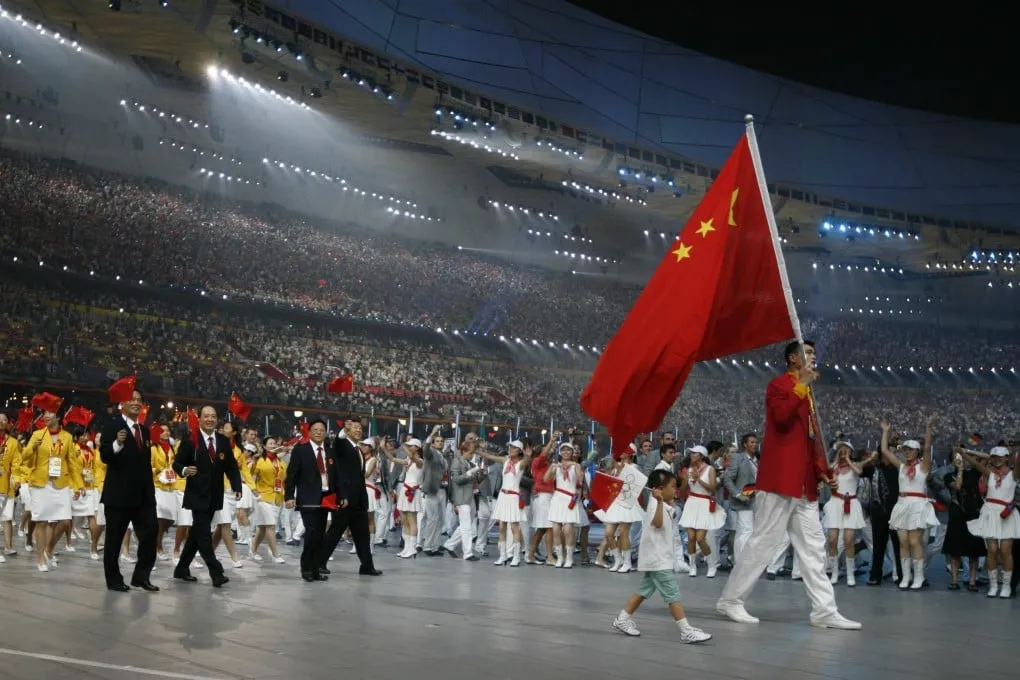
How a sporting spectacle became a declaration of national confidence.
Winning the Bid
When Beijing won the right to host the 2008 Summer Olympics, it was more than a sporting event. It was a statement that China had reemerged as a global power. Preparations began immediately: new stadiums, subways, and environmental clean up projects transformed the city. The “Bird’s Nest” and “Water Cube” became symbols of modern architecture and ambition.
The Opening Ceremony
On August 8, 2008, Zhang Yimou directed a ceremony that stunned global audiences. Drums thundered, fireworks lit the sky, and thousands of performers recreated 5,000 years of history. The spectacle fused tradition and modernity, signaling a China both ancient and futuristic. Commentators described it as one of the most elaborate cultural performances in Olympic history.
Games of Pride and Pressure
China topped the gold medal tally with 51, surpassing the United States for the first time. Heroes like diver Guo Jingjing and hurdler Liu Xiang became household names. At the same time, pressure on athletes was immense, and Liu Xiang’s injury sparked national heartbreak. The Games became an arena where pride and vulnerability were equally visible.
Political Context
The Olympics also brought scrutiny. Activists highlighted issues of human rights and Tibet. International leaders debated how to balance engagement with criticism. For Beijing, the event was a chance to control narrative, showcasing infrastructure, discipline, and national unity on an unprecedented scale.
Legacy and Aftermath
The Games left behind both tangible and symbolic legacies. Beijing gained modernized transport and global visibility. But some venues struggled with post event use, fueling debates about cost and sustainability. Still, the 2008 Olympics remain a turning point: the moment when China presented itself as confident, capable, and central to the global stage.
Conclusion: A Nation Takes the Stage
The Beijing Olympics were more than medals. They were a declaration that China had moved beyond survival into a phase of self-assured presentation. The glow of fireworks and the weight of criticism both marked the arrival of a new era in which China could not be ignored.

