
Chinese investment in Pakistan draws CEOs to Islamabad talks
Chinese investment in Pakistan is increasingly framed around bankable energy and trade-linked deals as Chinese CEOs engage Pakistani officials and firms. According to available reports, Reuters has described President Xi’s travel plans with a large CEO delegation as part of a wider push for commercial dealmaking, and similar executive-level outreach is often cited by market participants as a model for Pakistan-facing portfolios. In meetings framed around near-term execution, discussions are reportedly focused on project cash flow protection, fuel supply reliability, and lender comfort on sovereign guarantees. Pakistani counterparts are presenting power and grid upgrades as priority lanes, emphasizing operational fixes and verifiable performance targets, according to public briefings and meeting readouts. The immediate objective, as discussed by participants, is to translate executive access into signed term sheets, procurement decisions, and tighter delivery schedules.
Deal priorities and risk controls shaping China-Pakistan energy activity
The agenda is reportedly concentrating on generation efficiency, transmission reliability, and equipment localization tied to Pakistan energy projects that can close quickly, according to people familiar with the talks. Trade officials are also tracking spillover from other negotiating theaters, including shifting tariff pressure and market access debates, as illustrated by EU China trade talks intensify as October deadline nears as companies hedge demand uncertainty. Financing structures are being refined to reduce currency risk and improve payment discipline, with policy lenders and insurers said to be evaluating tighter covenants and clearer security packages. To anchor credibility, it appears that executives are pressing for audited performance metrics, transparent dispatch rules, and credible timelines for resolving arrears. For suppliers of turbines, solar modules, and grid hardware, the near-term focus is execution certainty over headline announcements.
What Chinese investment in Pakistan could change in the power sector
Pakistan’s power sector is drawing attention because, according to industry analysts and recent policy commentary, project viability increasingly hinges on efficiency gains and tighter loss control rather than rapid capacity additions. In this context, Chinese investment in Pakistan is being directed toward upgrades that lift output from existing assets and stabilize the network, including rehabilitation work, spares supply, and digital monitoring, according to market participants. Discussions with utilities reportedly emphasize measurable reductions in outages and technical losses, plus clearer settlement timelines for monthly invoices. As a reference point, Pakistan’s installed power capacity has been reported by Pakistani authorities and sector reporting at around 40,000 MW in recent years, while reliability is widely described as constrained by transmission bottlenecks and distribution performance rather than capacity alone. The operational logic, as lenders and operators often argue, is that better collection and fewer breakdowns can improve debt service capacity, enabling more competitive risk pricing for upgrades.
Trade and industrial upside linked to energy execution
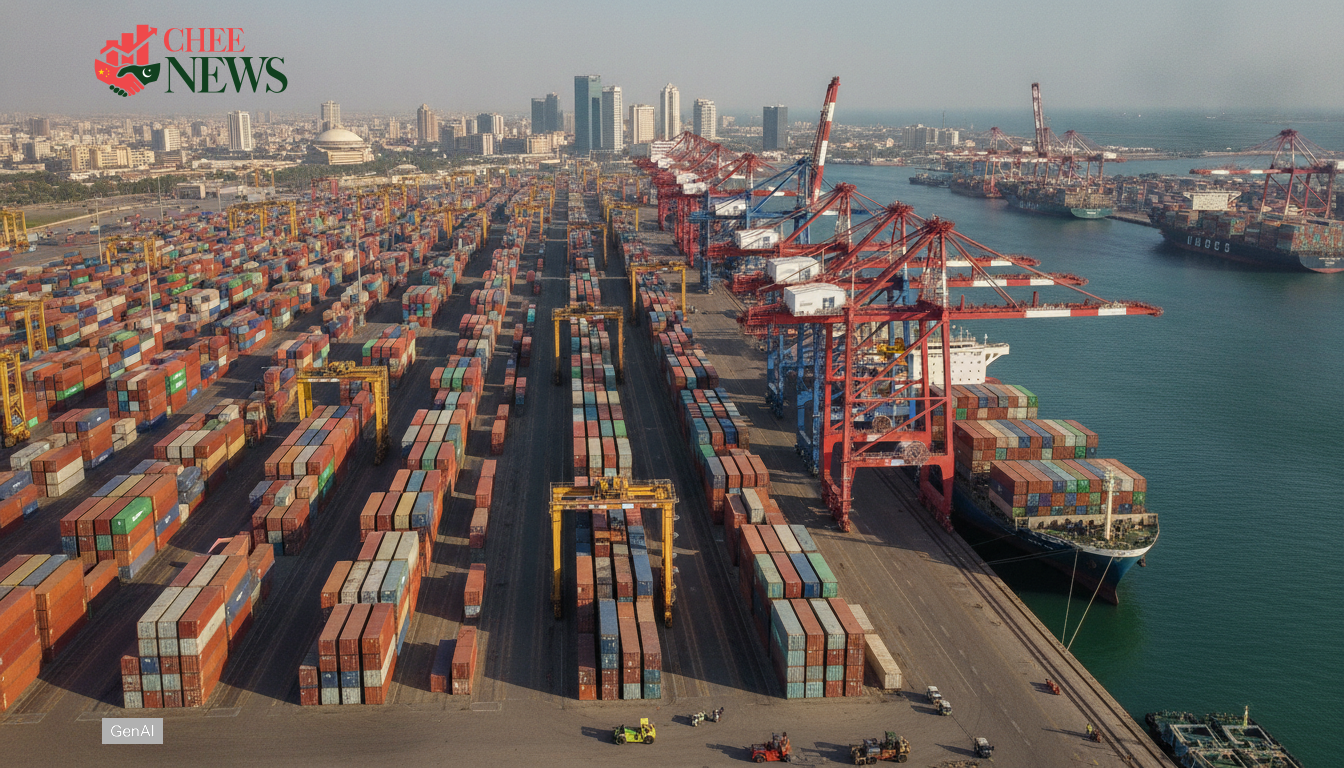
Trade officials and companies are aligning energy deals with a broader effort to expand industrial exports, since predictable electricity supply is widely described as a prerequisite for higher utilization in manufacturing. Ministry briefings have repeatedly highlighted that energy reliability and logistics upgrades move together in export planning, and executives are mapping power availability against industrial zones and port throughput, according to those briefings. Commercial corridors tied to CPEC are being treated as a platform for synchronized power and transport execution, and China-Pakistan Trade Corridor Expansion Gains Pace details how route capacity and trade facilitation are being prioritized. Related planning around the next phase is covered in CPEC 2.0: Plan to deepen China-Pakistan ties, which outlines efforts to deepen cooperation beyond early megaprojects. China-Pakistan investment discussions, when channeled into grid stability near production clusters, can shorten delivery times, reduce unit costs, and improve delivery predictability for buyers, according to exporters and logistics firms.
Next steps for CPEC and BRI projects
Forward planning is linking CPEC and BRI developments to a narrower set of energy actions that can be financed, built, and operated with fewer disputes over tariffs and payments, according to officials and project advisers. Pakistan’s energy managers are pushing for contract rationalization and clearer dispatch priorities, while Chinese firms are seeking enforceable mechanisms that limit circular debt exposure, according to sector stakeholders. In this environment, Chinese investment in Pakistan is expected by analysts to favor modular additions, life extension work, and grid modernization that can be monitored through verifiable performance indicators. Regulatory clarity is widely viewed as the deciding factor for larger-scale commitments, particularly where foreign exchange exposure is material. The most durable outcome, industry participants argue, will be agreements that balance investor protections with consumer affordability, allowing projects to sustain operations without recurring renegotiation and helping trade-linked zones rely on steadier power.

