
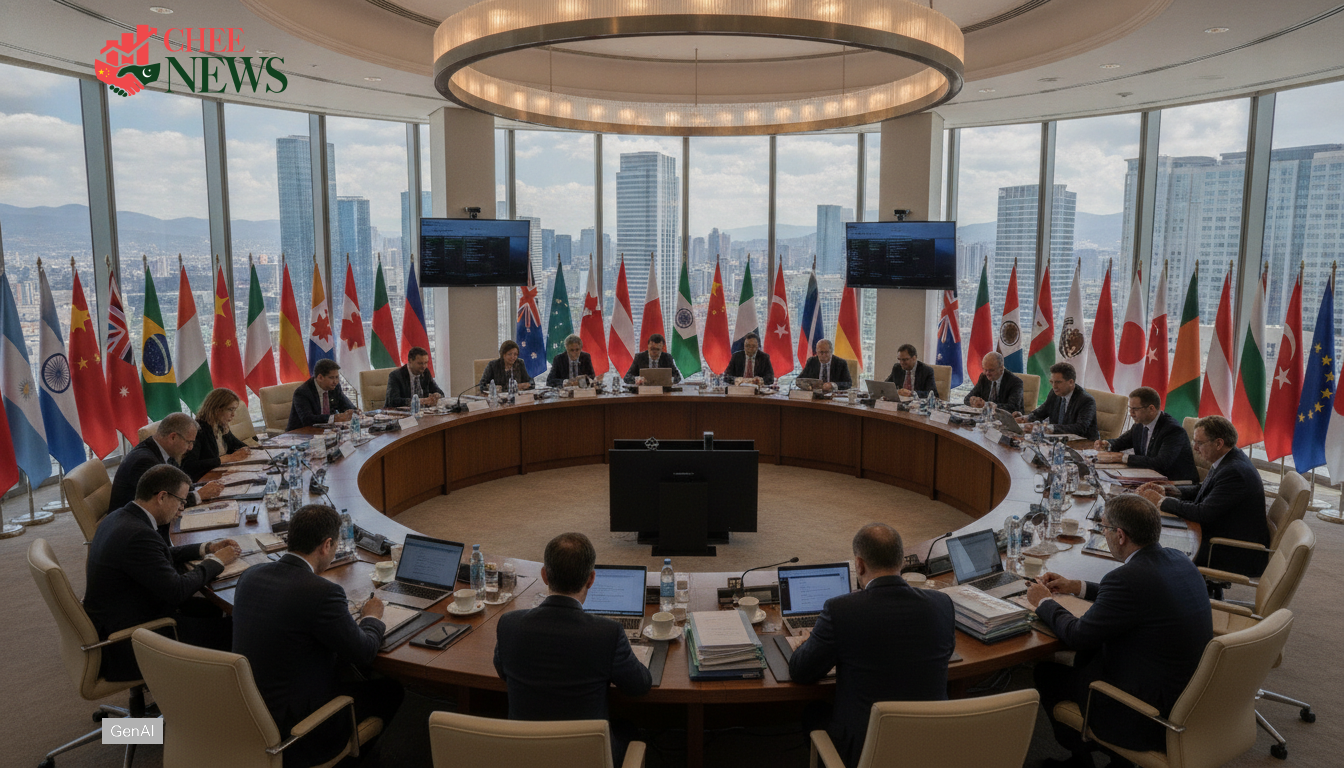
China G20 dissent and the fight over trade language
Negotiators left US-hosted G20 meetings with fragile language on trade and economic security. China G20 dissent surfaced early in drafting, as Beijing pushed back on wording that would align members on supply chain resilience, market distortions, and coordinated scrutiny of industrial subsidies. The talks were held in Washington during the IMF-World Bank Spring Meetings week in April 2024, when finance officials were also debating debt, inflation, and growth risks. Edits narrowed the scope of joint commitments and softened references to export controls and subsidy transparency. The immediate result was a communique that signaled procedural unity but offered less clarity on enforcement and expectations, a shift that matters for firms pricing regulatory risk across jurisdictions.
Reactions from other G20 member nations
Other delegations responded by emphasizing narrower issue statements outside the communique and by leaning on smaller working groups. Financial Times reported that officials tried to protect cooperation on debt relief, climate finance, and macro stability even as trade language stalled. A related indicator is how technology governance is migrating into smaller forums, as seen in AI cooperation: US and China seek guarded paths, where risk management conversations proceed even when broader alignment is difficult. Diplomats described the dispute as a stress test for whether the G20 can still set guardrails without drifting into bloc politics. In parallel, administrative compliance stories in the region, such as Education Bureau steps in after students wait in rain for uniform and hair checks, show how enforcement narratives can shape behavior even without new laws.
How China framed subsidies, security, and resilience
China’s stance can be read as a preference for flexible language rather than phrasing that could legitimize coordinated restrictions on its policy model. Financial Times noted resistance to text that would implicitly endorse joint action on market distortions and state support, topics that often include industrial subsidies, export controls, and national security screening. Connectivity efforts also complicate the picture, because trade corridors can expand even while rulemaking is contested, including work described in CPEC Initiatives Enhance Trade and Energy Cooperation. Beijing’s long-held argument is that development paths differ and should not be policed through political statements. The economic impact is less about one document and more about how uncertainty is priced into cross-border investment and sourcing decisions.
Implications for global trade policy and WTO reform
For policy makers, a key implication is that G20 statements may become less useful as reference points for preventing trade disputes. The Financial Times framed the episode as evidence that shared language on market principles is harder to sustain when industrial policy and national security tools are central. For context on how controls affect supply chains, see China recyclers feel impact as US export controls tighten. That matters because WTO processes often rely on political alignment outside Geneva to keep reforms moving, and diluted G20 consensus reduces that support. In practical terms, ministries may rely more on domestic rulemaking, tighter origin verification, and targeted screening instead of multilateral pledges. Businesses should expect more fragmented compliance across major markets, including disclosures tied to subsidies, data localization, and critical inputs.
What to watch next for G20 diplomacy and trade rules
The next phase of diplomacy is likely to focus on compartmentalizing, keeping cooperation alive where interests overlap while accepting that trade norms remain contested. The Financial Times described officials trying to prevent a single dispute from paralyzing the forum, a logic that could lead to more chair statements, annexes, and voluntary coalitions. In that environment, China’s leverage stems from its role across key supply chains while challenging the framing of distortions and resilience. The risk is a cycle where reduced consensus encourages unilateral action, which then makes future agreements harder. A more durable approach would be expanded transparency mechanisms that improve comparability without pre-judging policy models, as China G20 dissent continues to shape how negotiators draft and interpret joint language. If that balance fails, trade governance will drift toward managed rivalry and higher compliance costs.

