
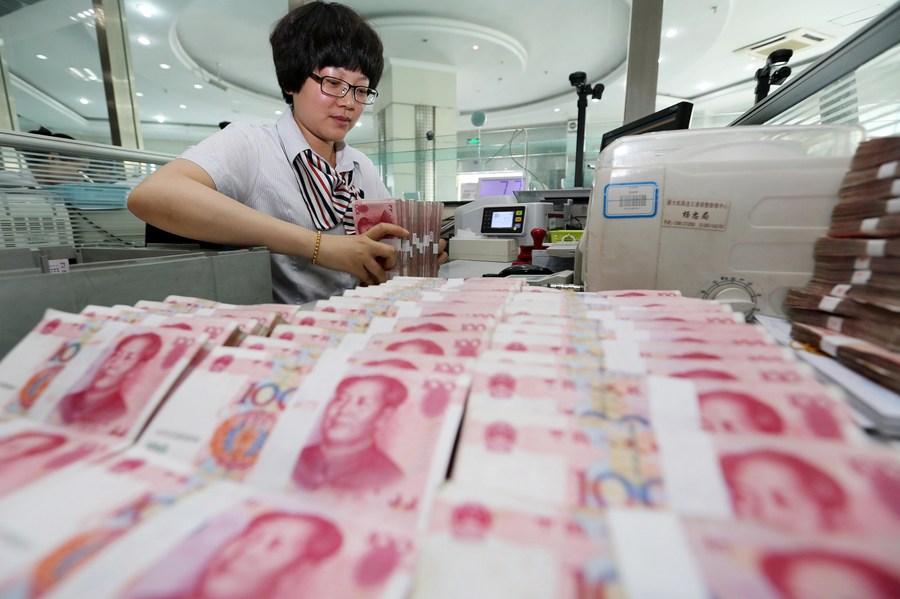
In a move to ensure continued financial stability and sufficient liquidity in the banking sector, the People’s Bank of China (PBOC) announced on Thursday that it will conduct a 1-trillion-yuan (approximately 141.4 billion U.S. dollars) outright reverse repo operation on Friday. The measure underscores China’s proactive monetary policy stance as the country navigates complex domestic and international economic conditions.
According to the central bank, the reverse repo operation will have a tenor of 91 days, or roughly three months, and will be conducted through a fixed quantity interest-rate bidding process. Multiple price levels will be used to determine the winning bids, allowing the PBOC to finely calibrate the impact on short-term market interest rates.
Strengthening Liquidity Through Innovation
Outright reverse repo operations are a relatively new tool in the PBOC’s monetary policy toolkit. First introduced in October 2024, they allow the central bank to inject liquidity directly into the banking system by purchasing securities from financial institutions with an agreement to resell them at a later date. Unlike traditional reverse repos, these outright transactions provide a stronger signal of the PBOC’s intent to maintain an accommodative monetary environment.
This upcoming 1-trillion-yuan injection is part of a broader strategy to preserve “reasonable and ample liquidity,” especially amid year-end funding demand, market uncertainties, and lingering global economic headwinds. Analysts note that the operation comes at a time when the government is also ramping up fiscal spending to support domestic consumption and investment.
Complementing an Expanding Monetary Toolkit
The PBOC’s recent use of outright reverse repos adds further flexibility to its growing array of policy instruments. Alongside tools such as temporary repos, temporary reverse repos, and open market operations involving treasury bonds, these new instruments offer a more diverse and responsive framework to stabilize liquidity and guide market expectations.
By targeting a medium-term tenor of 91 days, the central bank appears to be addressing liquidity conditions beyond the usual short-term fluctuations. This helps reduce rollover risks for banks and enhances their capacity to support lending to the real economy.
A Deliberate Policy Signal
Market observers view the scale and structure of this operation as a deliberate signal from the PBOC. While not a shift toward aggressive easing, it reflects the central bank’s cautious balancing act — ensuring enough liquidity to sustain economic momentum without triggering inflationary pressures or asset bubbles.
With the global economic environment remaining uncertain and domestic recovery still uneven, Chinese policymakers are increasingly relying on a mix of structural reforms and fine-tuned monetary interventions to maintain macroeconomic stability.
As outright reverse repos become a more regular feature of China’s policy landscape, their evolution will likely shape how liquidity is managed across the country’s financial system reinforcing the PBOC’s role as a flexible and adaptive institution amid an ever-changing economic environment.

