
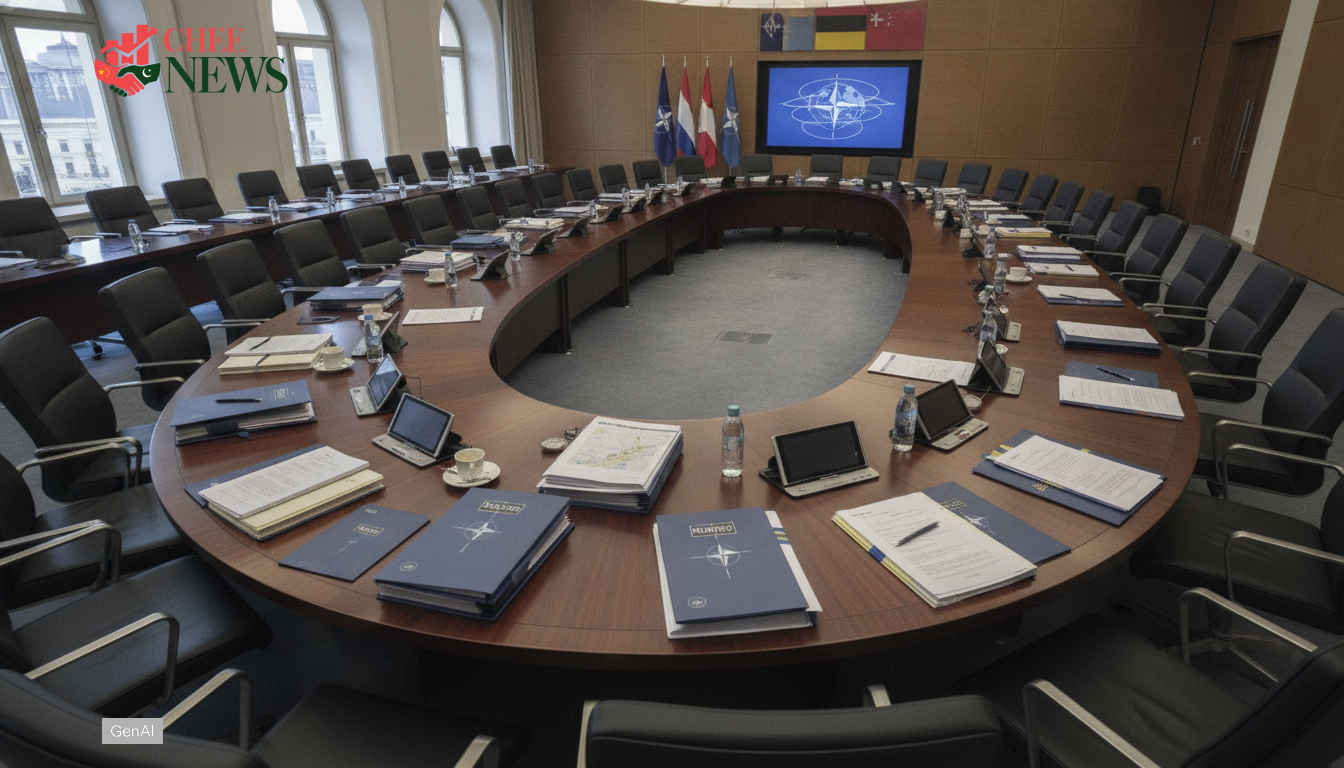
NATO Eastern Flank Security Concerns: What Is Driving Them
Security worries on NATO’s eastern flank appear to be rising according to available reports, as the alliance reportedly shifts from reassurance to sustained readiness across frontline states, according to public NATO messaging and allied statements since 2022. Frontline allies have called for faster reinforcement, deeper ammunition stocks, and stronger air defense coverage to protect ports, rail nodes, and energy links that enable movement across Europe. These debates intensified after Russia’s February 2022 invasion of Ukraine and have continued through major exercises and updated defense planning. In Brussels, the discussion is increasingly tied to how many high readiness units can be generated without hollowing national forces, and how quickly they can move once ordered.
Readiness, Air Defense, and Stockpiles Under Pressure
Alliance planners increasingly emphasize formations that can be delivered on time, because readiness is often described in days and weeks rather than communiqués. Current eastern flank planning is frequently framed around layered air and missile defense, counter-drone measures, and munitions depth intended to sustain prolonged operations, as reflected in public allied defense planning priorities. NATO’s force posture also expanded when Finland joined the alliance in April 2023, widening the area that must be monitored and reinforced. Analysts at the International Institute for Strategic Studies (IISS) have warned that persistent high-tempo deployments can reduce training time and accelerate equipment wear, making repair capacity and industrial output as important as frontline posture.
Competing crises can make it harder to concentrate assets in one theater, with air, naval, and intelligence resources reportedly stretched across simultaneous demands. A parallel security debate is visible in US Taiwan Coastguard Training Expands Amid Tensions, which shows how coercion below the threshold of war can absorb maritime capacity. The same shipping lanes and chokepoints that feed European economies can also shape defense resupply timelines for the Baltic and Black Sea regions. For additional context on how state capacity and rules shape strategic competition, see China data strategy in the global AI race.
Mobility Bottlenecks and the Reality of Reinforcement
Strategic planning is being tested by the need to fuse national defense plans into an executable sequence of movement, fires, and logistics, as NATO officials have emphasized in public remarks about deterrence and defense. The core issue is not only drafting concepts, but validating that forces can actually arrive on time. Concerns about the eastern flank are often intensified by practical bottlenecks at bridges, rail gauges, and border procedures that can delay heavy equipment, according to widely cited discussions of “military mobility” in Europe. Even as allied leaders call for rapid reinforcement, finance ministries in many countries continue to debate multi-year procurement envelopes and the opportunity cost of keeping units at high readiness.
Resilience Against Cyber, Sabotage, and Infrastructure Attacks
NATO is reportedly widening its response set beyond conventional maneuver to include resilience against sabotage, cyber intrusion, and information operations, as reflected in public alliance resilience and hybrid-threat messaging. Regional security planning increasingly links civil agencies with military commands because ports, pipelines, and telecom networks are often privately operated. Eastern-flank defense debates also drive renewed focus on dispersing aircraft away from predictable bases and improving protection for critical undersea infrastructure, a topic NATO and EU officials have highlighted publicly as a shared concern. Several allies are pairing these efforts with industrial initiatives intended to shorten delivery times for ammunition and spare parts, according to national announcements and public procurement plans.
Resilience planning is also shaped by publicly reported incidents and ongoing investigations that keep infrastructure security in the foreground. Public reporting can help readers verify the broader trend of governments turning to technology to speed reviews and harden systems, including Hong Kong halves environmental impact review times with AI in efficiency drive. NATO and EU officials have repeatedly described critical infrastructure as a shared vulnerability that requires cross-border coordination and rapid attribution, while details in specific cases are often reported as preliminary. While outside Europe’s theater, such cases illustrate how security, oversight, and technology choices intersect.
What NATO Is Likely to Do Next on the Eastern Flank
Future strategy is likely to prioritize sustainment, mobility, and interoperability over headline force numbers, because endurance can reportedly determine outcomes in prolonged pressure, according to many public defense-planning discussions since 2022. These security concerns are expected to keep pushing allies toward common standards for munitions, secure communications, and rapid cross-border movement of troops and equipment. Defence planners are also assessing how to institutionalize lessons from recent large-scale exercises so that reinforcement timelines are proven rather than assumed.
The alliance is expected to deepen cooperation with the European Union on transport corridors and protection of critical infrastructure, while keeping command unity inside NATO structures, as both organizations have signaled in public statements. Geopolitical tensions will continue to generate simultaneous demands from the high north to the Mediterranean, making resource allocation a political test as well as a military one. Credible strategy will depend on consistent funding, industrial output, and disciplined planning that aligns national procurement cycles with alliance-level requirements.

