
China Economic Slowdown: Causes and Key Signals
Trade decisions and market pricing are reshaping as weaker demand meets tighter credit and uneven confidence among households and firms, according to widely reported market and economic commentary. Some investors appear to be repricing risk as earnings assumptions cool and refinancing pressures rise for banks and local governments, as reflected in market reporting, though the magnitude varies by sector and region. The International Monetary Fund projected China growth of 4.0% for 2024 and 4.6% for 2025 in its World Economic Outlook update, underscoring a slower trend than the pre-pandemic era. Beijing has leaned on targeted support, according to official statements and state-media reporting, but near-term strain is often described by businesses as showing up in orders, margins, and delayed investment. The China economic slowdown is a key question for exporters and commodity producers, particularly how long subdued import growth persists and how quickly domestic consumption stabilizes.
Ripple Effects on Trade, FX, and Global Markets
Cross-border portfolios are reacting to China-linked risk, based on insights from market analysts, with currency and equity moves feeding into hedging costs for multinationals. Volatility in global markets can be reinforced by the way China demand influences metals, energy, and shipping rates. Traders and strategists often note, though the effect depends on broader global conditions. A policy dispute over tech rules has also raised uncertainty for investment decisions, as outlined in China AI policy urged to avoid split with US on rules. In Hong Kong, the exchange highlighted continuity in market stewardship when it extended CEO Bonnie Chan’s term for 3 more years, according to South China Morning Post coverage of the HKEX CEO term extension. For asset allocators, this mix of growth risk and policy signaling is being increasingly reflected in global market pricing.
Sector Impacts: Commodities, Manufacturing, and Logistics
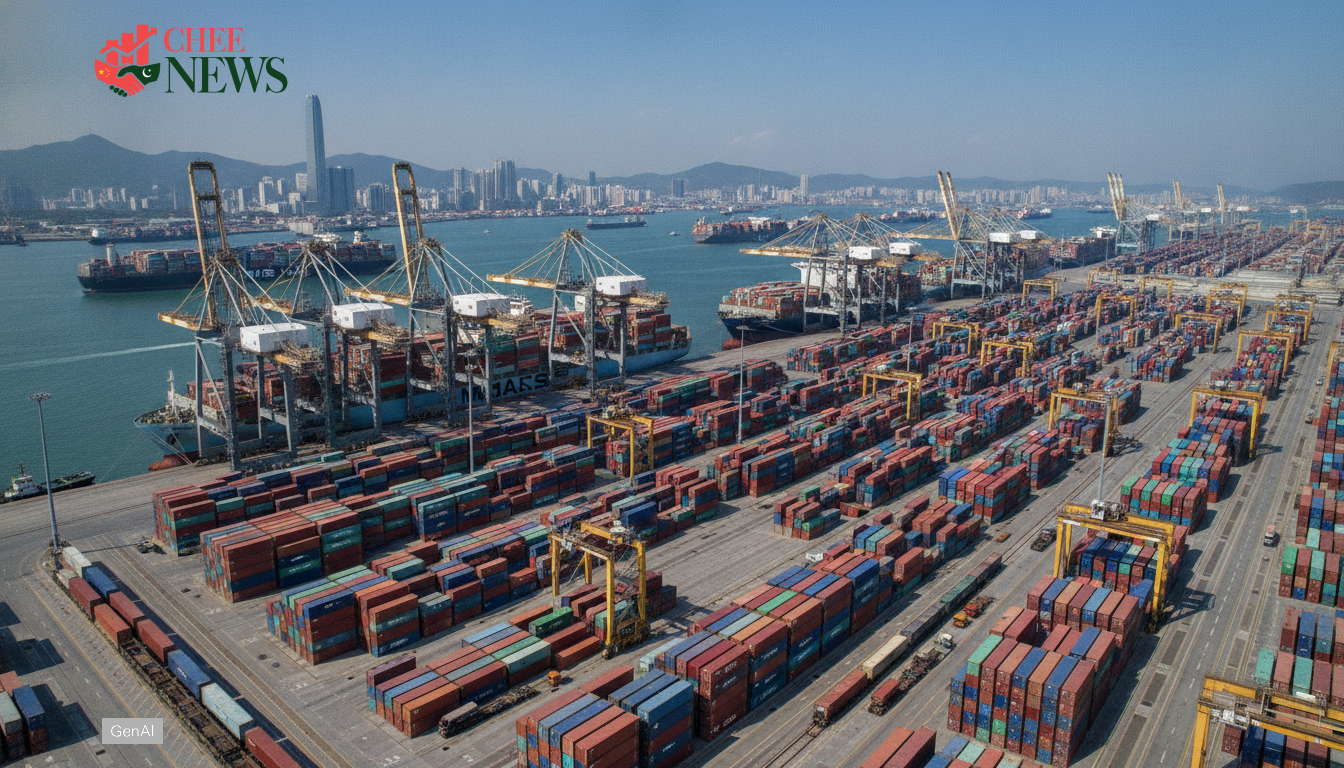
Manufacturers tied to Chinese intermediate goods are adjusting procurement and lead times, as indicated by industry sources, while some commodity exporters are recalibrating revenue assumptions and budget plans. Energy, iron ore, and industrial metals respond differently depending on how construction, autos, and grid investment evolve inside China, as tracked in sector research. When China GDP expectations soften, container volumes and chartering rates can shift quickly, according to shipping-market updates, affecting logistics profits and delivery schedules for retailers. The implications may reach project finance as well, including transport and energy corridors that depend on stable regional demand. Coverage of investment linkages around CPEC and corporate partnerships has underscored how slower China demand can influence contract timing, as discussed in CPEC project updates: Apple-Alibaba AI deal impact. For planners, the message is to treat China exposure as a variable risk factor rather than a constant input.
Policy Responses and Corporate Strategy Shifts
Governments are responding with a mix of domestic stimulus, trade diversification, and tighter screening of strategic industries, based on official announcements, aiming to cushion the economic impact without escalating friction. Central banks in Asia and Europe are observing how softer goods demand could contribute to disinflation, according to central-bank communications and analyst notes, while also monitoring the risk of price spikes if supply chains seize up. Corporate strategy teams are shifting from pure expansion to resilience, according to company statements and supply-chain surveys, securing multi-region suppliers, renegotiating freight contracts, and revising inventory rules. Reporting on broader connectivity and trade influence, including China’s Belt and Road Initiative Expands Trade Influence, shows how infrastructure-linked flows can amplify or soften shocks. Boards are also revisiting China market strategies versus alternative hubs in Southeast Asia, India, and the Gulf, as described in corporate disclosures and investment commentary, as margins and demand signals change. For exporters, the practical task is aligning capital spending with a wider range of demand outcomes linked to the China economic slowdown.
Outlook for Growth, Pricing, and Trade Planning
Baseline forecasts now assume China contributes less incremental growth than in prior cycles, according to major bank research and multilateral outlooks. This matters for everyone from miners to consumer brands. The IMF’s World Economic Outlook projections, alongside guidance from major central banks, have pushed analysts to reassess trade volumes, earnings, and fiscal space in China-exposed economies, though scenarios differ by forecaster. Rather than expecting a single global shock, investors are mapping second-order effects such as lower capital expenditure, weaker tourism flows, and slower cross-border M and A, based on deal data and industry tracking, while acknowledging uncertainty. The China economic slowdown is shaping views on risk and allocation, with markets potentially rewarding firms that demonstrate pricing power and regional balance while penalizing concentrated exposure. As framed by investment strategy commentary, it is likely to remain a reference point for scenario planning until demand stabilizes and policy support translates into more durable consumption and private growth. Policymakers are focused on managing spillovers while keeping trade channels predictable.

