
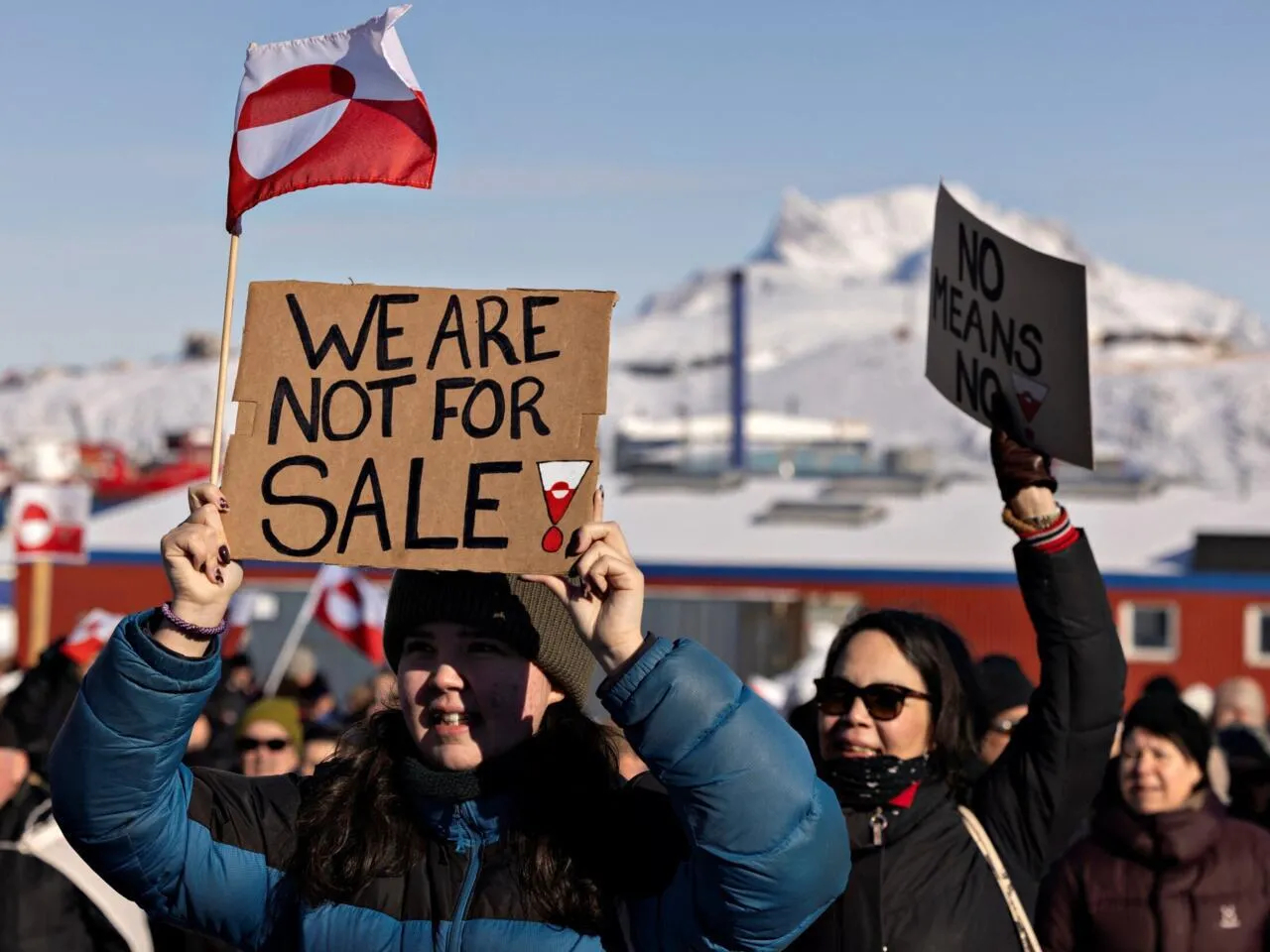
France has reaffirmed its support for Greenland’s political status and autonomy, with Foreign Minister Jean Noel Barrot stating clearly that the Arctic territory is not for sale and that its future belongs solely to its people. His remarks come amid renewed international discussion about Greenland’s strategic importance and growing geopolitical interest in the Arctic region.
Speaking in a radio interview on Wednesday, Barrot stressed that Greenland’s status is a matter to be determined through dialogue between Greenlandic and Danish authorities. He emphasized that decisions regarding the territory must reflect the will of Greenland’s population and respect existing legal and political frameworks. According to Barrot, any suggestion that Greenland could be treated as a tradable asset fundamentally misunderstands the principles of sovereignty and self determination.
Greenland is an autonomous territory within the Kingdom of Denmark, with its own government responsible for many domestic affairs. While Denmark retains control over defense and foreign policy, Greenland has steadily expanded its self governance in recent decades. French officials say this arrangement must be respected and that external pressure or speculation undermines stability in the region.
Barrot also addressed broader security concerns, dismissing any notion of military confrontation involving Greenland. He said it would make no sense for one NATO member to threaten or attack another, describing such a scenario as completely contrary to the interests of the United States and the alliance as a whole. His comments were widely interpreted as an effort to reinforce unity within NATO at a time of heightened global tensions.
The Arctic has become an increasingly strategic region due to climate change, which is opening new shipping routes and access to natural resources. Greenland’s location and mineral potential have attracted growing attention from major powers, making diplomatic clarity more important than ever. France has consistently argued that competition in the Arctic should be managed through cooperation, international law, and respect for local populations.
European officials see Greenland as part of a broader discussion about regional stability and the role of smaller territories in global geopolitics. Barrot’s statement aligns with France’s long standing position that security and economic interests must not override the rights of local communities. He noted that Greenland’s development path should be shaped by its residents in partnership with Denmark, not external actors.
The remarks were welcomed by analysts who see them as a firm but measured response to speculative narratives surrounding Greenland. By focusing on legal agreements and alliance solidarity, France is signaling that it opposes any attempt to introduce uncertainty into an already sensitive geopolitical environment.
As global attention continues to shift toward the Arctic, Greenland’s status is likely to remain a subject of discussion. France’s message is clear: sovereignty, self determination, and alliance unity are non negotiable principles. Any future decisions about Greenland, French officials insist, must come from Greenlanders themselves and be reached through established political channels rather than external pressure.

