
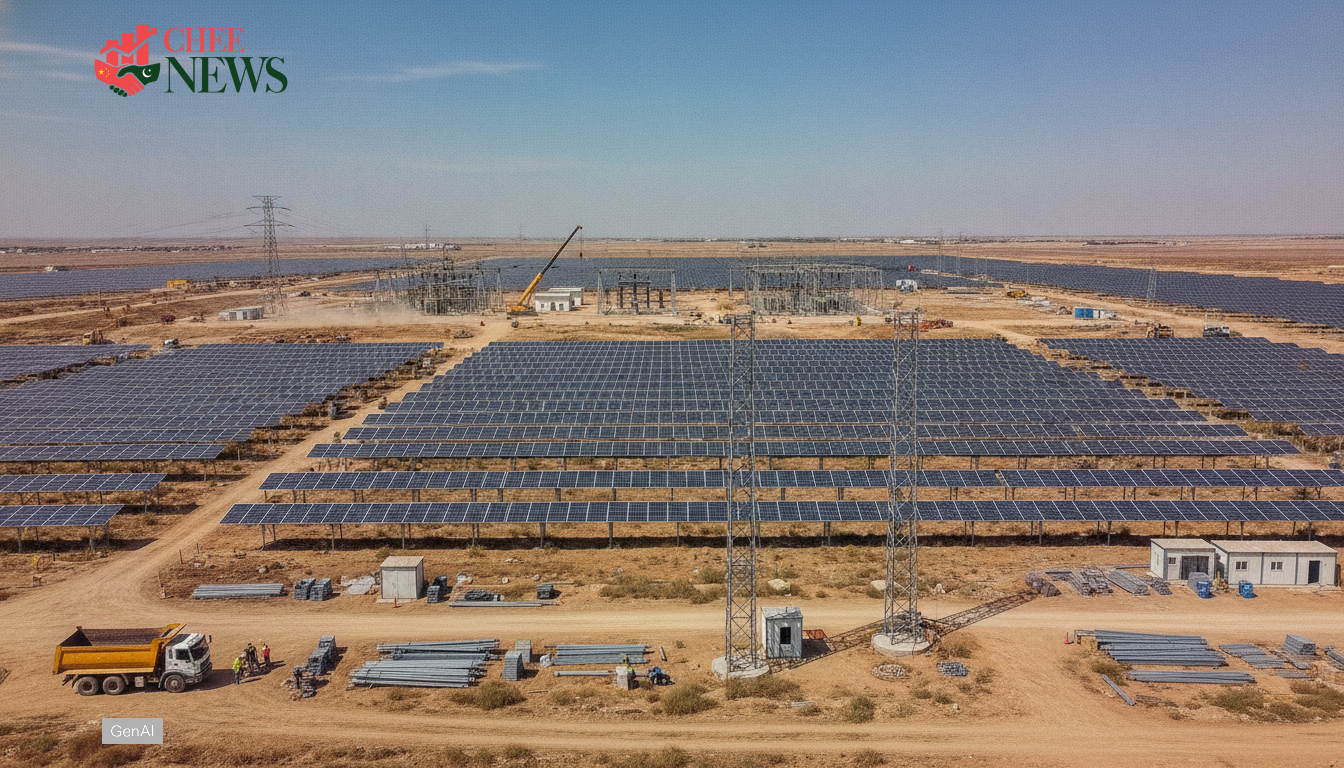
Pakistan energy projects and Chinese investment focus
Policy coordination between Islamabad and Beijing is shaping the latest wave of power and grid activity across provinces, as reported by local media referencing government briefings and official announcements. In this cycle, Pakistan energy projects are being structured to match industrial demand and reduce capacity bottlenecks, with Chinese investment often discussed by officials as being tied to performance milestones. Pakistan’s Ministry of Planning, Development and Special Initiatives has described the power portfolio as a core pillar of CPEC projects, alongside transport and industrial cooperation. Financing is frequently paired with engineering and procurement packages, in the view of project developers, to shorten construction cycles and standardise equipment. Provincial energy departments have also indicated they want clearer dispatch and payment rules so new plants can operate more predictably and lenders can price risk more accurately, including in planning notes circulated in Islamabad in 2024.
Grid upgrades and generation additions under CPEC
Current activity is widely described by sector stakeholders as being concentrated in upgrades intended to keep generation usable by easing transmission constraints and reducing technical losses. The National Transmission and Despatch Company (NTDC) has said in public communications that grid reinforcement is essential to absorb new capacity and stabilise frequency during peak demand. For a snapshot of how regional technology supply chains influence project timing, see Semiconductor Supply Chain Bottlenecks Lift Prices. Several initiatives are now presented by planners as emphasising substation expansion, reactive power compensation, and metering improvements rather than only adding megawatts, as reflected in public project summaries. For context on equipment availability signals, Chinese factory activity rises on AI export demand can help explain procurement lead times and delivery risk during tight cycles.
Financing structures, contracts, and timelines
In projects that include Chinese capital, financing is often structured around milestone-based disbursements, according to developers and lenders involved in comparable infrastructure transactions. EPC scopes are sometimes bundled to reduce interface risk and help control commissioning dates, as project sponsors commonly argue in tender and contracting discussions. Pakistan energy projects in this category are often assessed by lenders and project sponsors with a focus on payment security and curtailment rules because these terms can determine whether plants service debt, as noted by industry practitioners. In the wider geopolitical environment, South China Morning Post coverage such as China’s Wang Yi warns Marco Rubio to approach Taiwan affairs with ‘utmost caution’ highlights how diplomacy can affect commercial timelines and risk pricing. Contract clauses are also commonly tightened around testing, grid code compliance, and liquidated damages for delays, based on standard market practice for power projects. On the supply side, China factory activity returns to growth in June on AI provides additional context on industrial throughput.
System reliability, circular debt, and reform targets
Officials have described the policy goal as reducing exposure to fuel price swings and improving reliability for export manufacturing, with reforms aimed at making dispatch and payments more predictable. In practice, grid automation can help lower forced outages by improving fault detection and restoration times, particularly when utilities deploy feeder-level monitoring and faster switching, according to utility engineering guidance and common grid-operations practice. For broader context on trade and manufacturing momentum that can spill into equipment markets, China factory activity lifts tech exports, trade outlook is relevant. Utilities are beginning to adopt analytics that forecast demand by feeder and season, which can help limit expensive emergency procurement and reduce strain on transformers, according to technology vendors and utility planning teams. The Ministry of Energy has framed these improvements in public remarks as necessary to ease circular debt pressures and encourage private investment in efficient generation and storage, including in reform discussions referenced by the Ministry in 2023.
Challenges, opportunities, and next phase outlook
Execution risks are commonly cited by contractors and lenders as remaining concentrated in right-of-way approvals, payment discipline, and the technical complexity of integrating variable renewables into a stressed network. South China Morning Post reporting such as China’s Fifa fever, EU’s trade deadline: 7 global relations reads highlights the broader trade and regulatory environment that can influence procurement and compliance expectations for cross-border contractors. These energy investments can face scrutiny when distribution companies delay receivables, since payment lags may undermine debt service even for operational plants, as noted by lenders and project advisers. Chinese EPC firms are also reported by market participants to be asking for clearer contract protections and dispute-resolution pathways to reduce delays and cost overruns. At the same time, utilities and vendors point to room for scaling automated inspection of transmission corridors, helping detect encroachment, conductor damage, and overheating before faults cascade, particularly on high-load lines serving Punjab and Sindh.

