
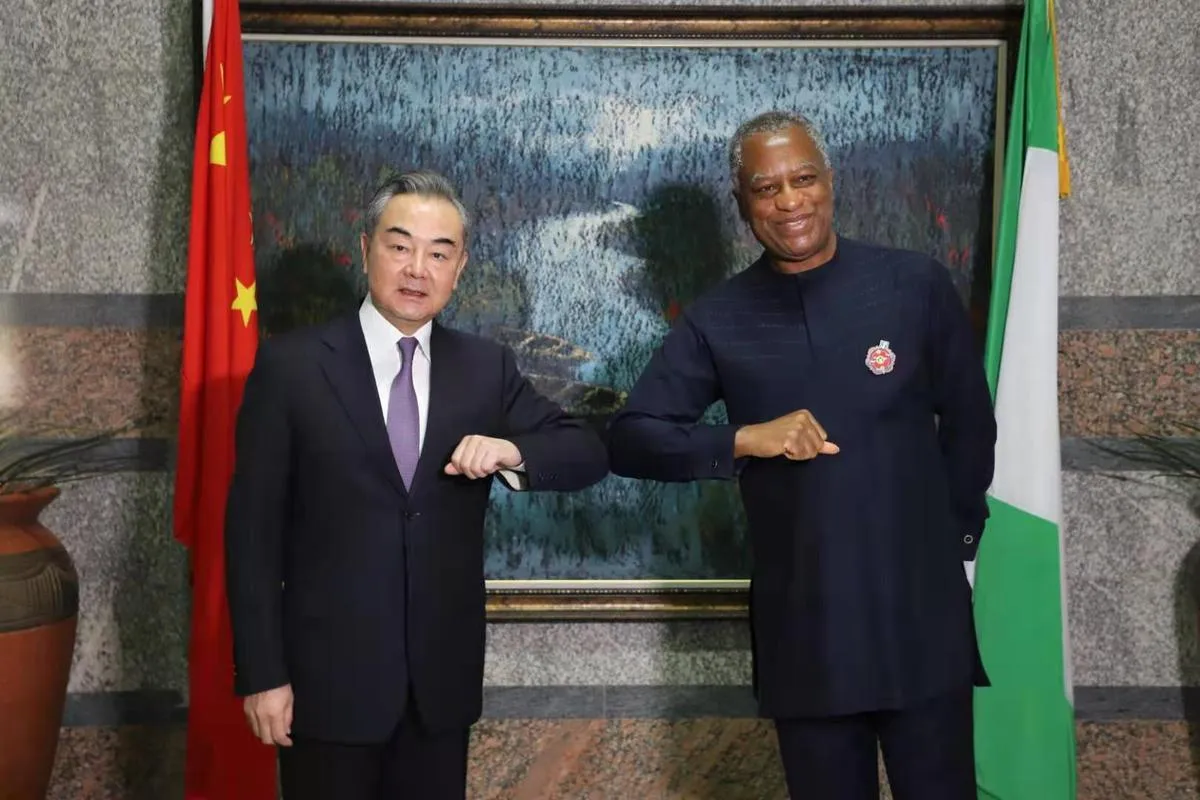
Chinese Foreign Minister Wang Yi will visit four African countries from January 7 to 12, marking China’s first major diplomatic engagement of 2026 and continuing a tradition that has remained unchanged for more than three decades. The visit will take Wang to Ethiopia, Somalia, Tanzania, and Lesotho, the Chinese Foreign Ministry announced on Wednesday.
Africa has been the destination of China’s foreign minister’s first overseas trip of the year for 36 consecutive years, a pattern widely viewed as a clear signal of Beijing’s long term diplomatic priorities. Chinese officials say the practice reflects the importance China places on its partnership with African countries and its commitment to strengthening ties across political, economic, and social spheres.
During the tour, Wang is expected to hold talks with senior leaders in each country, focusing on bilateral relations, regional stability, and practical cooperation. While specific agendas have not been disclosed, such visits traditionally cover areas including infrastructure development, trade, security cooperation, and development assistance. The inclusion of countries from different regions of Africa highlights China’s effort to maintain balanced engagement across the continent.
Ethiopia will be a key stop on the trip, as Wang is scheduled to attend the launch ceremony of the China Africa Year of People to People Exchanges at the African Union headquarters in Addis Ababa. The initiative is designed to deepen cultural, educational, and social ties between China and African nations, complementing existing economic and political cooperation.
Chinese officials have emphasized that people to people exchanges play an increasingly important role in bilateral relations. By promoting cultural dialogue, youth engagement, academic cooperation, and tourism, Beijing aims to build a broader foundation of mutual understanding beyond government level interactions.
Wang’s visit to Somalia is also being closely watched, given the country’s security challenges and strategic location in the Horn of Africa. China has supported Somalia through development assistance and participation in international efforts to promote stability. The visit signals continued Chinese interest in supporting peace and reconstruction in fragile regions.
In Tanzania and Lesotho, discussions are expected to focus on development cooperation and economic partnerships. China has long been involved in infrastructure and industrial projects in both countries, and officials say future cooperation will increasingly emphasize sustainability, local capacity building, and mutual benefit.
Wang, who is also a member of the Political Bureau of the Communist Party of China Central Committee, has played a central role in shaping China’s foreign policy over the past decade. His decision to begin 2026 with an Africa tour underscores continuity in China’s diplomatic approach, even as global geopolitics become more complex.
Analysts note that the timing of the trip sends a symbolic message. At a moment when global attention is often focused on major power competition, China is highlighting its commitment to the Global South and to long term partnerships rooted in development and cooperation rather than confrontation.
As the visit unfolds, observers will be watching for signals on how China plans to advance its Africa policy in the coming year. While concrete agreements may follow later, the tour itself reinforces Africa’s central place in China’s diplomatic calendar and its vision for international engagement in 2026.

