
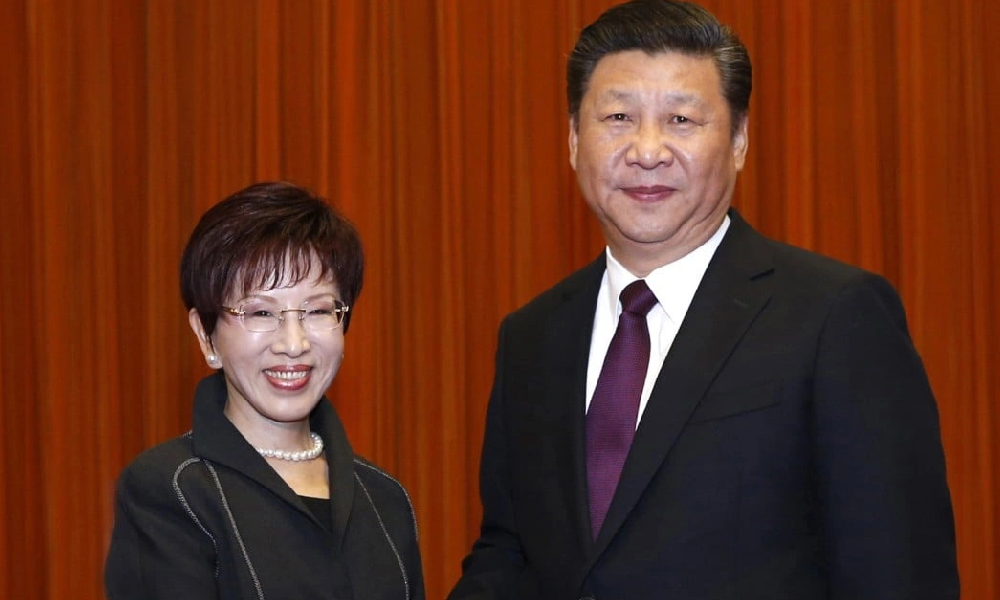
A former leader of Kuomintang has urged both sides to move beyond what she described as a “cold peace” across the Taiwan Strait, calling for renewed efforts to rebuild trust and improve relations. The remarks come amid rising tensions and limited communication between Taipei and Beijing, with political dialogue largely stalled in recent years. Her statement reflects growing concern among some political figures about the long term risks of continued disengagement.
She emphasized that maintaining stability requires more than the absence of open conflict, highlighting the need for active communication and mutual understanding. According to her, rebuilding trust should begin with practical steps that reduce misunderstandings and encourage cooperation in areas of shared interest. The call for engagement comes at a time when geopolitical pressures and regional dynamics are placing additional strain on cross strait relations.
Observers note that political divisions within Taiwan have shaped approaches to relations with mainland China, with differing views on how to balance security, sovereignty, and economic ties. The former KMT chairwoman’s comments align with a broader perspective within the party that favors dialogue and engagement as a means of reducing tensions. However, achieving progress remains challenging given the complex political landscape and differing priorities on both sides.
The situation across the Taiwan Strait continues to draw international attention, particularly as it plays a significant role in regional security and global trade. Any shift in relations could have wide ranging implications, affecting not only political stability but also economic cooperation and supply chains linked to the region. Calls for rebuilding trust are often seen as a step toward lowering risks and encouraging more predictable interactions.
As tensions persist, the discussion around how to move forward remains active among policymakers and analysts. Efforts to reopen dialogue and strengthen communication channels are viewed as essential in preventing escalation and fostering a more stable environment, even as underlying differences continue to shape the trajectory of cross strait relations.

