
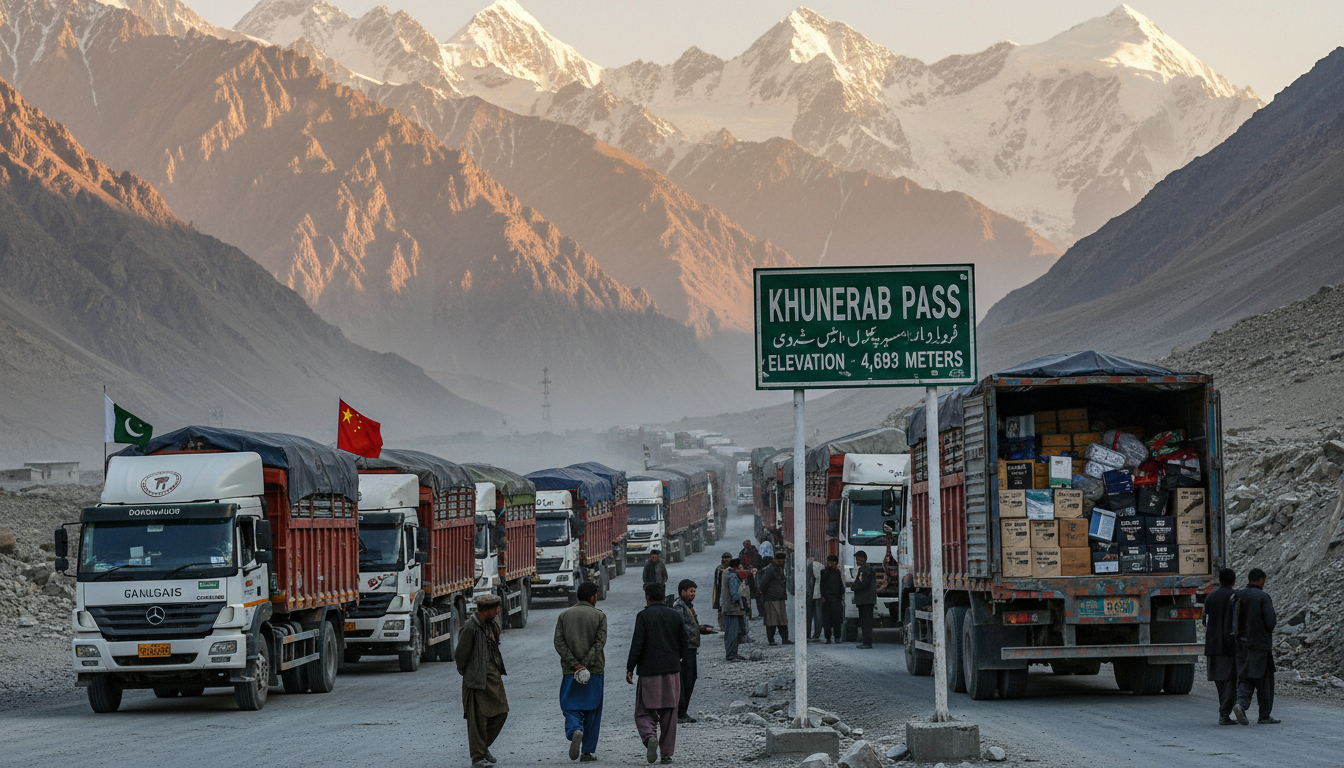
Current Trade Activities at Khunjerab
Pakistan-China trade at the Khunjerab Pass is moving at a sustained tempo as loaded vehicles and containerised cargo continue to transit under coordinated border routines. Traders describe clearer dispatch schedules and quicker verification compared with earlier slowdowns, with traffic flow shaped by weather windows and convoy timing. Today, the operational focus is on keeping freight moving without bottlenecks, while maintaining documentation discipline for both sides. A Live view from transport operators is that consistency has improved when staging areas are managed tightly and departure slots are respected. The latest field Update from business circles points to higher confidence in near-term shipments as long as routes remain open and weighbridge and scanning queues stay controlled.
The day-to-day rhythm reflects a border trade model that depends on predictable clearances, close communication among forwarding agents and a practical approach to traffic management on steep approaches. Pakistan-China trade is also being influenced by broader sentiment in regional commerce, where traders watch signals from major markets even when they are not directly linked to the Karakoram route. In that context, a separate report on global trade discussions, Virtual US-China trade talks set tone for summit, has been circulated among importers as a reference point for policy tone and demand expectations. Today, local operators say their immediate priority remains simple, keep loads rolling and reduce idle time. A Live operating culture rewards firms that file complete papers, and each Update on road conditions can change dispatch decisions quickly.
Significance of Khunjerab for Trade
Khunjerab Pass matters because it compresses distance between western China and northern Pakistan into a single controllable gateway, turning geography into a measurable advantage for cross-border trade. For China-Pakistan cooperation, the crossing provides a visible demonstration of coordination, where customs controls, security protocols and transport scheduling must align daily to deliver reliable outcomes. The significance is not symbolic, it shows up in freight rates, inventory planning and the ability of businesses to commit to delivery timelines. When flows are stable, firms can time replenishment better and negotiate more predictable contracts. The route also anchors trade activity to a corridor logic that supports CPEC-linked connectivity, making border performance a practical test of how well bilateral mechanisms translate into on-ground throughput.
Infrastructure and Logistics Challenges
The main constraints are physical and procedural, with altitude and sharp gradients creating narrow margins for heavy vehicles, especially when temperatures shift and surfaces change quickly. Freight movement depends on disciplined axle load management, braking safety and fleet fitness, while staging facilities on both sides must prevent spillover onto approach roads. Documentation remains a friction point when consignments arrive with inconsistent manifests or when classification disputes require manual review, extending dwell time and raising demurrage risk. Effective cross-border trade at this gate also hinges on reliable communications for convoy release and contingency planning when the route is interrupted. For a wider read on how regional stability can affect logistics confidence, traders often track related developments such as shipping safety updates around the Strait of Hormuz, because global freight sentiment can influence insurance pricing and routing assumptions.
Future Prospects for Trade Growth
Trade growth at Khunjerab will depend on steadily improving processing capacity rather than headline announcements, with emphasis on smarter scheduling, better pre-arrival data checks and predictable operating calendars that reduce surprise closures. Market participants are looking for tighter integration between transport associations and border agencies so that dispatch slots match actual handling ability at inspection points. Gains also come from addressing the small operational delays that compound, queue discipline, consistent scanning throughput, and prompt resolution of paperwork discrepancies. In parallel, supply chains will respond to signals from finance and policy coordination in Pakistan and China, especially when business sentiment is shaped by macro cues. A useful domestic reference for that connection is Ishaq Dar’s China Visit, Finance Talks and Trade, which highlights how financial coordination can support commerce through better settlement expectations.
Impact on Local and Regional Economy
The economic effect is most tangible in northern Pakistan where transport services, warehousing, vehicle maintenance and hospitality see immediate demand when border activity is steady. When cargo flows rise, local hiring expands for drivers, mechanics and handlers, and ancillary spending lifts small businesses that depend on transit traffic. Regional impact extends beyond short-term income, consistent trade movement helps firms invest in better fleets and more professional operations, improving safety and reliability over time. For China-Pakistan cooperation, the border’s performance also shapes perceptions among investors about whether corridor connectivity can be converted into measurable commercial value. In practical terms, reliable passage at the Khunjerab Pass strengthens the case for diversified cargo types and more disciplined contract logistics, reinforcing the idea that predictable cross-border trade is an economic stabiliser rather than a seasonal windfall.

