
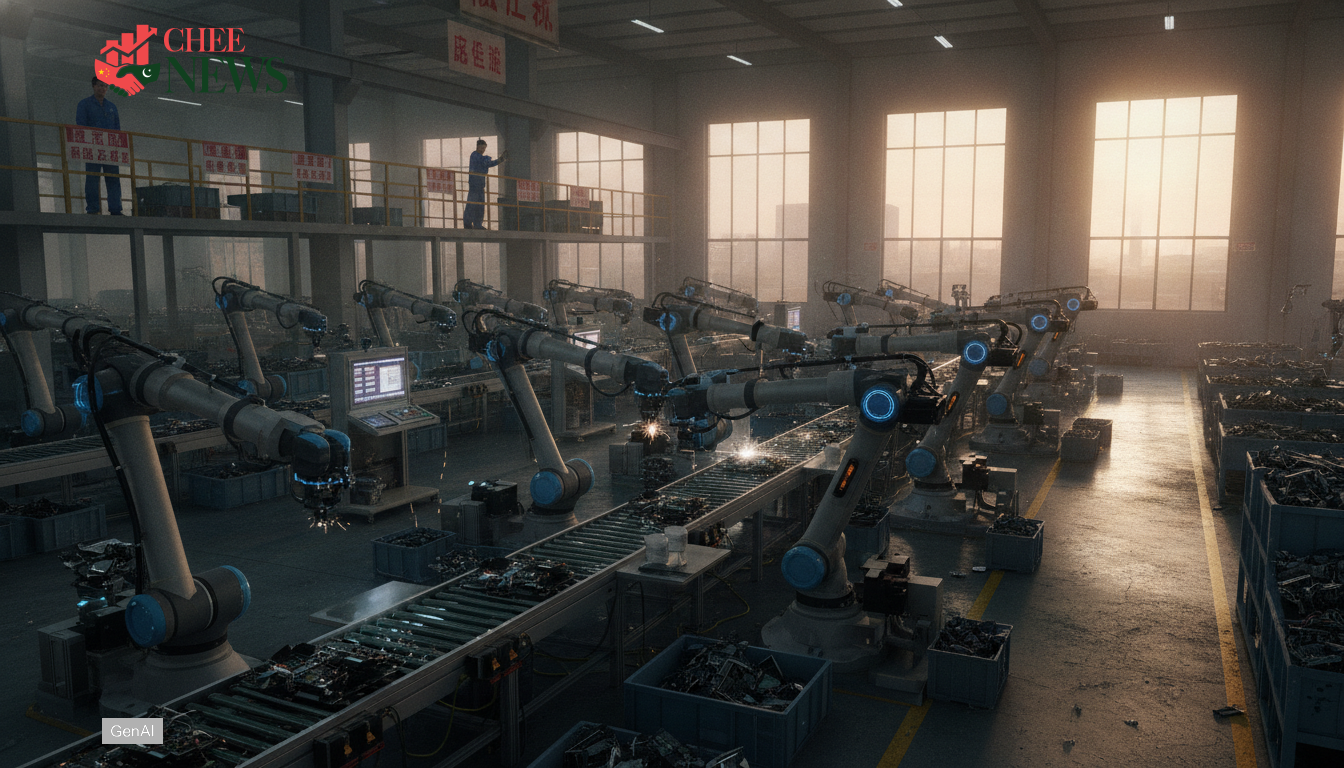
Chinese factory activity: AI export demand boosts output
Chinese factory activity appears to be strengthening as some manufacturers reportedly redirect capacity toward AI servers, networking gear, and data center components for overseas buyers. In 2024, exporters have described firmer inquiries tied to cloud buildouts, while factories increasingly prioritize quality control, testing, and on time delivery over pure volume, as indicated by industry commentary. Producers also say faster component sourcing and shorter production cycles can support higher value assemblies, even as chip costs are described as elevated by market participants. In the near term, this may create a clearer production pipeline for suppliers that can meet stricter performance standards and warranty requirements, based on exporter and producer statements. For trade watchers, one commonly cited signal is a pickup in new export orders, which is often viewed as leading factory utilization by several weeks, according to industry commentary.
How AI hardware orders are reshaping manufacturing lines
Plants are reportedly retooling for products that require tighter tolerances and more documentation, including burn in tests, thermal validation, and serial level traceability, based on manufacturer descriptions. Cost and availability pressures in chips and materials are detailed in Semiconductor Supply Chain Bottlenecks Lift Prices, and that shift can change labor needs toward firmware, reliability engineering, and calibration roles, and it may raise working capital requirements because certification can extend delivery timelines, according to supplier accounts. Pricing also remains sensitive to upstream constraints in high end components, encouraging firms to lock in suppliers and monitor lead times more closely, according to procurement teams and producers. As product mixes upgrade, some factories say they are investing in inspection automation to help reduce defect rates and protect margins.
Export markets and logistics routes gaining momentum
Exporters say they are targeting Southeast Asia and Gulf buyers for servers, power modules, and integration services used in large scale compute deployments. Chinese factory activity often benefits most when firms can bundle hardware with validation, integration support, and after sales maintenance, which can lift average selling prices, according to exporter and integrator commentary. For additional context on export signals and factory sentiment, see China factory activity lifts tech exports, trade outlook, and regional trade connectors are widening too, with the South China Morning Post describing how Asean hopes to tap Greater Bay Area’s tech skills with closer ties: industry chiefs.
Economic implications for jobs, margins, and investment
A firmer factory pipeline can support employment in industrial hubs and stabilize cash flow for private suppliers, especially when orders shift toward higher value assemblies rather than low margin commodity goods, according to analysts and supplier interviews. The central question is whether better export pricing translates into sustained profitability after financing, compliance, and warranty costs are included, as market observers frequently note. Analysts also say AI linked shipments can carry stronger margins, but they often require more up front testing and certification, which can increase the time between production and payment. Policy and market conditions also shape investment plans, including spending on robotics and metrology that can raise throughput without sacrificing quality, according to industry commentary. This development could be significant for the Chinese economy, potentially enhancing its global competitiveness in high-tech manufacturing sectors.
Risks: compliance demands, chips, and policy uncertainty
Growth is arriving with tighter constraints on inputs, customer scrutiny, and technology trade rules, according to producers and trade advisers. Buyers increasingly request proof of component traceability and clearer assurance on cybersecurity and data handling for connected devices, which can slow dispatches when audits are required, according to supplier compliance teams. Manufacturers also face higher exposure to policy shifts that can disrupt procurement plans, even for products built around widely used parts, according to companies involved in cross border sourcing. Competition from other Asian producers can add pressure on delivery speed and defect rates, especially for contract manufacturers operating on thin margins, as industry analysts often warn. Some factories say they are responding by narrowing product variety and prioritizing repeatable builds that are easier to certify, which can help reduce delays and rework.

