
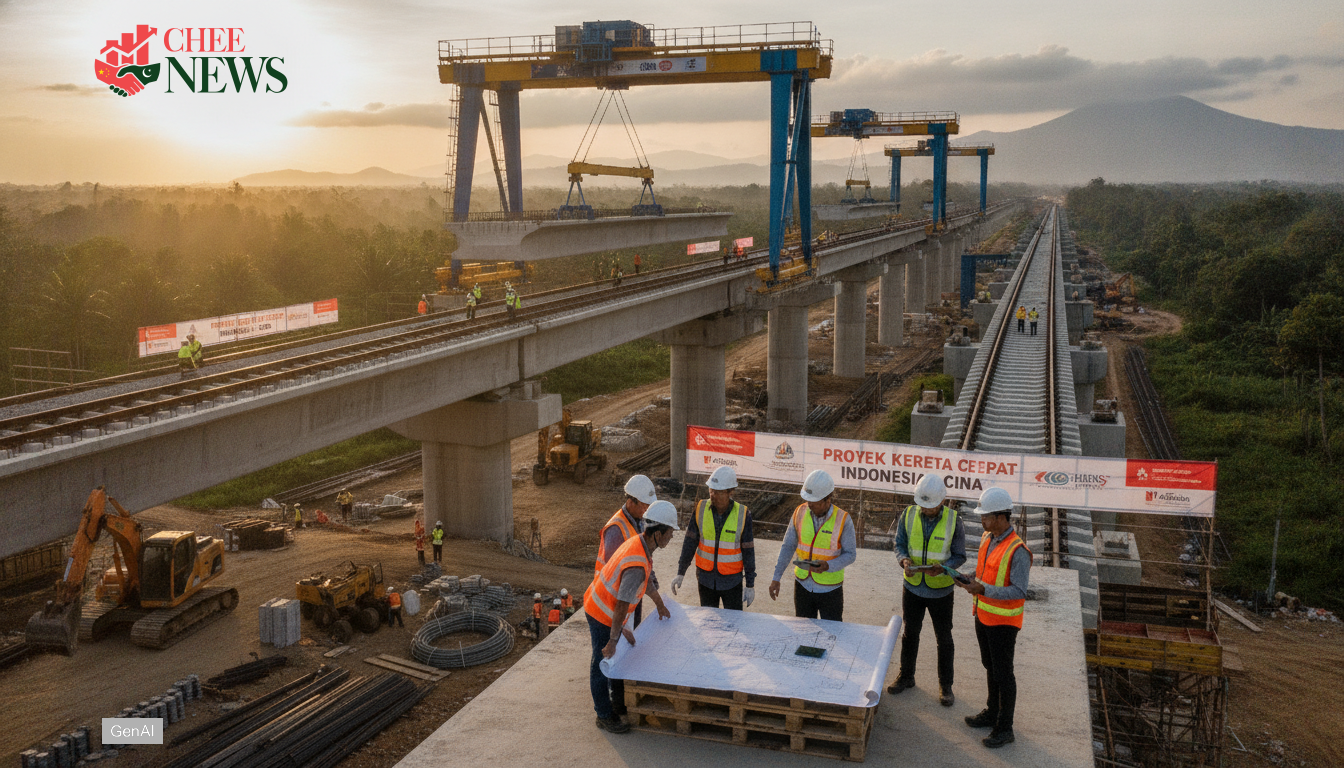
China-Pakistan Trade: Why Rail Links Matter Now
China-Pakistan trade is increasingly shaped by logistics costs, border reliability, and whether Pakistan can move goods faster between ports, industrial zones, and land routes. A proposed high-speed corridor is often framed around passengers, but the trade impact could come from freeing existing mainlines for freight and improving turnaround times at terminals. In 2024, there are indications that some Beijing-backed infrastructure financing may be renegotiated more frequently, according to reporting on recent project restructurings, raising the stakes for Pakistan to set clear rules on governance, procurement, and technology transfer before construction accelerates. For businesses tied to China-Pakistan trade, the core question is whether rail investment translates into dependable supply-chain performance rather than one-off civil works.
Governance Lessons for China-Pakistan Trade Corridors
Pakistan’s planners are watching Indonesia’s rail experience as a governance case study for large China-backed projects that face cost pressure. Reuters reported in May 2024 that Indonesia would take over PT Wijaya Karya’s stake in the China-funded Jakarta Bandung high-speed railway after the state builder struggled financially. The episode matters for Pakistan because unclear ownership can delay land acquisition, permits, and claims management, which can raise costs across a logistics network. For a corridor linked to China-Pakistan trade, one practical takeaway is to lock in a single empowered project owner early, define dispute resolution up front, and ring-fence revenue so contractors, lenders, and operators stay aligned on delivery.
China Funding Shifts and Trade Risk Management
China’s participation often arrives as a bundle of engineering capacity, rolling stock know-how, and long-tenor financing, but funding structures can tighten when budgets or risk appetite changes, as project reporting has shown. Reuters described the Jakarta Bandung project as China-funded and troubled, indicating that restructurings may be becoming more common in cross-border infrastructure delivery. For context on how policy shocks can spill into commercial ties, see China US trade relations hit by new sanctions move, and Pakistan can protect trade outcomes by insisting on transparent loan covenants, procurement rules, and change-order controls designed to limit schedule drift. Clear governance reduces the chance that financing disputes become logistics bottlenecks affecting China-Pakistan trade flows.
Technology Transfer for Suppliers Serving China-Pakistan Trade
Pakistan’s biggest lever is to define technology transfer as an operating capability, not a ceremonial handover of drawings. Contracts can specify measurable milestones such as joint design offices, local certification labs, access to maintenance manuals, and training targets for drivers, dispatchers, and maintainers tied to performance metrics. Building local overhaul shops can also support supply continuity for consumables and critical spares, helping lower downtime risk on a rail corridor serving China-Pakistan trade. Coordination needs are tracked in CPEC project updates: CMRG signals and steel planning, while workforce shifts are detailed in China AI workforce: how automation is reshaping jobs, and domestic content can rise in phases, starting with civil works inputs and moving to electrical and signaling systems once certification capacity is proven.
Trade Outlook: Integrating Rail With Ports, Energy, and Borders
Even with tighter capital markets, bilateral rail cooperation can expand if Pakistan structures bankable operations and protects the integrity of technical standards. Stable fare and access policies, plus real-time performance monitoring accepted by both sides, can help anchor payments and warranties while keeping services predictable for shippers. Energy constraints can affect corridor uptime, as noted in China-Pakistan energy projects face new export curbs, and trade benefits most when rail capacity is integrated with ports, dry ports, and manufacturing clusters so utilization ramps quickly. Customs modernization and reliable power around depots and terminals also matter, because late deliveries can erase time savings and raise inventory costs. Long-term success is likely to be judged by safe, on-time operations that businesses can plan around.

