
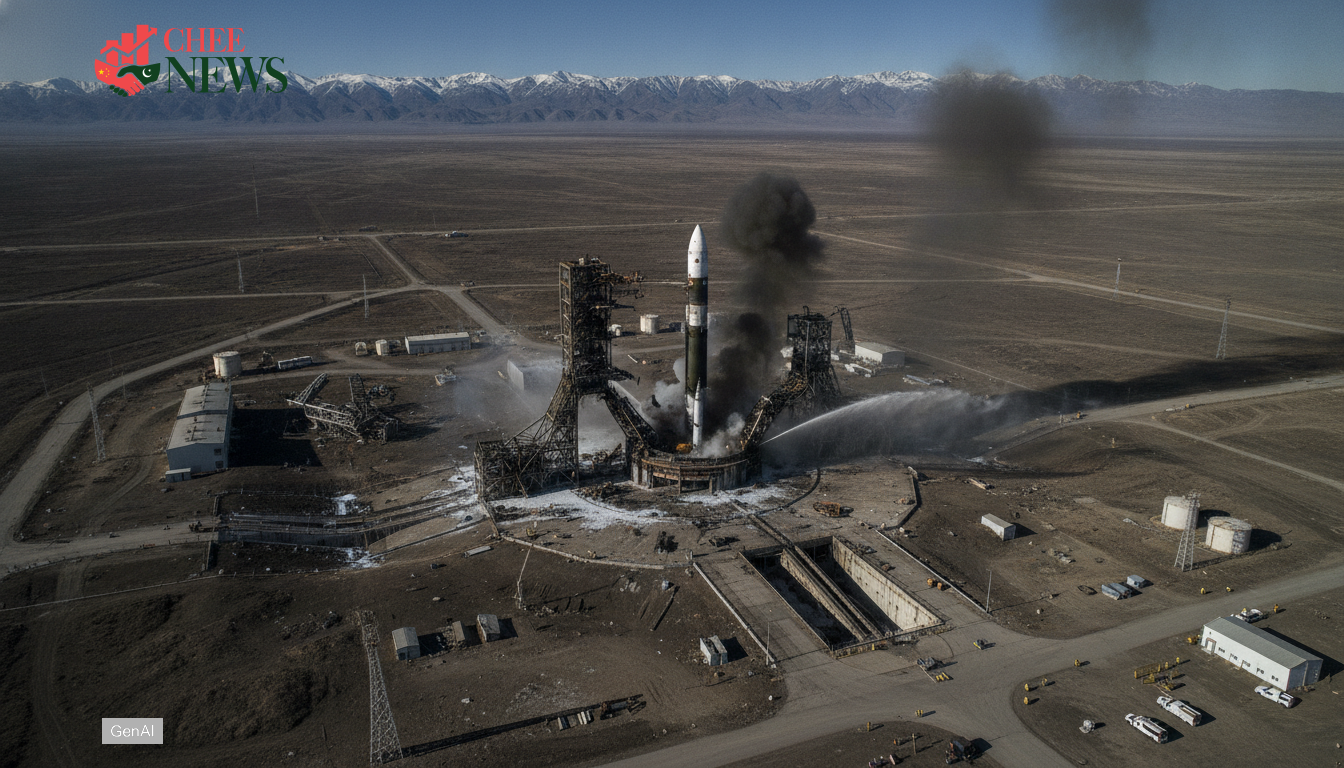
Details of the Long March 7A rocket launch attempt
The Long March 7A rocket suffered a launch failure after an in-flight anomaly, and according to available reports, the mission did not reach its intended orbit. This information was noted by the China Aerospace Science and Technology Corporation in a brief notice that said follow-up work was underway. According to that notice, it did not provide a mission name, payload designation, launch site, or a precise timestamp, and it did not cite the Wenchang Space Launch Site on Hainan. The notice also indicated the anomaly occurred after liftoff rather than during the countdown. The statement did not disclose casualty, debris, or damage figures, and it did not offer an estimate for schedule impact.
What the flight anomaly could indicate
Publicly available information does not clarify whether the issue involved propulsion, guidance, avionics, or stage separation, as neither China Aerospace Science and Technology Corporation nor other Chinese aerospace entities have provided technical specifics in the cited notice or related public statements. After a rocket launch failure, engineers generally begin by reviewing telemetry integrity, engine performance trends, and flight computer logs to narrow potential causes. Because officials described the issue as occurring during flight, it could mean the vehicle left the pad and encountered loads, vibration, and control demands that sometimes expose latent issues. For context on how regulated high-tech systems can ripple across adjacent aerospace operations, a separate policy discussion appears in China drone regulations tighten, leading to drone show disruptions, and any root-cause determination will depend on an official review and what details are released.
Impact on China’s space program and near-term cadence
Setbacks like this can test schedule resilience across the China space program, particularly when launch manifests rely on a specific vehicle family for certain payload and orbital requirements. In many space programs, a failure may lead to stand-downs, additional inspections, and re-qualification steps that can slow near-term mission cadence even if other launchers continue flying. The Long March 7A rocket operates in a segment where reliability is closely watched by institutional customers that prioritize repeatable performance and predictable launch windows. Broader economic and industrial headwinds that can affect large, complex programs are discussed in China economic challenges: spillovers to world markets, and the practical impact will hinge on what the reviewing authorities find and how quickly any corrective actions can be validated and approved.
How rocket failure investigations are typically handled
Launch systems globally experience occasional losses, and agencies commonly respond by isolating a likely failure mode and tightening acceptance testing before resuming flights. Based on general industry practice, that process can include review boards, configuration audits, and phased return-to-flight milestones, though specific steps for this case have not been detailed publicly beyond the contractor’s brief notice. Analysts track reliability using flight records, but meaningful comparisons require confirmed data points such as the failure phase, vehicle configuration, and payload mass—details not included in the notice. For background on policy and technology constraints that can influence cross-border aerospace-related components and supply chains, see US-China export licenses: Faster Reviews, Clearer Rules, and public information remains limited because the corporate statement did not specify a mission ID, payload name, or the exact stage of flight when the anomaly occurred.
Next steps for the Long March 7A rocket and recovery plans
In many investigations, recovery work begins with securing flight data, reconstructing the timeline from tracking and onboard logs, and auditing manufacturing and integration records tied to any suspect components; however, officials have not described a specific procedure for the Long March 7A rocket case beyond noting follow-up work. If the anomaly is traced to a discrete part or process, typical corrective actions can include supplier revalidation, design adjustments, added screening at acceptance, and revised test procedures. Readers looking for an external, independent view on Chinese technology and industrial developments can consult this South China Morning Post report, and the Long March 7A rocket may face additional scrutiny before it is cleared for another attempt, since return-to-flight decisions often hinge on demonstrated fixes rather than calendar targets. The company notice did not release a date for the next launch, quantify schedule impact, or outline a payload replacement plan.

