
China AI workforce: what is driving job disruption
China’s AI workforce outlook is shifting as Beijing pushes artificial intelligence deeper into factories, offices, and public services as an industrial strategy. Companies are deploying tools in customer service, marketing, coding assistance, and quality inspection, where productivity gains can be measured quickly. According to reports from The Economist, the effort is framed as a stress test for employment at scale, with automation arriving as demand cools in some traditional sectors. In some boardrooms, China AI workforce planning appears to be moving from long term training to shorter cycle efficiency targets, and procurement budgets are reportedly shifting from legacy IT to AI software and compute. Local governments are also expanding pilots and procurement rules, which can reinforce the same direction across provinces.
Where AI is landing first, and what roles change
China AI workforce change is showing up first in roles with repeatable workflows, such as call centers, basic analysis, document processing, and factory inspection. Demand for inference is becoming a practical constraint and a cost signal. South China Morning Post coverage of model providers, including DeepSeek signals a significant price hike amid rising demand, points to tightening capacity as usage climbs. These pressures matter for staffing because firms may respond by standardizing tasks and narrowing some entry level pathways rather than freezing all hiring. For trade exposed manufacturers, lower unit labor needs can, in some cases, translate into more aggressive pricing abroad even when revenue is flat.
China AI workforce risks for global competition and policy
Analysts suggest that the main risk may be steady task substitution that can reshape career ladders, especially for routine services and light industry, as argued by outlets such as The Economist. Investor narratives are also tracking the size of the opportunity; China AI revenue seen hitting US$13b, Goldman says highlights how forecasts are being baked into strategy even as policy friction grows. Related technology guardrails are tightening too, as shown in Chinese optical-module shares rise despite US AI curbs, which underscores how supply chains and curbs can affect deployment choices. China’s scale may amplify spillovers into export pricing and competitive pressure on partner markets, though the magnitude varies by sector and cycle. The result can be faster adjustment pressure than in regions where adoption is slowed by longer compliance cycles.
Supply chains, chips, and the jobs created by buildouts
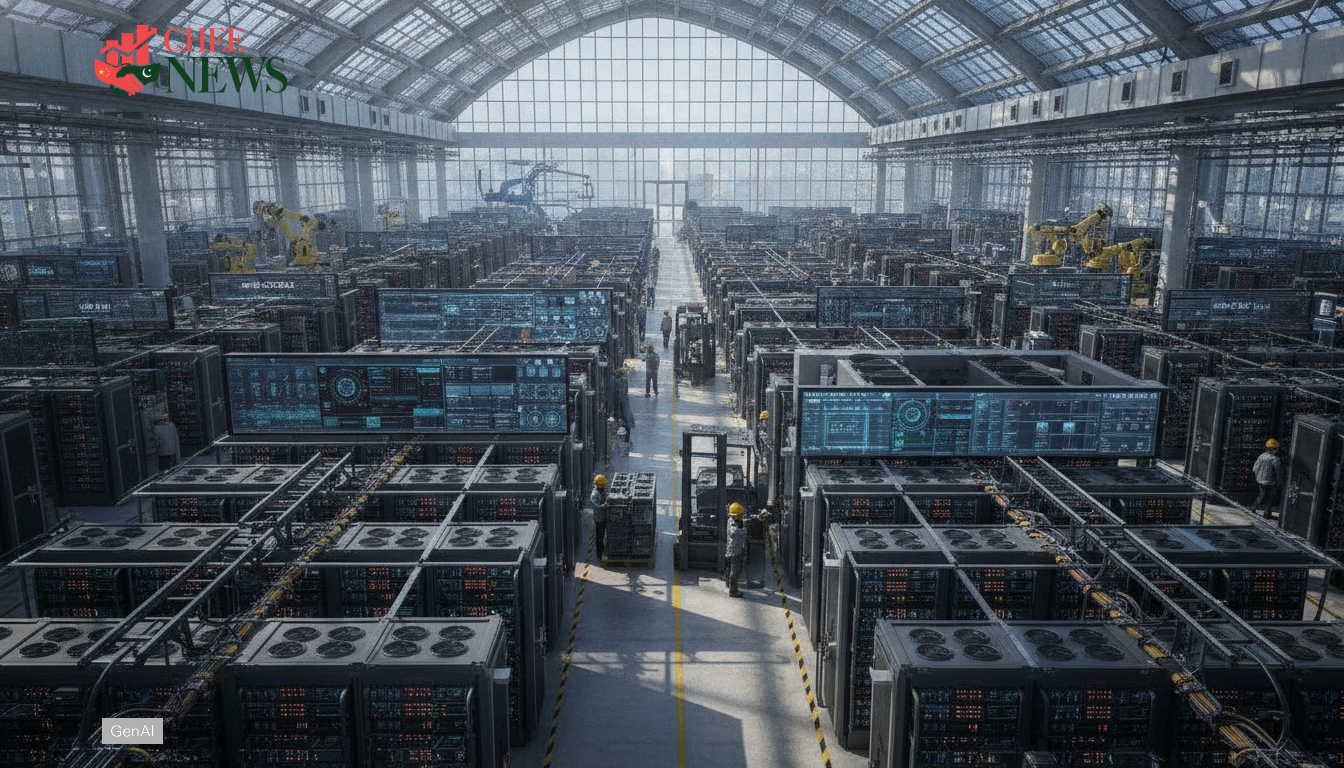
Hardware supply chains are adapting to sustained AI demand, and bottlenecks are increasingly found in components, packaging, and specialized circuit boards, not only advanced chips. South China Morning Post reporting on manufacturing expansion, including Unrelenting AI demand spawns a new plant for PCB maker Victory Giant, shows upstream capacity being added to support servers and accelerators. A parallel constraint is passive components; China’s MLCC supply chain expanding rapidly amid AI demand signals broader industrial pull. These buildouts can shift employment toward maintenance, testing, integration, and logistics, while also raising demand for power and grid reliability in data center clusters.
Policy responses: retraining, absorption, and job security
For the China AI workforce, policy responses are likely to focus on absorbing displaced workers through retraining, targeted subsidies, and new service categories, rather than trying to slow adoption outright. The Economist’s warning implies mismatches can widen if training and credentialing do not keep pace with firm level automation, especially in regions reliant on routine manufacturing and back office work. Managing transitions also intersects with infrastructure and export constraints, including China-Pakistan energy projects face new export curbs, which can affect industrial inputs and timelines. Regulators can also shape speed via data governance standards, procurement auditing, and liability rules for higher stakes deployments. Employers can mitigate disruption by redesigning jobs so workers supervise systems, validate outputs, and handle edge cases where models fail.

