
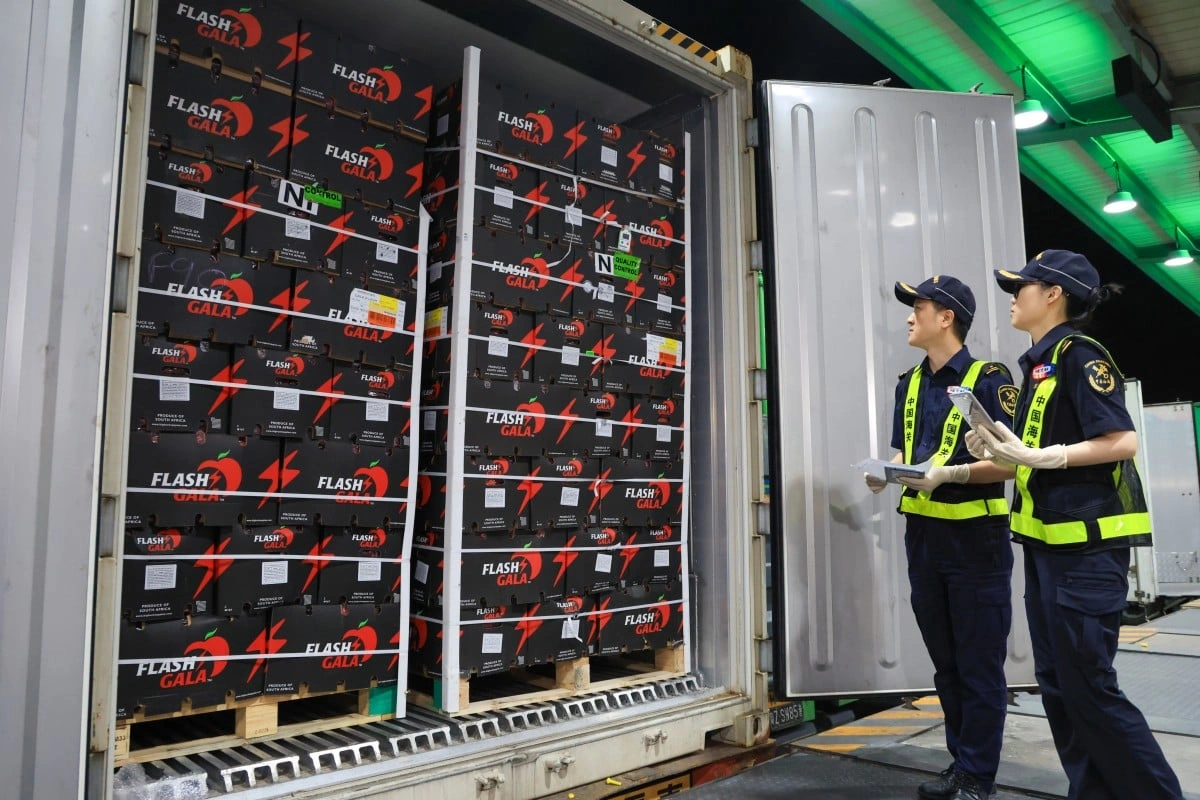
A new zero tariff trade arrangement between China and African partners has begun reshaping export routes for South African agricultural producers, with early shipments of apples and wine marking a symbolic and economic milestone. The policy change, which took effect on May 1, has removed previous import duties and is already being seen as a major opportunity for exporters seeking more stable and diversified international markets amid shifting global trade conditions.
The first shipments under the new arrangement were processed through key Chinese entry points, including the Shenzhen Bay Port, where 24 tonnes of South African apples successfully cleared customs. At the same time, in central China, authorities in Hunan province processed around 6,000 bottles of South African wine, signalling the early operational rollout of the duty free access framework. These shipments are being closely watched by trade analysts as indicators of how quickly African exporters can scale up their presence in the Chinese consumer market.
The removal of the previous 10 per cent tariff on apples is particularly significant for agricultural exporters in South Africa, many of whom have been under pressure from rising costs and limited access to traditional Western markets. The new arrangement is seen as part of a broader strategy to deepen trade ties between China and African economies, offering preferential access to one of the world’s largest consumer bases. For producers, the change reduces pricing pressure and improves competitiveness in a market where demand for imported fresh produce continues to expand.
According to recent data from the South African Reserve Bank, export patterns have already been shifting, with the United States losing its position as South Africa’s second largest export destination to Germany. Despite this reshuffling, China has maintained its position as the country’s top export market, reinforcing its importance in South Africa’s long term trade strategy. Economists suggest that the new tariff-free framework could further strengthen this relationship by encouraging higher volumes of agricultural and value added exports.
The development also reflects broader changes in global trade dynamics, where emerging markets are increasingly prioritising South South cooperation and alternative trade corridors. For South African exporters, particularly in agriculture and food processing, China’s growing consumer base presents a critical opportunity to offset volatility in traditional export destinations. Wine producers, in particular, are expected to benefit from improved shelf competitiveness, while fruit exporters anticipate increased seasonal demand linked to China’s expanding middle class consumption patterns.
As the first shipments continue to be evaluated, both governments are expected to monitor the implementation closely, with industry stakeholders viewing the initial results as a foundation for longer term expansion. The success of early trade flows will likely determine how quickly South African exporters can scale operations under the new tariff free environment, potentially reshaping agricultural trade routes between Africa and Asia in the years ahead.

